Moldova in the Nansen Support Programme for Ukraine
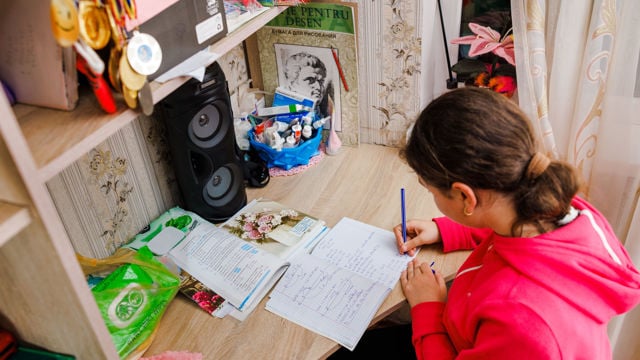
Families in Moldova receive help to pay for heating through a scheme supported by Norway.
Moldova is facing complex and long-term challenges related to economy, energy, security, and humanitarian needs.
In line with the political agreement and Proposition to the Storting 44 S (2022-2023), the Republic of Moldova is the only prioritised neighbouring country in the Norwegian Nansen Support Programme for Ukraine. This is because the country is particularly affected by the ripple effects of the Russian war of aggression against Ukraine. Moldova is facing complex and long-term challenges related to economy, energy, security and humanitarian needs. The Storting’s White Paper Meld. St. 8 (2023-2024) states that Norway supports the UN-coordinated humanitarian efforts for refugees in Ukraine's neighbouring countries, where the efforts in Moldova are given special priority.
Since the full-scale invasion of Ukraine, Moldova has dealt with a refugee crisis, an energy crisis, high inflation and a difficult security situation. Since February 2022, around 1.3 million Ukrainians have crossed the border into Moldova. According to the United Nations High Commissioner for Refugees (UNHCR), around 110,000 Ukrainian refugees were registered in Moldova as of December 2023. With a population of just under 2.6 million, Moldova has received the highest number of Ukrainian refugees per capita, despite being one of the poorest countries in Europe.
The Republic of Moldova used to be almost entirely dependent on Russian energy. Although this has been greatly reduced in recent years, there is still a need to further strengthen energy independence, both in the form of improved energy efficiency, better transmission capacity with EU countries for the import of electricity and investment in renewable energy production. In addition, the negotiations for EU membership place demands on the country's government. The reintegration of the Transnistrian region is a particular challenge for the Republic of Moldova.
Moldova is also a target of Russia's hybrid war and disinformation campaigns, which seek to undermine Moldova's stability and European integration. Fears persist that Russia's war against Ukraine could eventually spread to Moldova. Through the Nansen Support Programme, Norway is supporting the Moldovan state in dealing with the crises and supporting rule of law reforms and closer cooperation with the rest of Europe.
Norwegian support to the Republic of Moldova through the Nansen Support Programme
Norwegian contact with and financial support to Moldova has stepped up as a result of the Russian war of aggression against Ukraine. In the autumn of 2024, Norway will open an embassy office in Chisinau for further cooperation with Moldova and closer coordination with Moldovan and international partners. In 2023, the EFTA countries and Moldova also negotiated a free trade agreement that lays the foundation for stronger economic ties.
Norwegian support to Moldova is to be flexible and based on Moldovan needs. In the coming years, Moldova will need civilian support to ensure progress in European integration, reforms and good governance.
In 2023, in partnership with the European Bank for Reconstruction and Development (EBRD), Norway allocated NOK 400 million to Moldova for the purchase of gas. Norway also pledged NOK 100 million to the World Bank's newly established Moldova Growth, Resilience and Opportunities for Wellbeing (M-GROW) multi-donor fund, which supports the Moldovan government in making critical investments, improving competitiveness, strengthening institutions and increasing energy efficiency. Norway also supports the multi-donor fund E5P, which promotes the green development of the public and municipal sectors within energy efficiency in areas such as district heating, waste management and infrastructure.
In addition, Norway supports reform efforts through the Council of Europe's Action Plan for Moldova, which focuses on the rule of law, democracy and human rights. The direction of Norwegian support to Moldova for 2024 is being prepared, and will further contribute to strengthening Moldova's civil resilience, energy and societal security and European integration.
Norway is one of the largest humanitarian donors in Moldova. Since Russia's full-scale invasion of Ukraine in 2022, Norway has contributed around NOK 490 million in humanitarian support to the response in Moldova. Moldova is also a prioritised neighbouring country in the UN-coordinated humanitarian response, in which vulnerable local populations are supported in addition to refugees from Ukraine. According to the UN, around 160,000 people received humanitarian support in Moldova in 2023. This included cash transfers to 86,000 Ukrainian refugees and 46,000 Moldovan host families. Key partners in the humanitarian response in Moldova under the Nansen Support Programme for Ukraine include the UN through IOM, UNFPA, UNHCR, UNICEF, WFP, and WHO, and the Red Cross Movement, Caritas, the Norwegian Refugee Council, Norwegian Church Aid and NORCAP.