Gaza: Children are back to learning despite extreme conditions
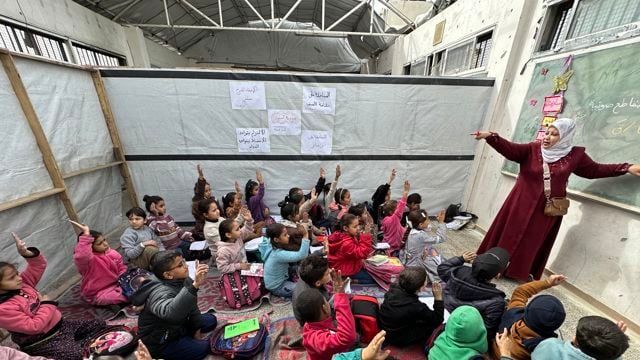
Education has always been at the core of UNRWA’s mission.
In the midst of the humanitarian crisis, UNRWA is teaching approximately 65,000 children in person, and over 280,000 are learning virtually.
Despite widespread damage to schools, fuel shortages and severe disruptions to education services, UNRWA (the UN agency for Palestine refugees in the Middle East), is continuing to provide education to hundreds of thousands of children in the Gaza Strip and the occupied West Bank.
- Read the story: How Norway Will Allocate Humanitarian Funding in 2026
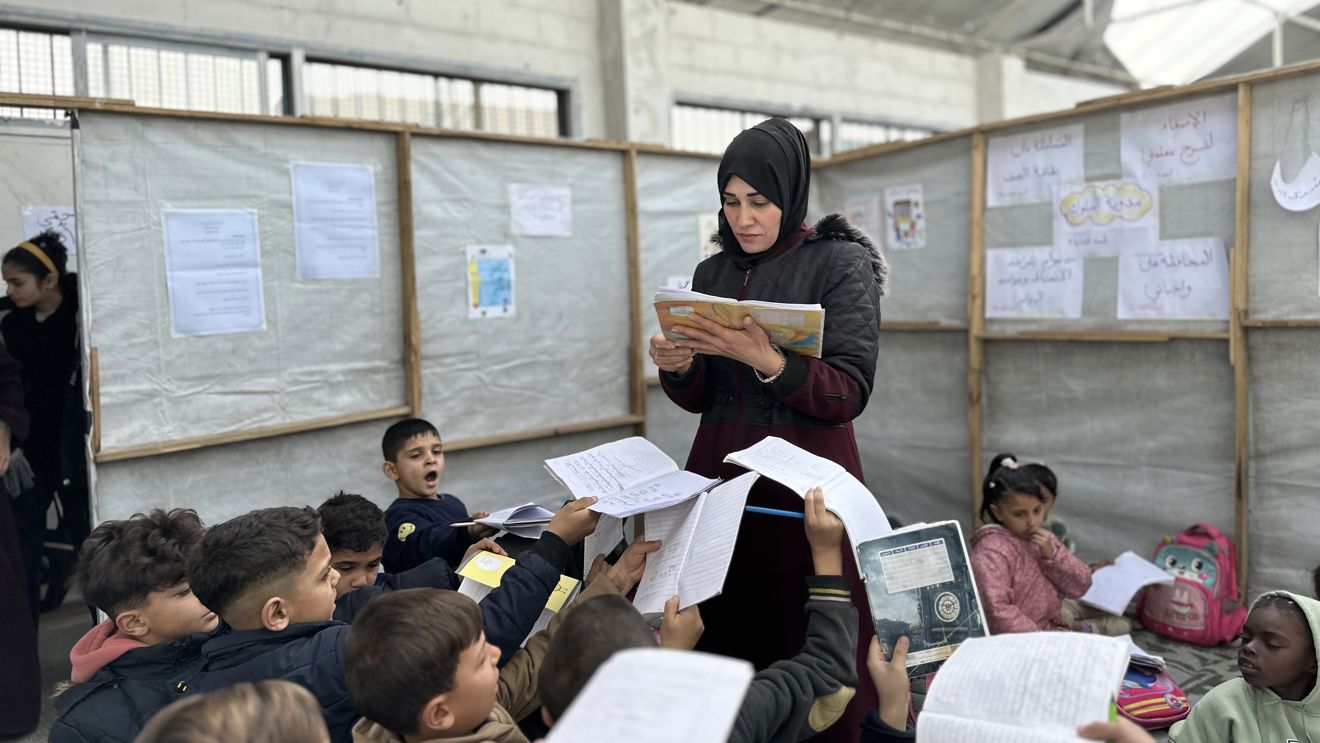
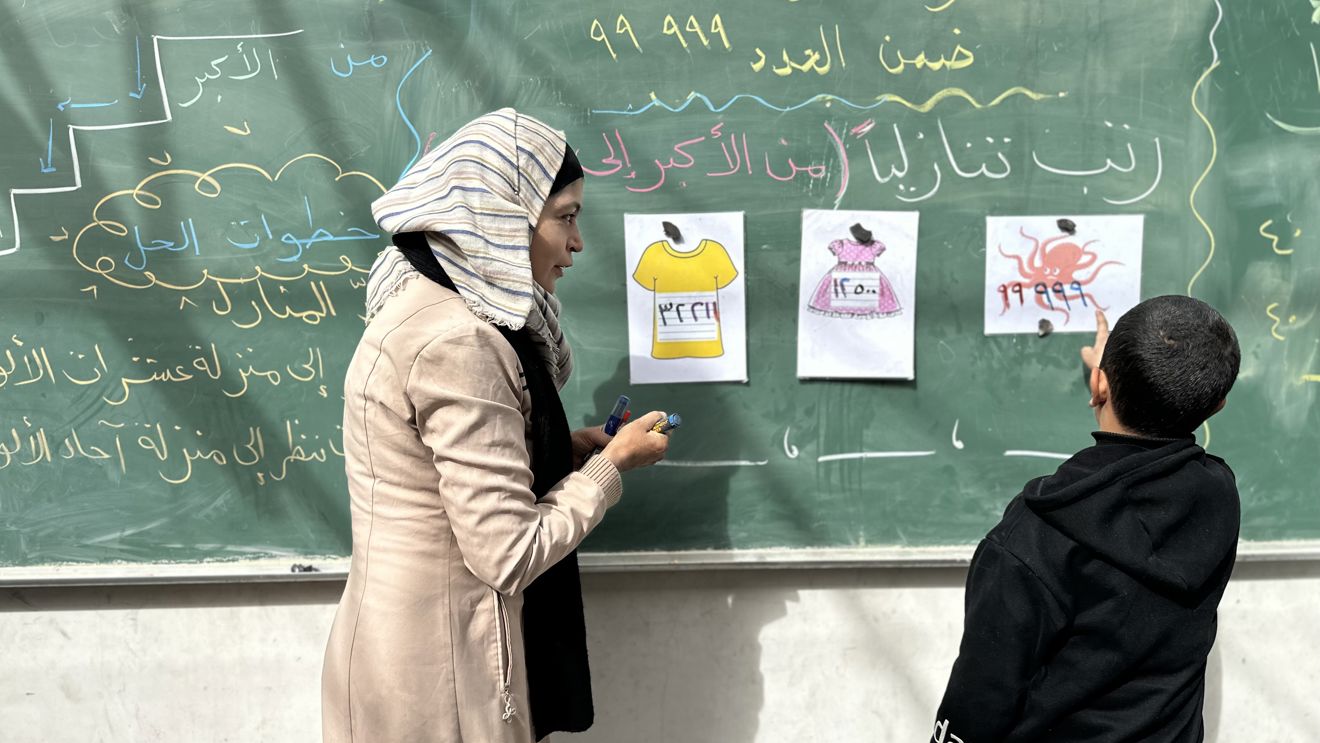
Despite the war, teachers remain an essential source of learning, support, and protection for their students in Gaza.
The conflict continues to affect the lives of millions of Palestinian refugees. At the same time, UNRWA is facing one of the most serious humanitarian and institutional crises in its history.
– For decades, the organisation has been a lifeline for Palestine refugees in the Gaza Strip, the occupied West Bank, Jordan, Lebanon and Syria. They are now working to keep the education system running in what has become one of the world’s most challenging and dangerous environments, Erik Abild, Director of the Department for Humanitarian Assistance at Norad says.
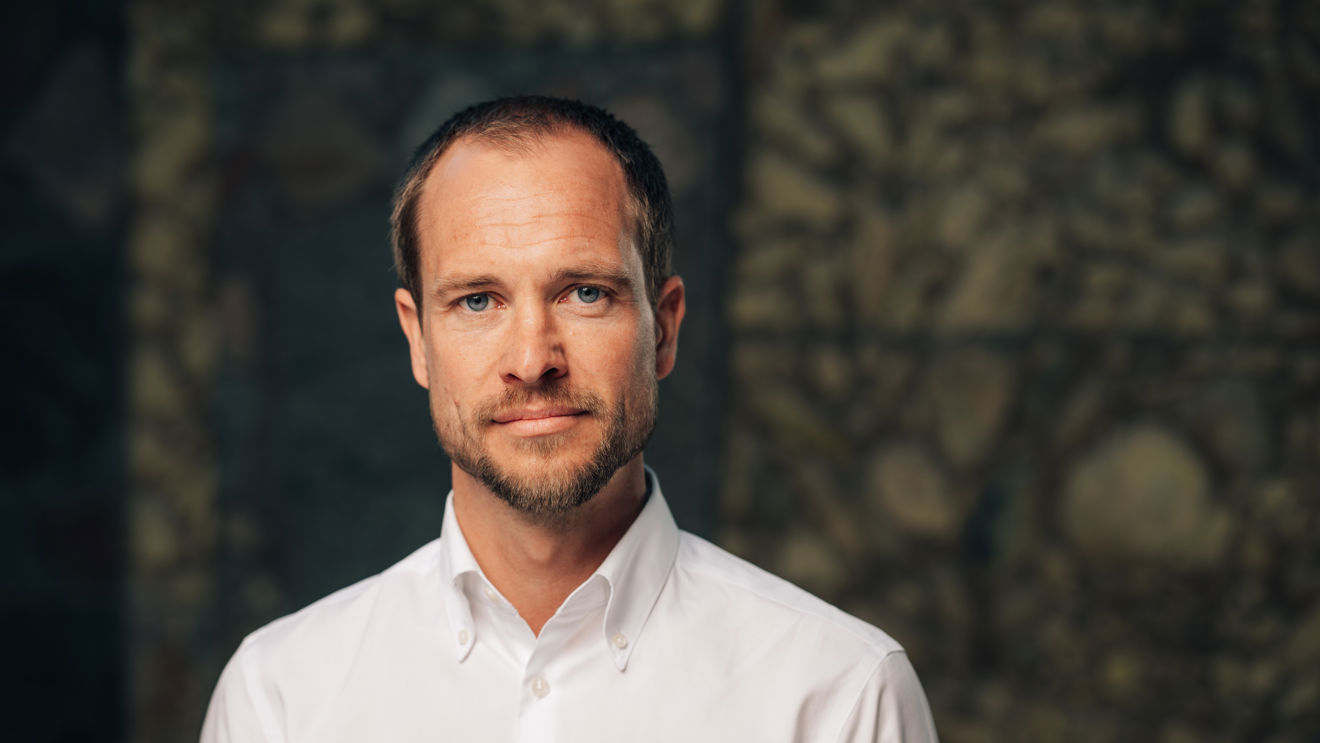
Erik Abild is the Director of the Department for Humanitarian Assistance in Norad.
Since the war began in 2023, the situation has become increasingly severe. More than 72 000 Palestinians have been killed since October 2023, including 391 UNRWA personnel and other people supporting the operations.
School buildings in ruins – teaching continues
The impact on education in the Gaza Strip has been devastating.
From October 2023 until the ceasefire in October 2025, almost all children were left without any real access to schooling.
Many schools have been completely destroyed; others are being used as shelters or are located within military zones. For example, in North Gaza alone, eight UNRWA schools were demolished during January and February 2026, according to preliminary information.
UNRWA’s strategy follows the Education in Emergencies approach developed with partners, which starts with healing the deep trauma through mental health and psychosocial support, then transitions into safe spaces for non-formal learning, and ultimately enables a return to formal education when conditions allow.
Even so, UNRWA has managed to ensure that:
- 65 000 children have returned to learning in temporary learning spaces
- 280 000 children are now receiving distance learning through digital platforms and self-study materials allowing them to progress from one grade level to the next
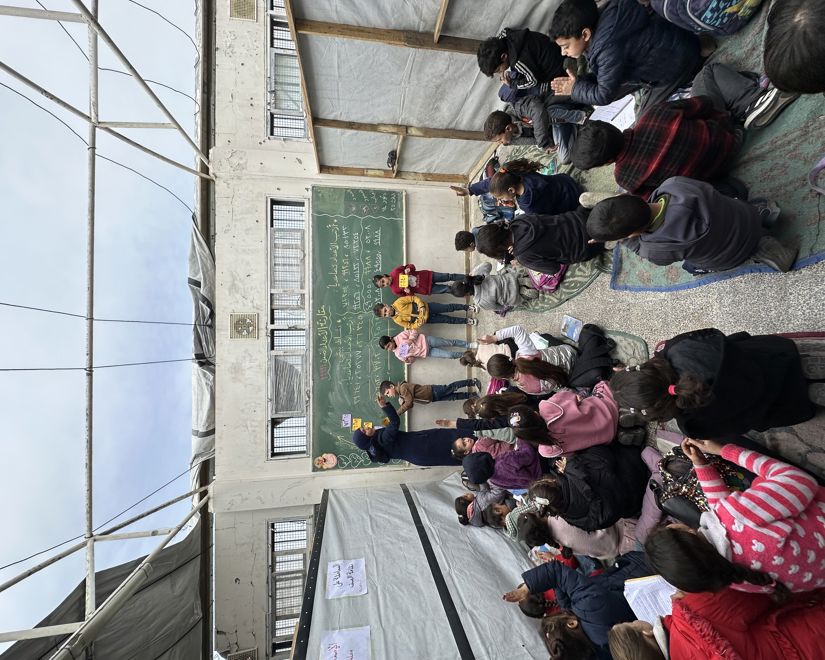
The right to education: Temporary Learning Spaces are filling up with students eager to learn.
Digital solutions that ensure continuous education
The digital learning approach developed rapidly during the COVID-19 pandemic has become a vital lifeline. More than 280 000 students are using the accredited learning modules, and even in the midst of war, 93 percent have completed their assessments online.
In 2025, UNRWA launched an intensive learning programme allowing pupils to complete two school years through three compressed learning cycles.
This is an important measure to help make up for lost learning time and offer hope for a better future. It also helps maintain a pathway back to formal education when conditions allow, while ensuring children can engage in structured, protective activities even in extremely difficult circumstances.
– These children are living through deep trauma amid the rubble, and education remains essential to restoring dignity, protection and hope, says Philippe Lazzarini, former UNRWA Commissioner‑General.
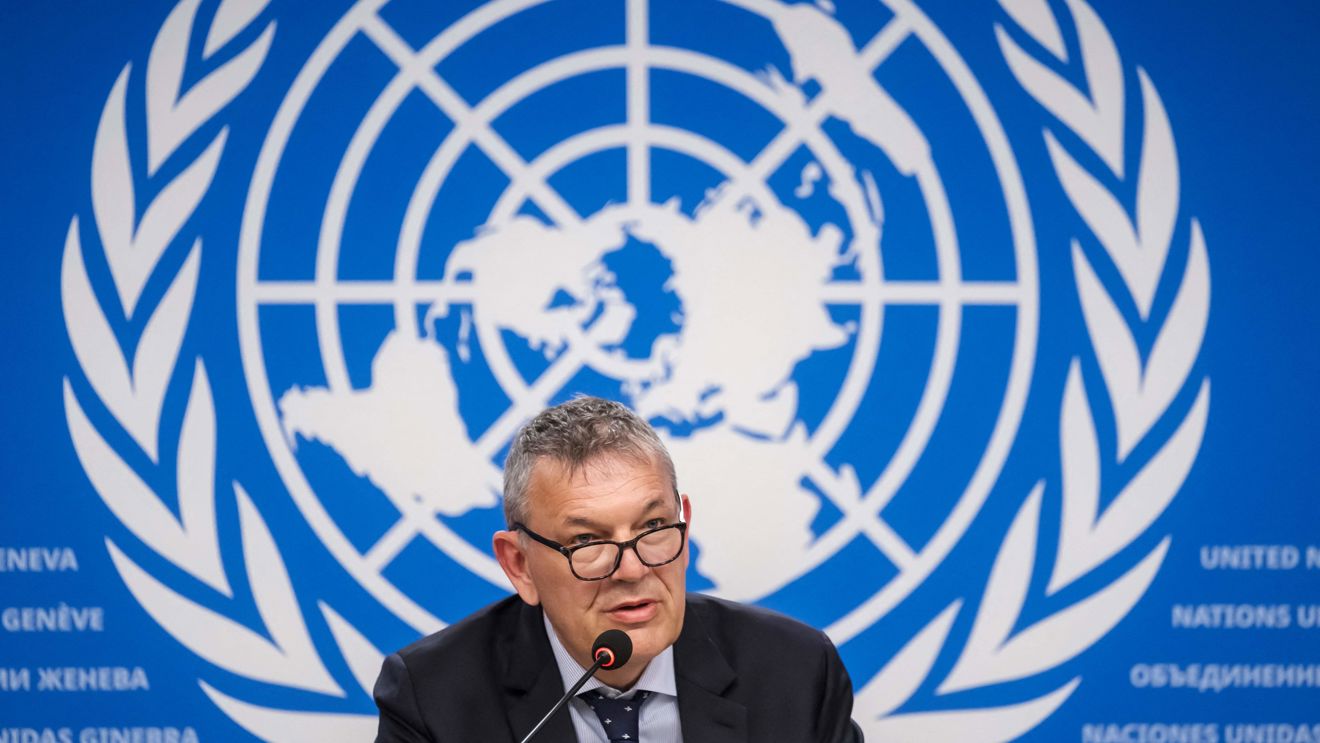
Philippe Lazzarini is the former UNRWA Commissioner‑General.
Teachers on the ground
Over the years, UNRWA has remained closely connected to Palestinian communities by providing health services, social services, education, and youth programmes.
But education has always been at the heart of its mission: Giving children and young people the opportunity to live with dignity and pursue their development.
– Literacy and education serve as an antidote to despair and trauma experienced by children in Gaza, says Lazzarini.
Teachers and counsellors are the backbone of UNRWA’s education response in the Gaza Strip, but they are carrying a double burden. They are not just educators; they are survivors.
For their own security, they are not able to give interviews.
Every single one of them has lost a home, a loved one, or a piece of their family, but they still show up to serve and to support the students to continue learning.
Professionally, teachers are performing a daily miracle in extreme conditions - damaged or repurposed school spaces, limited teaching and learning resources, and heavy workloads to sustain learning and psychosocial support through remote and temporary modalities.
Despite this, teachers continue to show up. They prepare lessons, grade homework, provide counselling and remedial support, and stay engaged with families, even when conditions are extremely difficult.
They are not just delivering lessons, but they are proving, through their own resilience, that a future is still worth building for the children in Gaza. The UNRWA education response depends on thousands of teachers who continue working despite being displaced themselves.
– If the education system collapses, an entire generation of children may lose the chance to build a future beyond conflict. This is why UNRWA’s work is so important, and why continued international support is essential to keep education going, Erik Abild says.
Norwegian support for UNRWA
As of 2026, Norad has assumed responsibility for humanitarian support to UNRWA from the Ministry of Foreign Affairs.
On 10 March 2026, Norad and UNRWA signed a two-year agreement to support Palestine refugees. In 2026, UNRWA received NOK 100 million for this work.
In the Gaza Strip, around 70 per cent of the population has refugee status and falls within UNRWA’s mandate. In total, UNRWA is responsible for meeting the needs of 5.9 million registered Palestine refugees across the occupied West Bank, including East Jerusalem, Gaza, Jordan, Lebanon and Syria.
UNRWA employs nearly 16 000 staff in Gaza and the occupied West Bank. It delivers around 40 per cent of primary healthcare services in the Gaza Strip, 30–40 per cent of water distribution, and essential sanitation services. These services help sustain local communities, even as the crisis deepens.
Education is the ultimate engine of recovery and resilience.
UNRWA's message to the world is simple and clear:
– Do not look away. Invest in the right to education today, or we will all pay the price for a lost generation tomorrow. Continued international support remains critical to preventing a lost generation.
- Read the story: Life‑saving assistance in Gaza