The needs are enormous, and it is absolutely crucial that humanitarian aid reaches people quickly.
Erik Abild
Director of the Department for Humanitarian Assistance and Comprehensive Response
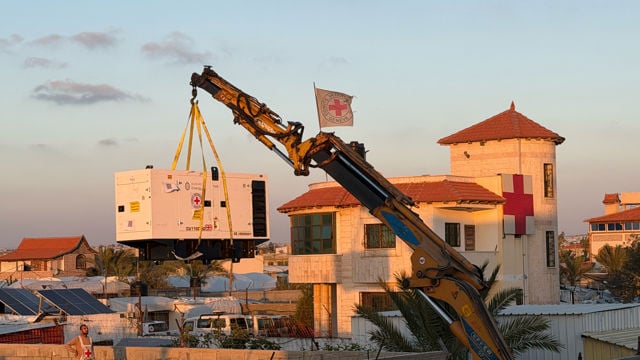
The field hospital in Rafah is operated by the International Committee of the Red Cross (ICRC) and the Palestine Red Crescent Society, with support from 15 national Red Cross and Red Crescent societies. The Norwegian Red Cross plays a central role.
More medical equipment is entering Gaza. With Norwegian support, the Red Cross is upgrading the field hospital in Rafah. The need for humanitarian assistance will remain extensive for a long time.
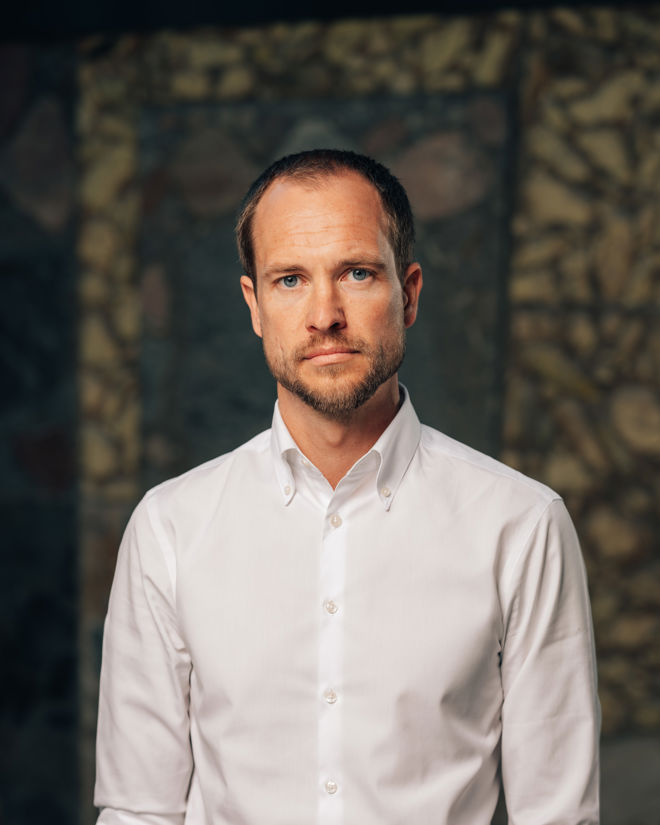
– Despite the ceasefire, many people are being killed and injured in fighting and attacks. Many of the wounded are being treated at the field hospital run by the Red Cross, says Erik Abild, Director of the Department for Humanitarian Assistance and Comprehensive Response at Norad.
The needs are enormous, and it is absolutely crucial that humanitarian aid reaches people quickly.
The field hospital in Gaza has been in operation for two years, and was originally intended as a temporary facility. It is now being expanded from 60 to 72 beds. It is operated by the International Committee of the Red Cross (ICRC) and the Palestine Red Crescent Society, with support from 15 national Red Cross and Red Crescent societies. The Norwegian Red Cross plays a central role.
Monica Thallinger is a doctor at the hospital:
– A child was brought in last week, unidentified, perhaps around 12 years old. The child was severely injured after a bomb explosion, with major injuries to the face and head. We did everything we could for more than half an hour. But we were unable to save the child. It was really heartbreaking. It affected all of us deeply to see children continue to die as consequence of this war, which we do not know when will end.
Monica Thallinger is a doctor at the field hospital in Rafah. Hear her speak about daily life as a doctor in Gaza.
The hospital has been in continuous operation since May 2024. In practice, an entirely new field hospital is now being sent in to upgrade and expand the current facility.
Norway has supported the hospital with a total of NOK 97 million since 2023. In addition, the Red Cross has contributed its own funds.
– The field hospital has helped to save many lives. Our investment in its renewal and continued operation is about responsibility both to the patients and to the healthcare personnel working under extremely difficult conditions every single day, says Grete Herlofson, Secretary General of the Norwegian Red Cross.
Since its opening, the field hospital has carried out more than 11,300 surgical procedures, more than 250,000 consultations, assisted with more than 1,200 births, and provided a comprehensive range of services including emergency medicine, child health, maternity care, physiotherapy and blood transfusions. Today, this is the only fully functioning hospital in southern Gaza, and the outpatient clinic also serves as the only primary healthcare service in the Rafah area.
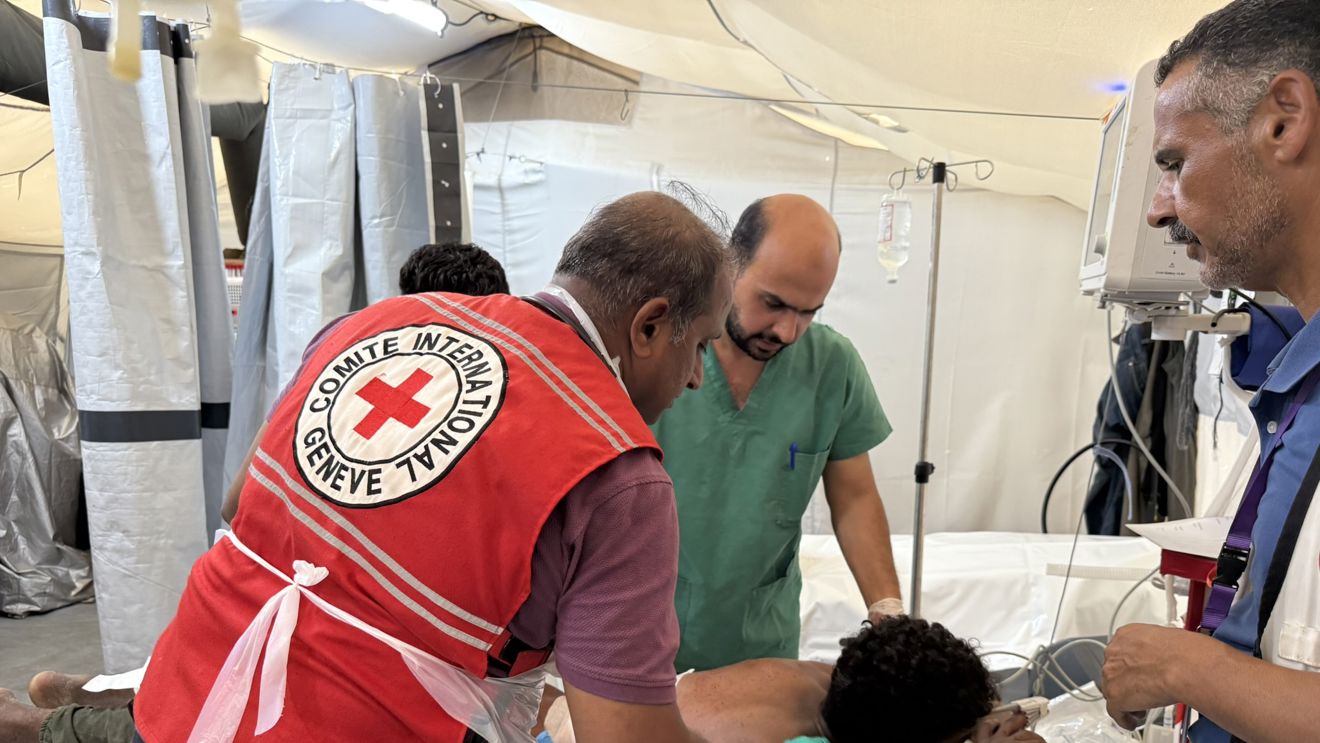
Doctors are savong lives in the Red Cross field hospital in Rafah.
Roger Alcock worked as a doctor at the hospital before and after the ceasefire. The experienced doctor has never witnessed more suffering than in Gaza. Read the article: – Hard to comprehend how badly injured the children are
After the ceasefire in autumn 2025, the number of mass casualty cases has fallen somewhat, but the need for specialised treatment, follow-up of chronic illnesses, rehabilitation and planned surgery remains great.
– The fact that fewer patients are arriving with acute war injuries does not mean the needs are any less. On the contrary, we are now seeing the consequences of a prolonged lack of healthcare. Many people are living with untreated illnesses and injuries that require long-term follow-up, says Grete Herlofson.
The rehabilitation and expansion work depends on permission to import medical equipment and supplies. In total, the upgrade comprises 25 lorries, more than 400 pallets, and over 4,000 individual components. Restrictions on humanitarian access to Gaza mean that the measures must be implemented gradually, as solutions are approved and materials become available.