Q&A – Guarantees for renewable energy investments in low- and middle-income countries
(English only)
About the guarantee scheme
1. What risks will the guarantee scheme cover?
The guarantee scheme can cover different types of risks, but will initially primarily be used to cover credit risk. Still, Norad will assess transactions according to an overarching assessment of risk (based on the context, experience, and transaction) meaning that other risks can be considered.
2. What is Norfund’s role?
Norfund will support with risk assessments, which includes due diligence and the pricing of guarantee premiums.
3.There are three main objectives for the guarantee scheme. Do they all need to be met? Will they each be assigned equal weighting when you are evaluating the different indicators?
All three main objectives will need to be met. The weighting will depend on the circumstances and type of project, as well as an overall consideration of the total composition of the portfolio.
4. What metrics will be used to evaluate the success of projects funded through this scheme?
Metrics will be finalised in the agreements, but likely to include the metrics that are included in the call for proposals.
5. What cross-cutting issues have to be considered and how will you consider the cross-cutting issues?
- The cross-cutting issues that need to be considered include human rights, gender equality, climate change, nature, and anti-corruption. Each issue’s consideration will depend on the project/portfolios.
- When applying for a guarantee through the call for proposals, documentation of underlying systems for considering cross-cutting issues will need to be provided. This could include a risk management strategy or other documentation outlining measures for risk mitigation and internal controls.
- We will review the relevant organisations’ systems and procedures for risks and security to ensure that cross-cutting issues are addressed and that relevant mitigation measures are taken into account.
Who can apply and what qualifies?
6. Who can apply? Can countries or sub-nationals apply?
The call for proposals is open for applications from financial institutions (such as banks, funds, guarantee institutions and insurance companies), as well as other entities. The Guarantee Beneficiary may be a local or international entity irrespective of country of origin
Support for countries will go through MDBs (and are not covered by this call for proposals) and we are currently unable to issue guarantees to sub-nationals.
7. Would you accept submissions from a consortium of institutions (e.g., a private company and commercial bank)?
Yes, but please clearly outline roles and contributions of each organisation. Please note the eligibility criteria, including that the guarantee beneficiary has to be a legally established company.
8. Can non-profit organisations partner with a financial institution to apply for this program?
Applicants must fulfil the criteria of the call. Depending upon the role of the NGO is supposed to take in the transaction, an application may be considered.
9. Can a microfinance institution apply? Would you consider a portfolio of smaller transactions?
Yes, but please note the indicative minimum guarantee amount of 200m NOK, along with alignment of the other eligibility and assessment criteria.
We will also prioritise applications according to their ability to impact the objectives of the guarantee scheme.
10. Do there have to be defined/identified projects at the outset of the application or is it possible to apply on the basis of a hypothetical portfolio that it is expected to be issued in the future?
It is possible to apply based on a prospective portfolio, without it being 100% predefined. However, it will then be important to provide information that underbuilds the probability of the applicant’s ability to build a portfolio within a reasonable timeframe, so the more identified projects provided, the better. It is important for Norad that the (limited) guarantee facility gets utilises for its purpose and is not bound up without being effective.
Please note that we will prioritise applications with financially mature projects. Planned financial close should be 6–12 months from the application date.
11. Can existing projects qualify for on-lending through this scheme?
Existing projects may only be considered if additional and new funding will be catalysed as a result (assuming alignment with the other criteria).
12. Will you consider, transactions where we already have guarantor?
We can consider such transactions, but please note that we cannot replace a guarantor and that we have to be additional (according to the OECD definition), implying that we should support investments that would not have otherwise taken place.
13. Does the submission for renewable energy projects need to focus on a single project, or can multiple projects be combined into one proposal? How do you define a portfolio?
Both single and multiple projects can be considered. We consider portfolios as using the same financing source (under a bank). A portfolio is not a combination of projects within an application.
Geographical and sectoral scope
14. Can you explain the 30% maximum limit to low-income countries?
This is a politically determined risk mitigating measure. Norad aims to provide guarantees in low-income countries up to the maximum limit at 30%, which we are aiming to fulfil.
Projects that demonstrate a strong potential to reduce energy poverty, particularly in Sub-Saharan Africa, will be given special consideration.
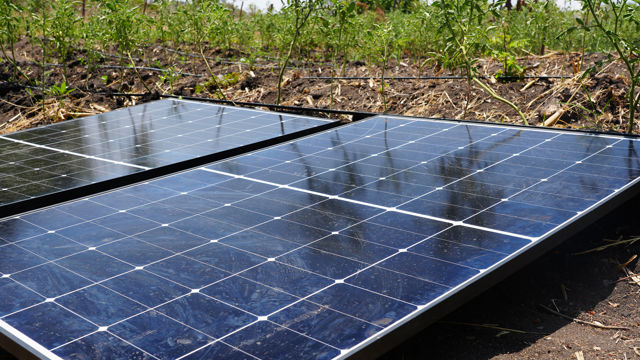
15. Can other projects (e.g. agriculture) with renewable energy components, such as solar, be eligible for a guarantee from Norad?
The guarantee scheme is only for renewable energy - it is possible to apply for a guarantee that will cover the renewable energy component of a wider project e.g. of an agriculture project.
Any project would still need to be aligned with the eligibility criteria (such as the indicative minimum guarantee amount of 200m NOK).
16. Does electric mobility qualify for this facility?
Electricity mobility infrastructure is within scope. Any investments for the increased consumption of cars are currently outside of scope of our guarantee scheme.
17. Does the rehabilitation of energy projects come under the guarantee scheme?
The rehabilitation of existing projects is within scope, but please note that we will prioritise applications according to mobilised new investment, impact, and additionality.
Pricing, risk-sharing, and co-guarantors
18. Can you please explain the 200m NOK minimum guarantee amount?
- The 200m NOK is an indicative minimum This can cover both one project and a portfolio.
- Applications for investments requiring less than 200m NOK in guarantee coverage from Norad can be considered, but please note that any provision of guarantees to such projects will be on exception
- Such applications will need to show exceptional value against the criteria of additionality and potential for impact (among the other formal and assessment criteria outlined in the call for proposals). This should be clearly outlined in the application.
19. If the minimum guarantee is 200m NOK and Norad normally covering 50%, does it mean that the project needs to be minimum 400m NOK then?
The indicative guarantee amount of 200m refers to the part that Norad will cover.
This means that the project/portfolio needs to require a risk cover of 400m NOK or above (equity would come in addition)
20. What is the maximum guarantee amount?
The total amount available for issuance under this call is up to NOK 1 billion, out of a total guarantee frame for private sector of NOK 1,750 billion.
We will limit the considerations of applications above 500m NOK, as higher amounts will reduce the ability to support several projects, and there is a need for diversification of risk.
21. Can this guarantee be blended with green bonds?
Any structure including green bonds would need to be further analysed.
22. Are there requirements to deploy the guarantee within a set time or according to a specific proportion per year?
When a guarantee is issued there will be a tentative agreed plan for the deployment of the guarantee. This will differ, depending on the transaction and structure.
23. What is meant by sharing the risk with a professional entity?
- This means that the risk must be shared with a co-guarantor or the guarantee beneficiary. Norad can share risk with multiple professional entities.
- A professional entity is a party providing guarantees or offer other measures for risk participation as part of their business model, e.g. a bank, a financial institution, a state/governmentally owned entity (e.g. DFIs) or other well-suited institutions preferably regulated by financial authorities.
- Please note that Norad is unfortunately unable to support in connecting co-guarantors to guarantee beneficiaries
24. Is it fair to say that the guarantees will provide pari passu risk sharing i.e. they will not be first loss guarantees?
- Our preference is to provide pro rata pari passu guarantees.
- In exceptional cases, the Guarantee Scheme may consider taking a first-loss position alone (before other risk-takers absorb losses), for a limited amount. We recommend that applicants consult with us before applying for a first-loss structure where Norad stands alone. Our primary recommendation is a risk-sharing model with a co-guarantor
- We define “first loss” as guarantees where the Norwegian Government is not pari passu with one or more of the other risktakers in the transaction.
25. How does Norad envision pricing to happen?
Norfund will undertake a risk assessment which will inform the price of the guarantee premiums. This is a two-step process that will take place after the application has progressed for further review. It entails 1) an initial assessment which will inform an indicative price, and 2) a final assessment confirming a final price of the guarantee premium. The pricing of the guarantee will reflect the risk covered and an administration fee.
26. What can the subsidies cover and what is the process for applying for a subsidy?
- Applicants can apply for subsidies to cover parts of the guarantee premium and administrative costs, and these will be awarded according to the demonstrated need, potential for impact and additionality.
- This will be through a separate application process, as this constitutes a grant. See the call for proposals for further details: https://grants.mfa.no/#call/4261/main
- Applicants should outline whether they are likely to be dependent on a subsidy in the application.
27. How much can we expect the due diligence costs to be, and who will be responsible for bearing these costs? Will the costs for external consultants be covered by Norad or the applicant, and how will the size of the transaction influence this?
The costs for due diligence will be carried by the applicant/guarantee beneficiary. These costs will cover the external consultants undertaking due diligence and will vary according to the size of the transaction. Indicative costs will be outlined at the start of the due diligence process.
28. Who will pay the guarantee premium - beneficiary or borrower?
The guarantee premium will be charged to the guarantee beneficiary
29. What is the process for calling on the guarantee? Do all other possible alternatives (arbitration, etc.) need to have been exhausted before calling on the guarantee?
Process for calling on the guarantee will depend on the overall structure of the agreement and will be decided during negotiations.
Depending on the project/portfolio irrevocable on-demand guarantees may be issued.
The application process
30. We’re a newly established organisation and don’t have access to audited accounts. Can we still apply?
Yes, but please outline this as a reason in the application form.
31. How long will it take to process an application?
The total processing timeline will be determined by internal processes, due diligence, risk assessments, and any negotiations. Norad will do its best to process applications as efficiently as possible and be transparent in the process.
32. From what year should we submit the audited reports?
Please submit the latest audited reports that is available.
33. When will the risk assessment be undertaken?
The main risk assessment will take place after the application is progressed. This due diligence will incur costs to the applicant so pre-acceptance of this is required.
34. Do we need to have secured co-guarantors as part of the application?
Having secured one or several co-guarantors will be an essential criterion that applicants will be evaluated against. Please include proof of a co-guarantor along with the application (such as a letter of intent).
35. Are there any limits assigned to financial institutions or per transaction?
There are no limits (related to amount or number of applications), so multiple applications are allowed. However, single point exposure in the portfolio will be taken into consideration
Interactions with Norad funding
36. Apart from guarantees, do you also offer grants?
The guarantee scheme covers only guarantees and does not offer grants.
37. Can you receive other grants from Norad (such as the Enterprise Development Scheme), while still being eligible for this guarantee scheme?
Yes, organisations that already receive funding from Norad are still eligible to receive guarantees from Norad.
38. Can Norad guarantee early-stage activities like pre-feasibility studies or partnership development?
Norad provides grants for capacity building and technical assistance both directly to companies and through partners. Please see the following link for Norad’s calls for proposals: https://www.norad.no/en/for-partners/guides-and-tools/calls-for-proposals2/
Norad’s Renewable Energy for Development Scheme, also offers grants for up to 50% of the costs described in the question. More information here: Norad's enterprise development scheme for renewable energy | Norad.no
Please reach out to guarantees@norad.no if there are any further questions.