This is what Norwegian governance assistance supports
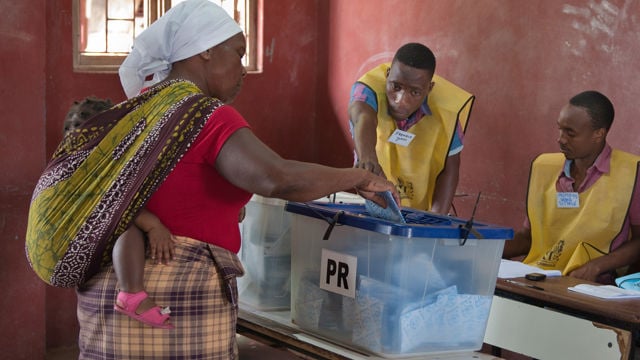
Norwegian support for governance and public institutions in low-income countries focuses on several areas.
What does the support cover?
Norway supports developing countries’ ability to take ownership of their own development. To do so, countries need to increase their domestic revenues, manage public finances more effectively, and strengthen systems such as national registers and statistics so that authorities can prioritise resources and make informed decisions. Today, developing countries lose much-needed resources through corruption, illicit financial flows and tax evasion.
Norwegian support for governance helps combat these leakages. When developing countries strengthen their governance and public finance systems, this lays the foundation for national private sector development and increased access to capital. The effort emphasises an integrated approach to gender equality in public financial management reforms, as well as support for necessary digitalisation processes in public institutions in developing countries.
Combating corruption, supporting civil society and journalists who hold authorities accountable, and strengthening systems for financial transparency are central elements of the effort. These measures are essential to ensure that resources are used effectively and that trust in society is strengthened.
Why is this important?
Dramatic cuts in development assistance by many countries mean that new approaches are needed to how low-income countries can finance essential welfare services. In the long term, the most economically sustainable source of financing is countries’ own tax revenues.
Research shows that when countries increase their tax revenues, they also increase investments in key welfare services such as health and education. At the same time, many countries face enormous challenges related to climate adaptation, rising debt burdens, and the need to invest in everything from infrastructure to digitalisation.
By supporting core state functions such as public institutions, Norwegian aid can be catalytic in triggering large increases in tax revenues that enable public investments, or in strengthening macroeconomic management that can give countries access to more favourable borrowing terms.
To better combat illicit financial flows and tax evasion, developing countries need to strengthen their national systems – but also international standards that are better adapted to their realities and needs. Norway supports initiatives that have strengthened developing countries’ representation in global forums for shaping tax norms through support to the OECD, the UN and ATAF – the African regional organisation for tax administrations. Norway has also supported civil society partners’ work on developing the resolution on gender equality and anti-corruption under the UN Convention against Corruption (UNCAC), and on strengthening the UN Secretariat to facilitate negotiations on a UN convention for international tax cooperation.
Strengthening countries’ ability to mobilise domestic resources
Norwegian development assistance is, among others, channelled through multilateral organisations such as the IMF, the World Bank, the UN and the OECD, but also through direct cooperation between Norway and developing countries. Norwegian experts have contributed to increased tax revenues through several projects. The Norwegian Tax Administration and Statistics Norway work directly with counterpart institutions in Rwanda, Tanzania, Zanzibar, Ghana, and Kenya. Norway also supports the authorities in Mozambique in managing revenues from natural gas, which can generate substantial income for the country but also poses major governance challenges.
Norway supports several international initiatives, such as the International Consortium of Investigative Journalists (ICIJ), known for the Panama Papers revelations on corruption, tax evasion, and the use of tax havens. Norway also supports several civil society organisations, such as Tax Justice Africa and Global Witness, which are crucial for holding authorities accountable for the use of tax revenues and are often key drivers of reforms for greater transparency and fairer tax rules.
Examples of results:
- Norway supports the World Bank’s Global Tax Program, which from 2018 to 2024 strengthened tax systems in 53 developing countries and contributed to more than USD 250 million in increased tax revenues in Africa.
- Through the Global Mining Tax Initiative, the International Institute for Sustainable Development (IISD) achieved USD 1.39 billion in additional revenues between 2019 and 2023 in resource-rich countries such as Zambia and the Democratic Republic of the Congo.
- With Norway’s support to the African Tax Administration Forum (ATAF), the organisation supported 24 African countries in 2024, delivered 17 training programmes to 2,214 participants from 44 countries, and contributed to USD 193.6 million in additional tax revenues.
- Norway supports both UNDP and the OECD in the “Tax Inspectors Without Borders” initiative, which since its launch in 2015 has assisted 70 developing countries in generating more than USD 2.40 billion in additional tax revenues.
Public financial management
Open and accountable public financial management is essential for government revenues to translate into concrete improvements in welfare services and critical investments in infrastructure. Norway—through both Norad and agreements at Norwegian embassies—cooperates with international actors such as the World Bank, the IMF and INTOSAI, as well as civil society organisations, to strengthen fiscal policy and financial management, with direct results in many countries.
Examples of results:
- Management of natural gas revenues in Mozambique: The cooperation between Norway and Mozambique has resulted in a legal framework, the establishment of a national petroleum fund, and improved revenue forecasting models for natural gas income. The project has strengthened transparency and accountability through public reporting of LNG revenues.
- Strengthened financial governance in Somalia: Norwegian support has contributed to improved public financial management, strengthened audit capacity, and increased budget transparency in Somalia. Annual audits of government accounts are now conducted and published, and electronic payment systems have replaced cash transactions.
Strengthening national statistical systems
Norway works to strengthen national statistical systems in developing countries, including through cooperation with Statistics Norway (SSB), which has supported counterpart institutions since 1994. SSB has cooperation projects such as “Gender Equality for Development” (Lifu) together with Bufdir, and has supported Uganda, Nepal, Ethiopia, and Colombia in developing gender statistics.
Norway supports international actors such as the UN, the IMF, and the World Bank, as well as global initiatives such as Power of Data, a data partnership operating in 15 countries in Africa, Asia, and Latin America. The UN Statistical Commission and the United Nations Statistical Division (UNSD) develop international statistical standards and methodologies.
The need for better data was strongly highlighted at the Fourth International Conference on Financing for Development (FfD4) in Seville in 2025. The Seville Platform for Action on Data was launched at the conference, with Norway as one of the driving forces. The aim is to strengthen national data systems through effective financing, investments, and political ownership, so that more countries have access to reliable statistics to achieve the Sustainable Development Goals. Read more about FfD4 here.
Anti-corruption and illicit financial flows
Corruption and illicit financial flows undermine development and public trust, and drain resources that could otherwise be invested in key sectors such as health, education, climate adaptation, and infrastructure.
Norway’s anti-corruption efforts are based on the UN Convention against Corruption, the only universal and legally binding framework in this field. The work includes increasing transparency around ownership and financial interests. Norway has contributed to the development and adoption of the UN’s first resolution linking gender equality and anti-corruption under UNCAC. Through support to civil society and international networks, Norway promotes anti-corruption measures that also take women’s rights and gender equality into account in the fight against economic crime.
Corruption often arises where boundaries between the public and private sectors are unclear and where lack of transparency makes it easier to conceal illegal transactions and ownership. Norway therefore prioritises support for measures that increase transparency in public procurement, corporate structures, and capital flows. Investments in openness and accountability are crucial to preventing and investigating economic crime.
Norway emphasises cooperation between different actors and institutions, and the integration of anti-corruption efforts into sector programmes. Much of this work is carried out in partnership with international organisations such as UNODC, the Open Contracting Partnership and Open Ownership, as well as through support to global networks and knowledge development.
Examples of results:
- Through Norwegian support from 2020–2024, the Corruption Hunter Network has contributed to increased cooperation and experience-sharing between investigators, prosecutors, and tax authorities in developing countries.
- With Norwegian support, the OECD’s work against corruption and bribery strengthened knowledge and measures to combat corruption and illicit financial flows in 2024 and promoted follow-up of the OECD Anti-Bribery Convention and international cooperation through the G7, G20 and the UN.
- Norway supports ICAR’s work to strengthen anti-corruption efforts and asset recovery. In 2024, ICAR provided assistance to countries such as Mozambique, Peru, Malawi, Zambia, and Tanzania, contributing to the recovery of more than CHF 48 million.