Over time, we have built up mutual trust, which makes it possible to invest commercially while ensuring that the local community, nature and wildlife all benefit.
Svein Wilhelmsen
Founder of Saruni Basecamp Foundation
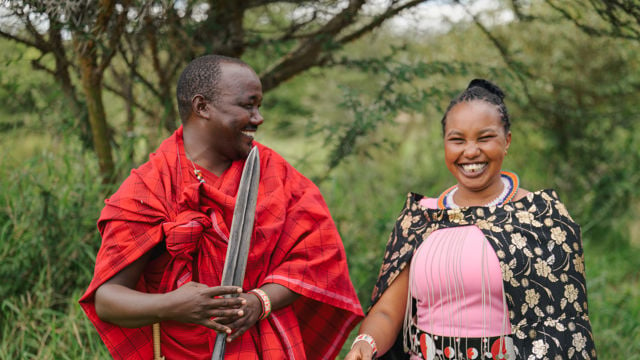
Dama Koshal and Kissami Saruni are local safari guides in the Masai Mara in Kenya.
Nature conservation, job creation, gender equality and improved living conditions for both animals and people – all at the same time. On the savannah in Kenya, the Saruni Basecamp Foundation is investing in sustainable tourism, with support from Norwegian development assistance and private investors, on the terms of the local population.
– I wake up at five every morning and smile. I look forward to going to work, says 25-year-old Dama Koshal.
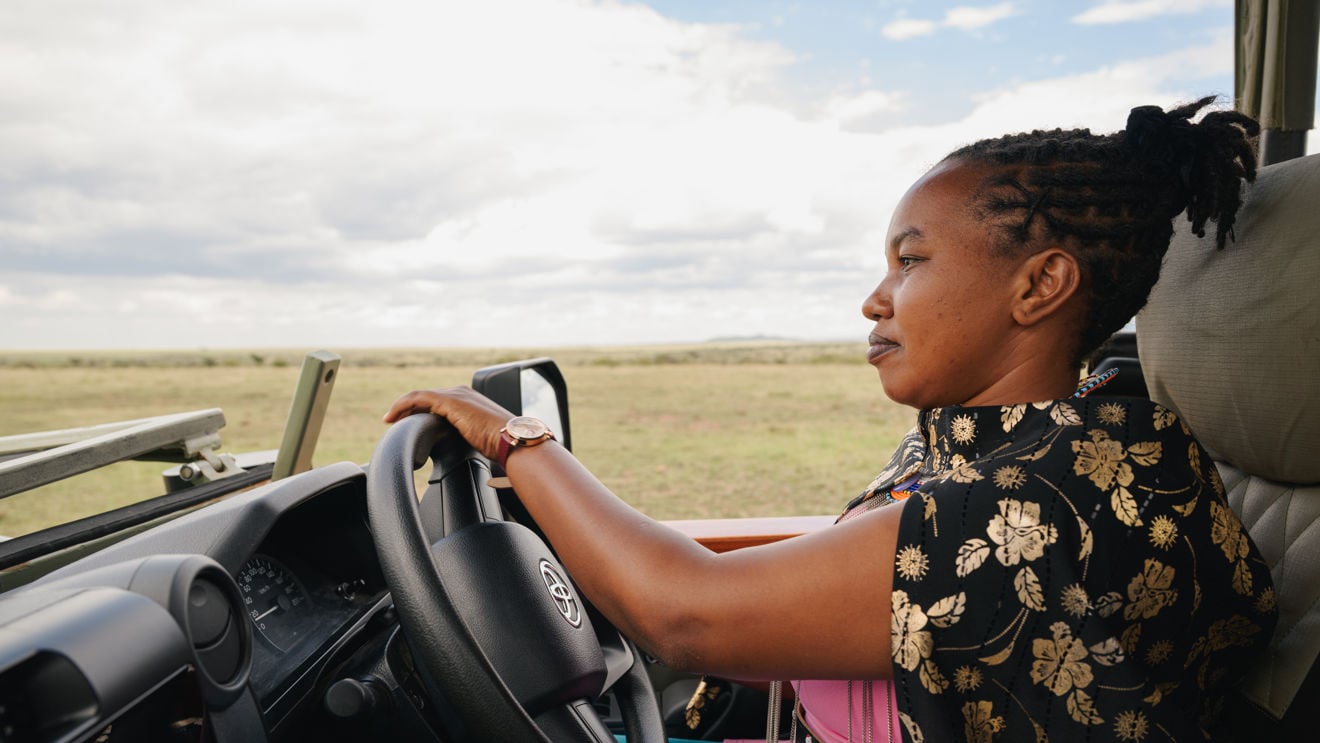
Dama Koshal, 25, loves her job as a safari guide and is happy to help protect nature and wildlife through her work for Saruni Basecamp.
As a safari guide, nature is her office. She grew up in this environment and knows every stone, every bush and, not least, all the wild animals on the savannah.
– The first thing I think about when I wake up is where I’m going to drive and what nature might have in store today. You never know for certain what you’ll see, because there are no fences here. This isn’t a zoo. That’s what makes my job so exciting, says the young guide.
Confidently, she manoeuvres an open Toyota Land Cruiser with room for 10–12 safari tourists, pointing things out, drawing and explaining what is happening on the savannah. She knows the rhythms and behaviour of the elephants, giraffes and lions.
The lions in the neighbourhood even have their own names, as if they were members of the family.
– I love my job, and I can tell you that this is no longer a job just for men. Many people in the local community are impressed because we have shown them that «yes, we can!», Dama laughs.
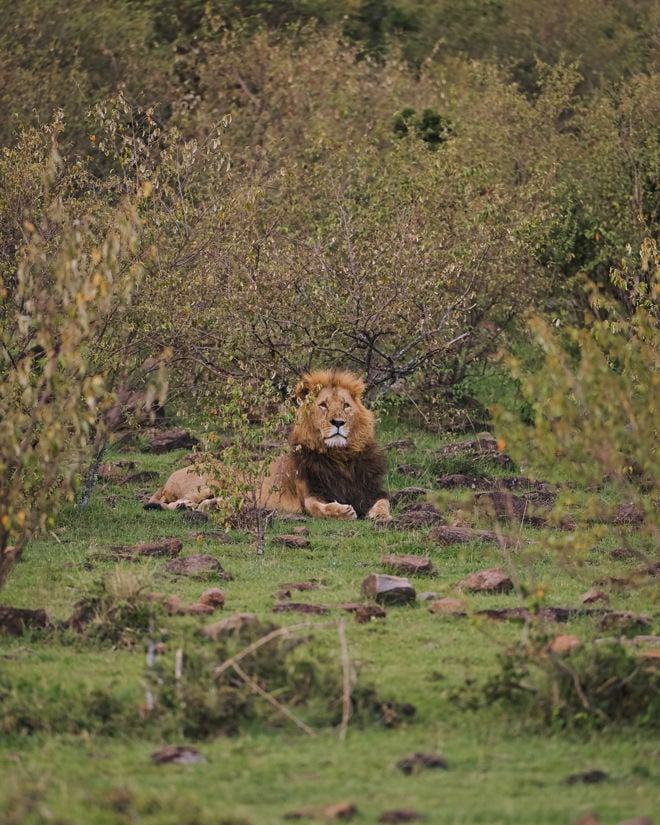
Visitors to Naboisho Conservancy can see lions, giraffes, elephants, antelopes and more.
We are in the Masai Mara, on the savannah in south-western Kenya, at a small tented camp offering comfortable accommodation, local food and the feeling of being at one with the wilderness. People from all over the world come here to experience one of the most unique natural areas on the planet.
– Our aim is to protect wildlife while contributing to development in the local community. I am very proud of what we have achieved here, says Dorcas Awino.
Dorcas Awino is the manager of Basecamp Wilderness, one of thirteen safari camps established and owned by Saruni Basecamp.
The message on her T-shirt is simple and clear: «People and nature».
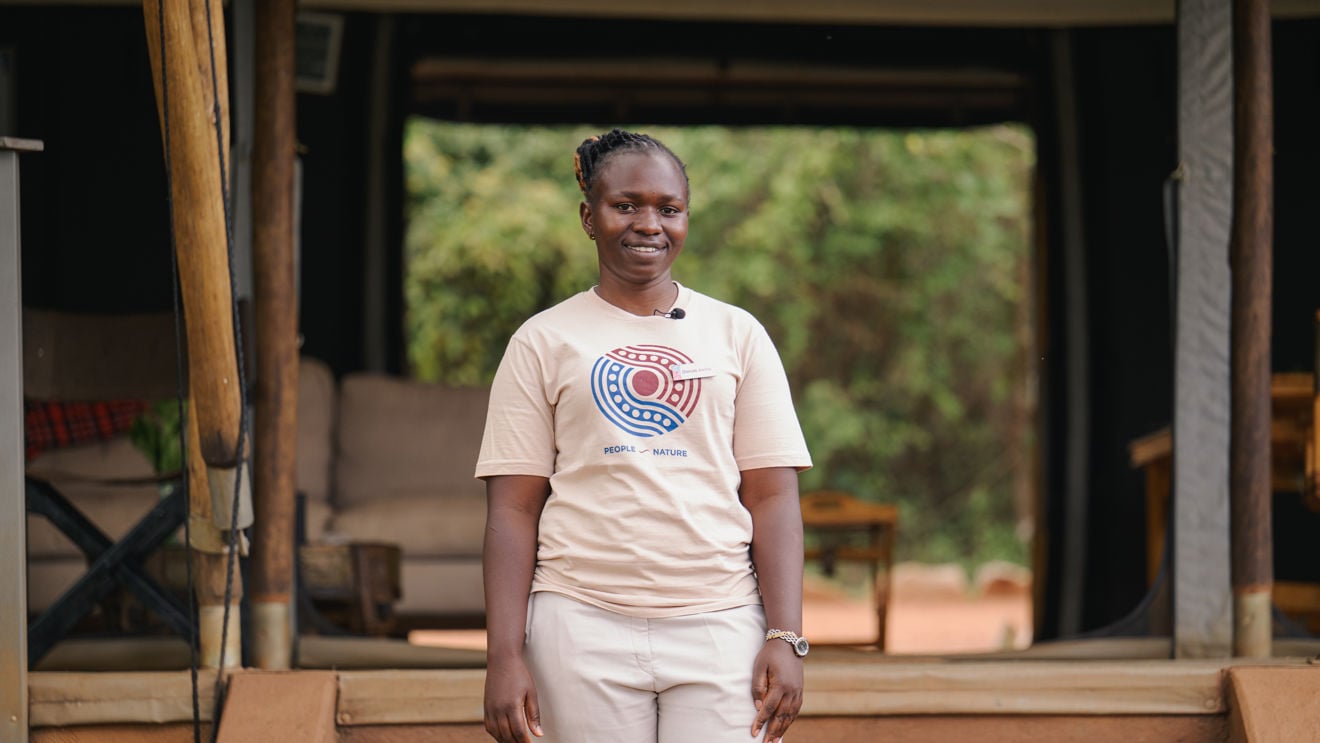
Dorcas Awino, manager of Basecamp Wilderness, one of thirteen safari camps established by Saruni Basecamp Foundation, which receives Norwegian support.
– We look after wildlife, protect nature and employ people from the local community. If you visit one of our camps, 87 per cent of the employees come from the local community, says Sawino.
It has not always been this way in Kenya’s tourism industry. Previously, most safari operations were owned, run and guided by outsiders. Local people were little more than part of the scenery and received barely a fraction of the income generated by tourism.
Now, local Masai people are taking the lead, working closely with tourism investors to promote sustainable tourism.
– In the past, we knew little about tourism and the opportunities it could offer the local community. But now many young people have received an education and found work on the savannah. Families who keep livestock earn income by selling milk to the tourist camps. At the same time, nature is better protected, says 25-year-old Kissami Saruni, who also works as a safari guide.
Saruni Basecamp Foundation works to protect nature, wildlife and ecosystems through responsible, locally led tourism. Its work is based on long-term partnerships with local communities, where conservation, sustainable tourism and local value creation go hand in hand.
– Some of the world’s richest populations of large mammals are found here. At the same time, the area is under severe pressure from population growth, climate change and land fragmentation. If the wildlife and nature here are destroyed, they are irreplaceable, says Svein Wilhelmsen, founder of Saruni Basecamp Foundation and Saruni Basecamp.
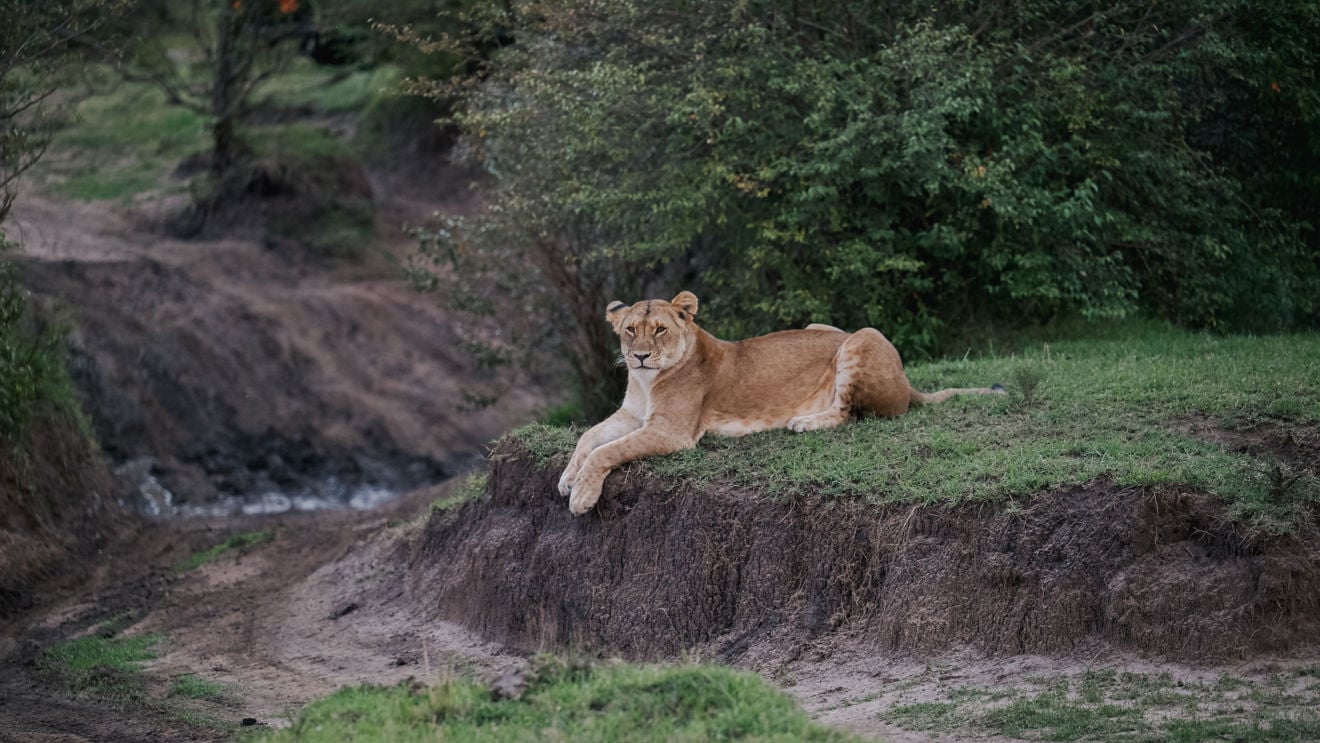
– There is no going back afterwards and saying «lets get it all back!»
With support from Norwegian private investors, Wilhelmsen launched an extensive project in 1997. Its aim was to protect one of the world’s most unique ecosystems while creating new opportunities for the people who live there. Norad and Norfund joined the initiative with support in 2011.
Svein Wilhelmsen founded both Saruni Basecamp Foundation, a non-profit foundation, and Saruni Basecamp (formerly Basecamp Explorer), the commercial part of the operation.
Tourism contributes to local jobs and income while helping to preserve culture, traditions and ways of life, including the seasonal nomadic livestock farming practised by the Masai and Samburu communities.
– One important reason why this model works is that it is based on local knowledge and local ownership. The local community are the most important investors, Wilhelmsen emphasises.
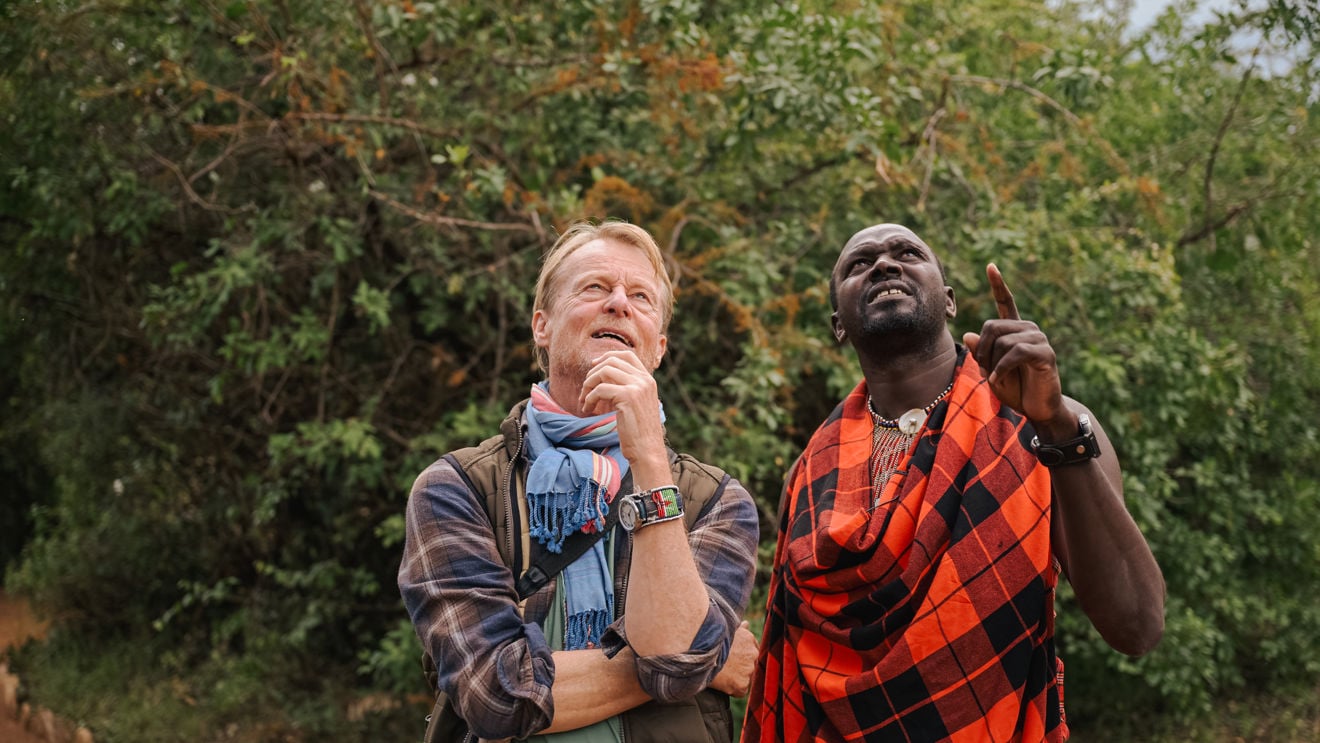
Svein Wilhelmsen, founder of Saruni Basecamp and Saruni Basecamp Foundation, with guide William Tinka.
– The key question is: What is the local community’s vision? What do they themselves want? You cannot impose this project on people. Without local roots and local ownership, you will never succeed.
Livestock farming and tourism are the most important industries in the Masai Mara. When large areas of land were privatised a few years ago, many local landowners began putting up fences around their properties to protect their own grazing areas.
This restricted the natural migration routes of wild animals, threatening the ecosystem and the natural environment on which tourism depends.
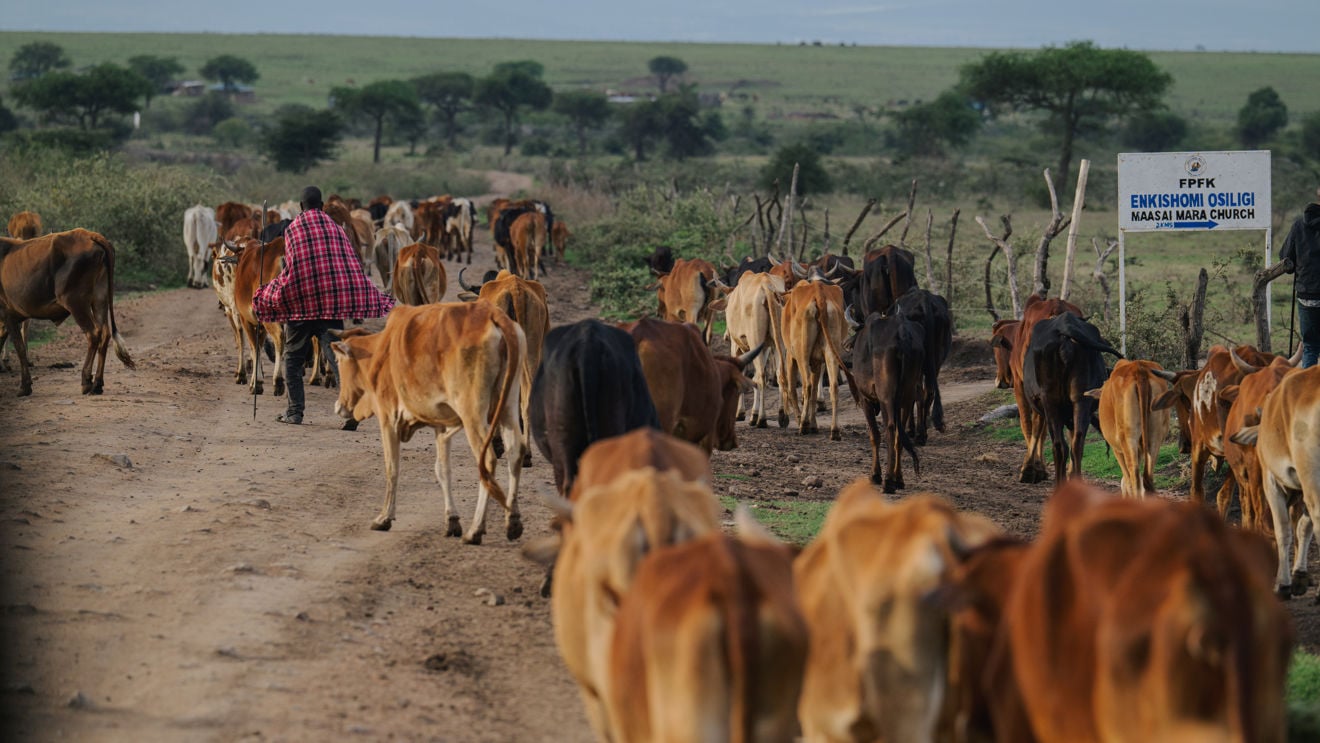
Livestock farming and tourism are the most important industries in the Masai Mara. In Naboisho Conservancy, people can make a living from both without the different interests coming into conflict.
With this in mind, Svein Wilhelmsen initiated a model in which Masai families who own land and livestock voluntarily lease out their land while continuing to live nearby, with wildlife migration corridors maintained between settlements.
Instead of fencing off or developing each plot of land and property, areas are kept open and managed collectively – for the benefit of people, livestock and wildlife alike.
Families receive a regular income through long-term lease agreements, the area becomes attractive for sustainable tourism, and people in the local community gain employment.
This approach is known as «Community Wildlife Conservancies».
Mara Naboisho Conservancy and the emerging Pardamat Community Conservancy are leading examples of this model, in which the sale of tourism products helps finance both conservation and local development.
– The local community clearly say that they want to preserve this natural area and protect the wildlife that is part of their identity and culture. It is this vision that enables us to play a role as a partner and supporter, says the founder of Saruni Basecamp Foundation.
Norad is one of the partners in a broader collaboration involving local communities, the foundation and private investors, including several well-known Norwegian businesses.
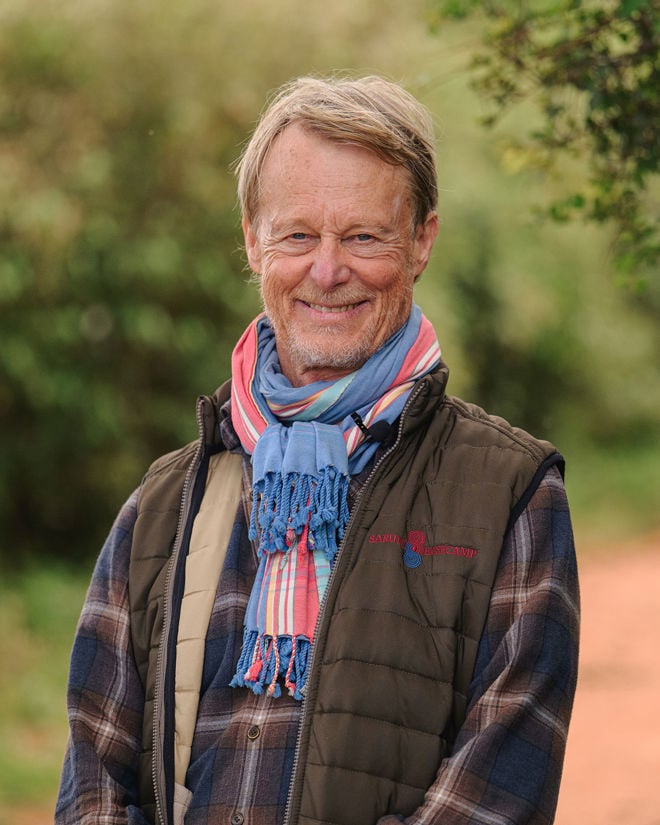
Over time, we have built up mutual trust, which makes it possible to invest commercially while ensuring that the local community, nature and wildlife all benefit.
Since 2018, Norad has supported Saruni Basecamp Foundation with more than NOK 13 million. Anders Aabo is a senior adviser in Norad’s Climate, Nature and Business Department and has followed the project closely.
– Saruni Basecamp and Svein Wilhelmsen have truly been pioneers in developing innovative models that preserve traditional ways of life while protecting nature. They have shown how people, livestock and wild animals can live side by side on the same land. These are exactly the kinds of solutions we need more of, where conservation and economic development go hand in hand, he says.
The weakness of earlier conservation and safari tourism models was that local people had to move further away from the land they leased to tourism operators. Under the new model, they can remain in the surrounding area and continue livestock farming, while receiving income from leasing their land and accessing employment opportunities in the tourism industry, Aabo explains.
– The local families who own the land are well organised, and the local community is represented on the boards and in the management of the conservation areas. Local people are in the driving seat throughout and ultimately have the decision-making authority, the Norad adviser emphasises.
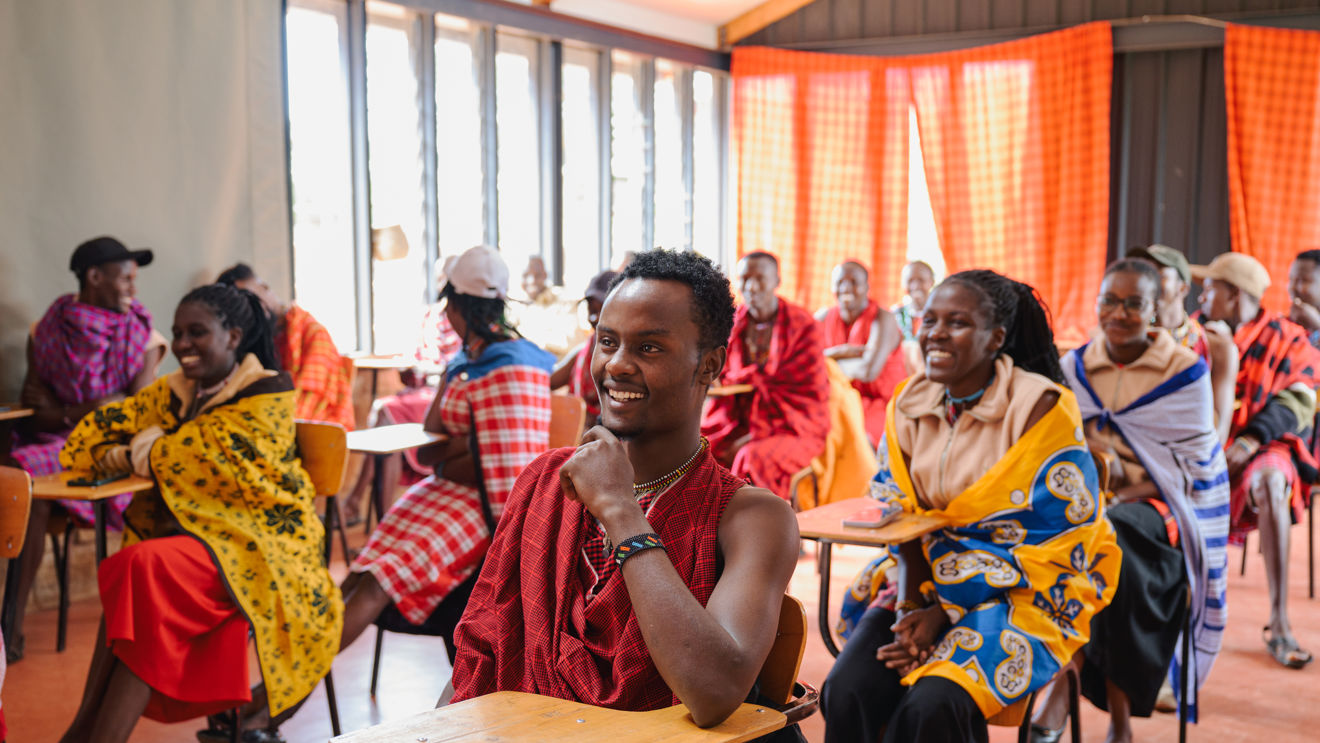
Learning about natural resource management, wildlife conservation and how to become a good safari guide at the Wildlife Tourism College of Masai Mara.
Youth unemployment is a major challenge in the region. Education and job creation are therefore essential parts of the Norwegian-supported project. There is a strong focus on local recruitment and vocational training.
At the Wildlife Tourism College of Masai Mara, young Masai people are training to become safari guides, responsible conservation managers and service-oriented managers and employees in the tourism industry.
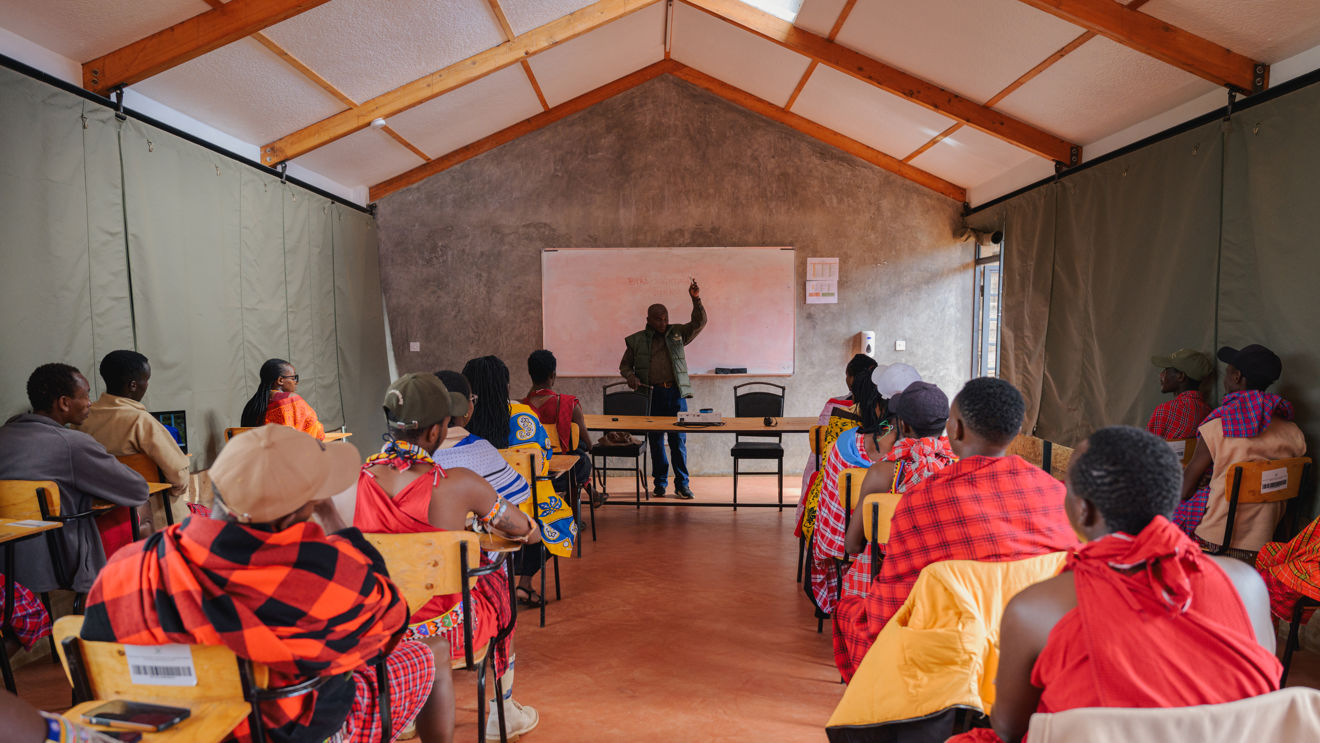
Students at the Wildlife Tourism College of Masai Mara take responsibility for protecting both nature and their culture.
– The college gives young people a route into working life. It provides an income for them and their families, many of whom own land in the conservation areas. When they see that conservation can provide local families with a livelihood and an alternative to farming and livestock keeping, it also strengthens support for protecting nature, explains principal Morris Olanabala.
Sharon Saiton is 20 years old and a student at the college. Like the other students, she wears colourful cloths draped around her body, with beautiful and elaborate beaded jewellery around her neck.
Her goal is to become a guide.
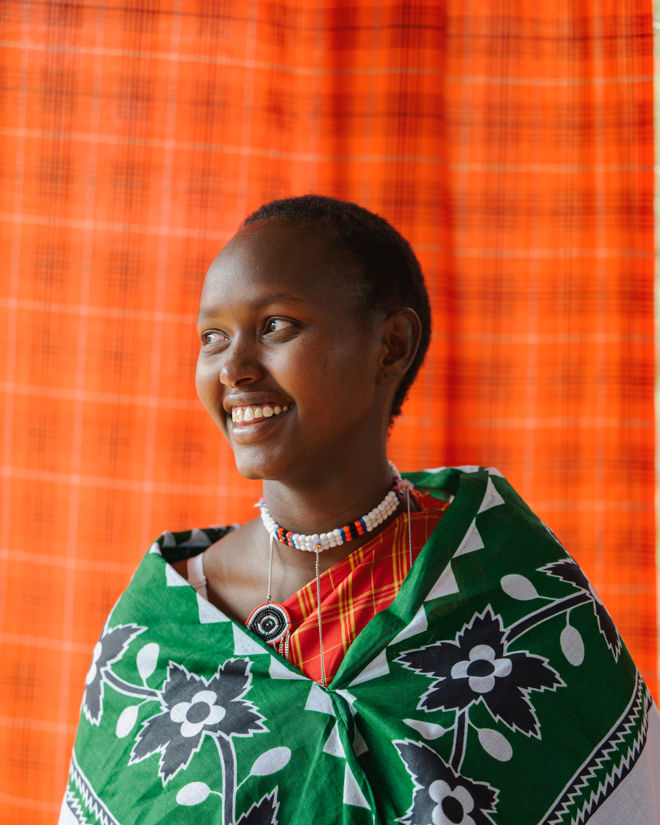
I want to become a guide because I have a strong passion for and love of nature. I want to be close to it every day and spend as much time there as possible.
As well as enjoying nature, Sharon feels a particular sense of responsibility.
– The most important thing I have learnt is that conservation starts with me. At the same time, I have a responsibility to show others in the local community what we need to protect and why it is so important, she adds.
Gender equality is also an important principle for Saruni Basecamp Foundation. And it is about more than fine words. For many women in the area, the project has opened doors that were previously closed. At the tourist lodges and in the central administration, the aim is for half of all managers to be women – a target that has now been achieved.
Dorca Sawino at Basecamp Wilderness is one of them. She loves her job, but says the road to getting there has not always been easy.
– I have faced many challenges. The biggest have been attitudes and entrenched gender stereotypes. Women's leadership is often undervalued, particularly when you are young. When I arrived here, people looked at me and asked: ‘Are you really the one who is going to lead this whole team?’ I replied: ‘Yes, I am!’
Safari guide Dama Koshal also got her dream job through the project.
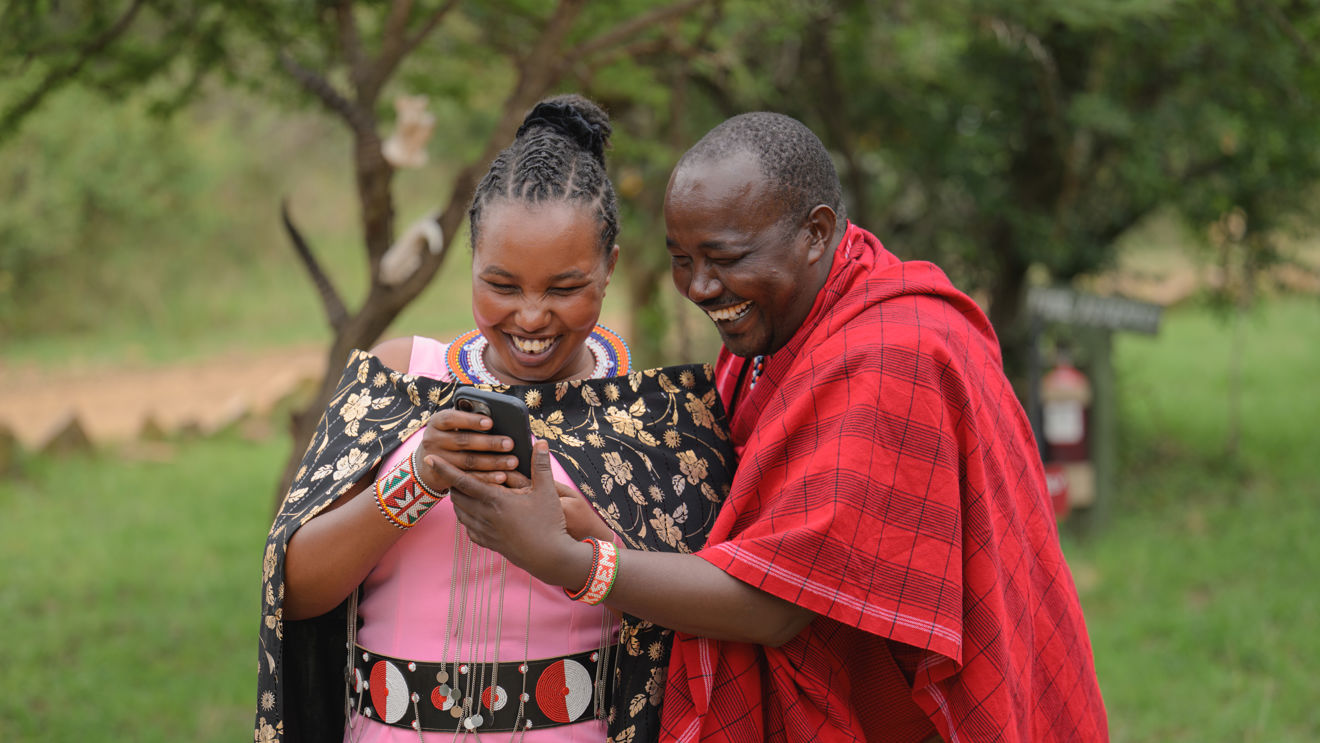
Dama Koshal and her colleague Kissami Saruni.
– In traditional Masai society, women's work was not valued. Boys received an education, while girls were left behind. But now people can see that young women can support their families and help improve living conditions for everyone. This has made many people more open to girls receiving an education and entering the workforce, she says.
The story of Saruni Basecamp Foundation is a story of partnership and collaboration: between local communities and investors, conservation and business development, Indigenous knowledge and modern management, and development assistance and private capital. It is about protecting nature while also securing income, education, employment, Indigenous rights and women's participation.
And the results are tangible.
There are now 25 community conservancies in the Masai Mara alone, and more than 200 community-based conservation areas across Kenya. These have created more than 2,000 jobs. Saruni Basecamp alone has 450 employees in its tourism operations. All are Kenyan, and half of the senior management team are women.
– When we started almost 30 years ago, there were very few animals to see. Now it is a wildlife paradise all year round, says Svein Wilhelmsen.
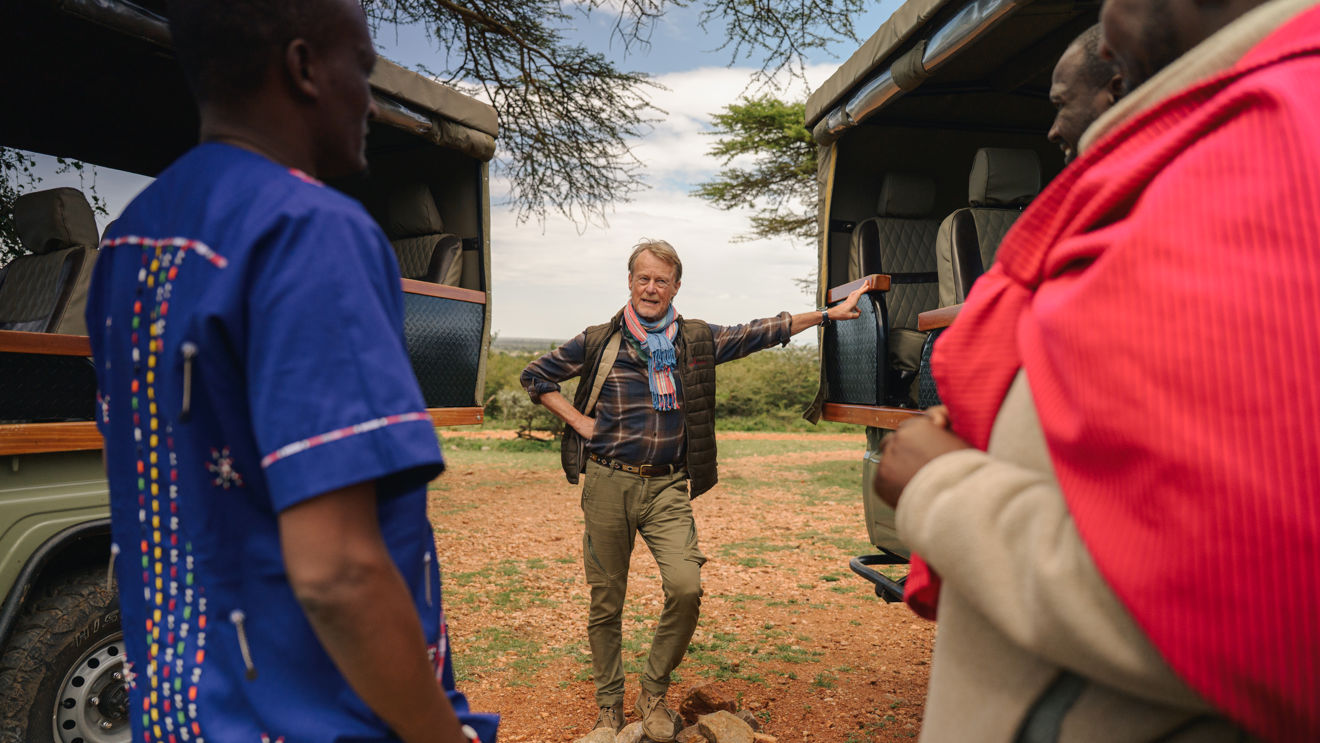
In the Masai Mara in Kenya, Saruni Basecamp works to protect nature, wildlife and ecosystems through responsible, locally led tourism.
When families receive a regular income from leasing their land and more household members find employment, their living conditions also improve, the Norwegian founder emphasises.
– You can see it in their homes. You can see that they can afford to send their children to school. When they are ill, they can afford to go to health clinics. We are seeing a significant improvement in living standards here, he says.
Mara Naboisho Conservancy, where Norwegian development assistance played a key role in its development, is considered a model. More than 800 local families have voluntarily made a long-term commitment to their land in favour of wildlife through a 25-year lease agreement.
– We have seen that our land can give us much more than grazing for our livestock. With conservation, as in Naboisho, we can generate income and jobs while allowing the cattle to graze under controlled conditions. It is good for people and good for nature, says safari guide Dama Koshal.
She hopes that the young people who come after her will continue this work and protect their nature and culture for generations to come.
– This is the legacy of our ancestors. We must protect it and pass it on!