No two days are the same. Every morning begins with a new challenge.
Bogdan Zelenyi
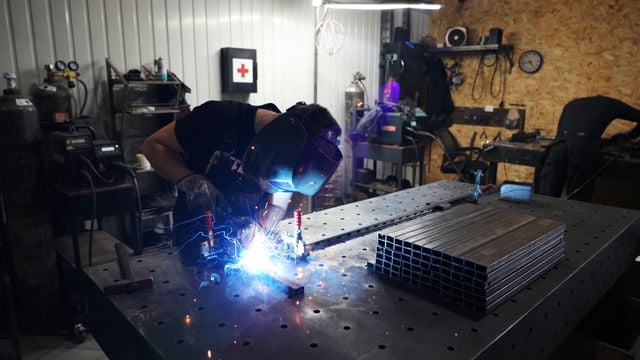
Steel shop fittings are manufactured with precision and craftsmanship at MARKQUEN Company outside Lviv.
Without a stable electricity supply, many businesses and jobs in Ukraine are at risk. With support from Norway, many companies are now investing in their own power supply.
At a factory outside Lviv, shop fittings, furniture and advertising solutions are manufactured for customers across Europe. When Russian attacks made the electricity supply unpredictable, both production and exports were put at risk. With support from Norway, MARKQUEN Company has invested in its own energy supply, and regained one of the things that matters most in business: predictability.
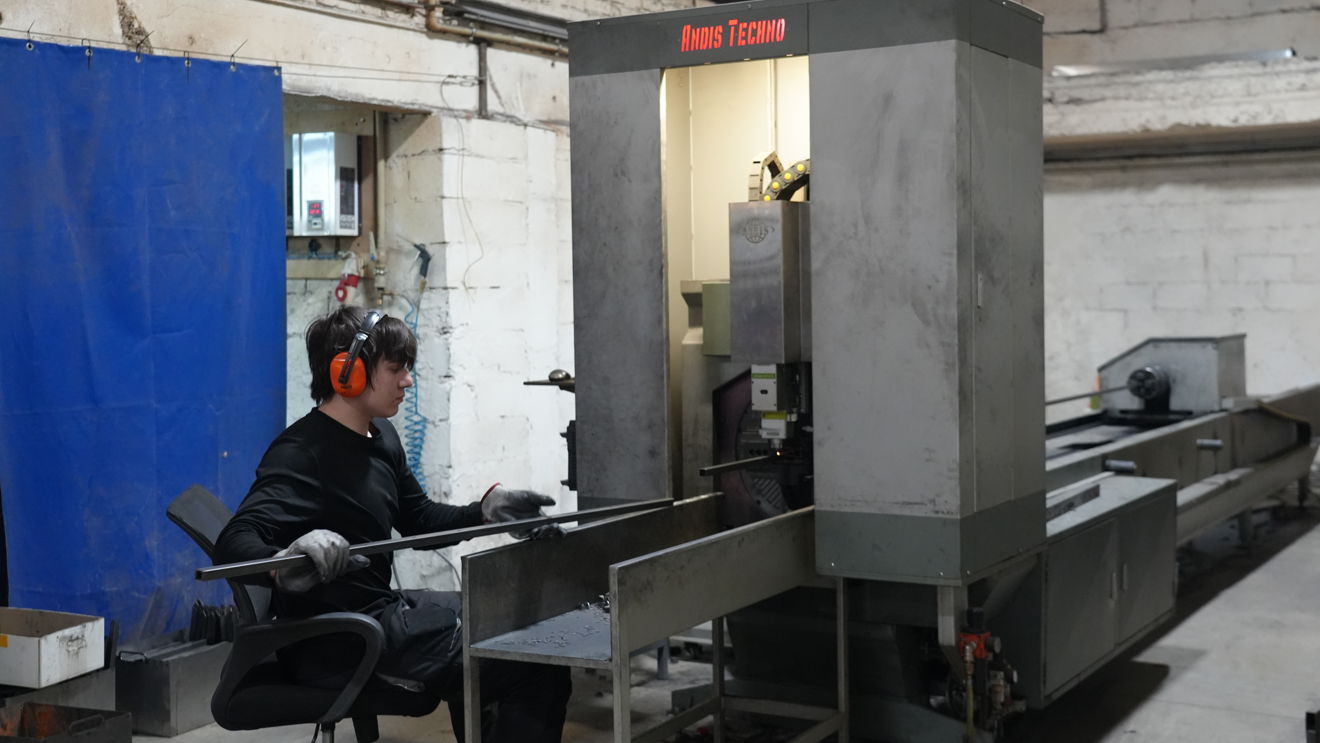
MARKQUEN Company manufactures shop fittings, furniture and advertising solutions for customers across Europe.
The sound of metal being cut and shaped fills the production hall. Machines run steadily at the factory outside Lviv. Employees weld shop shelving, assemble furniture and put the finishing touches on advertising signs that will soon be shipped to customers across Europe.
Rows of brand-new solar panels cover the roof. In a country where power cuts can occur several times a day, the solar panels provide stability.
The company’s owner, Bogdan Zelenyi, says the investment is about far more than avoiding power cuts. Before the solar panels were installed, everyday life was marked by uncertainty.
– Electricity can disappear at any moment. You never know when it will happen or how long it will last. When it does, the entire production process has to be adjusted on the spot, says Zelenyi, describing what it is like to run a business in a country at war.
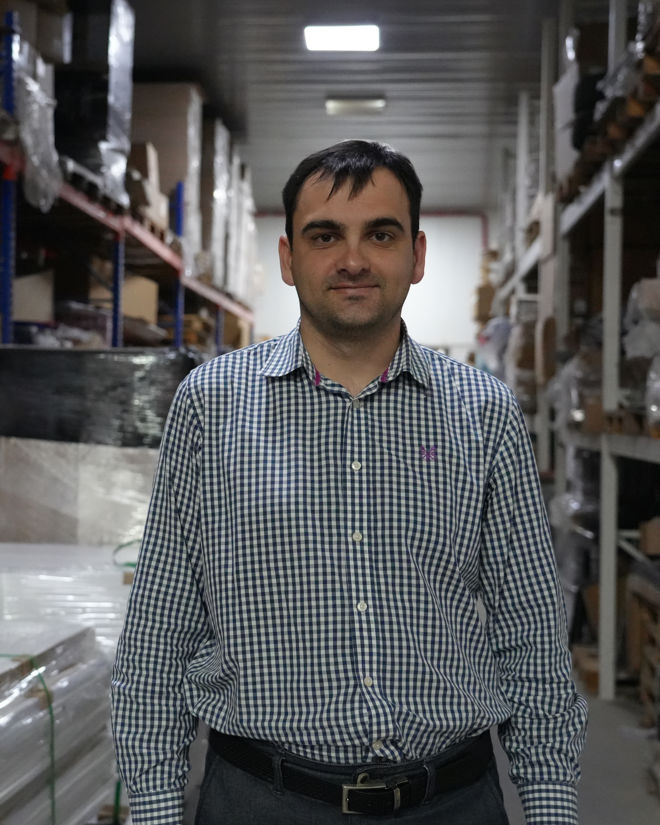
No two days are the same. Every morning begins with a new challenge.
– Some days it is about electricity; on others, it is about logistics or employees. You learn to solve today’s problem before you start thinking about tomorrow, he says.
With its own power supply, the local export factory now has a stronger foundation for growth.
– Our customers expect us to deliver when promised. With a more stable electricity supply, we can plan more effectively, offer more predictable prices and compete for a greater number of contracts, says Zelenyi.
For a company exporting to Europe, this is crucial. Zelenyi now has room to invest further and hire more employees.
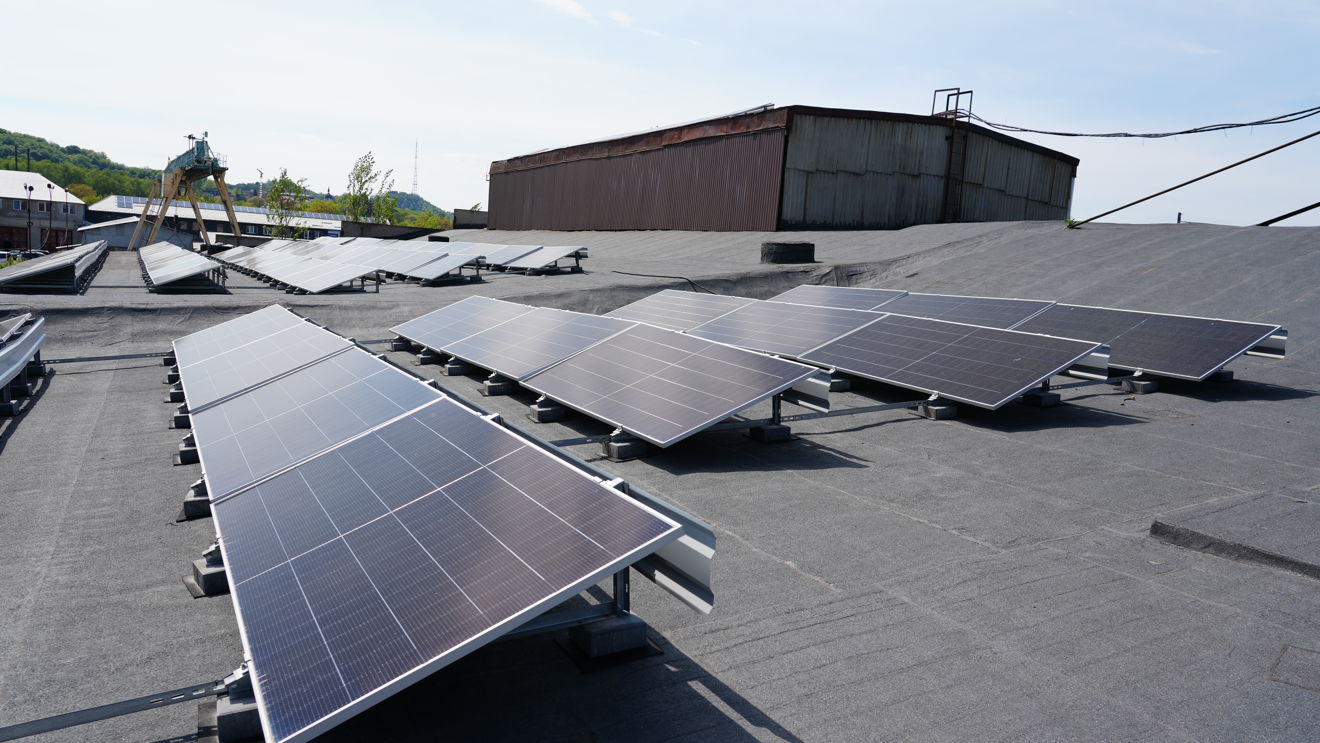
With support from Norway, MARKQUEN Company outside Lviv has invested in solar panels, providing a more stable electricity supply and greater predictability in production.
Despite the war, the business owner describes the region’s private sector as being characterised more by cooperation than by competition.
– There are not many companies doing the same kind of work here in western Ukraine. If I am in need of something, need a machine part or encounter a problem, I simply call another business owner. We help each other. That is how we get through this, says Zelenyi.
Zelenyi’s company has received support through the ReACT4UA programme, to which Norway was an important donor. The programme, led by Germany’s development agency GIZ, gave businesses access to a combination of grants and loans through a local bank. This made it possible to invest in solar panels and energy storage, an investment that would otherwise have been difficult to undertake during the war.
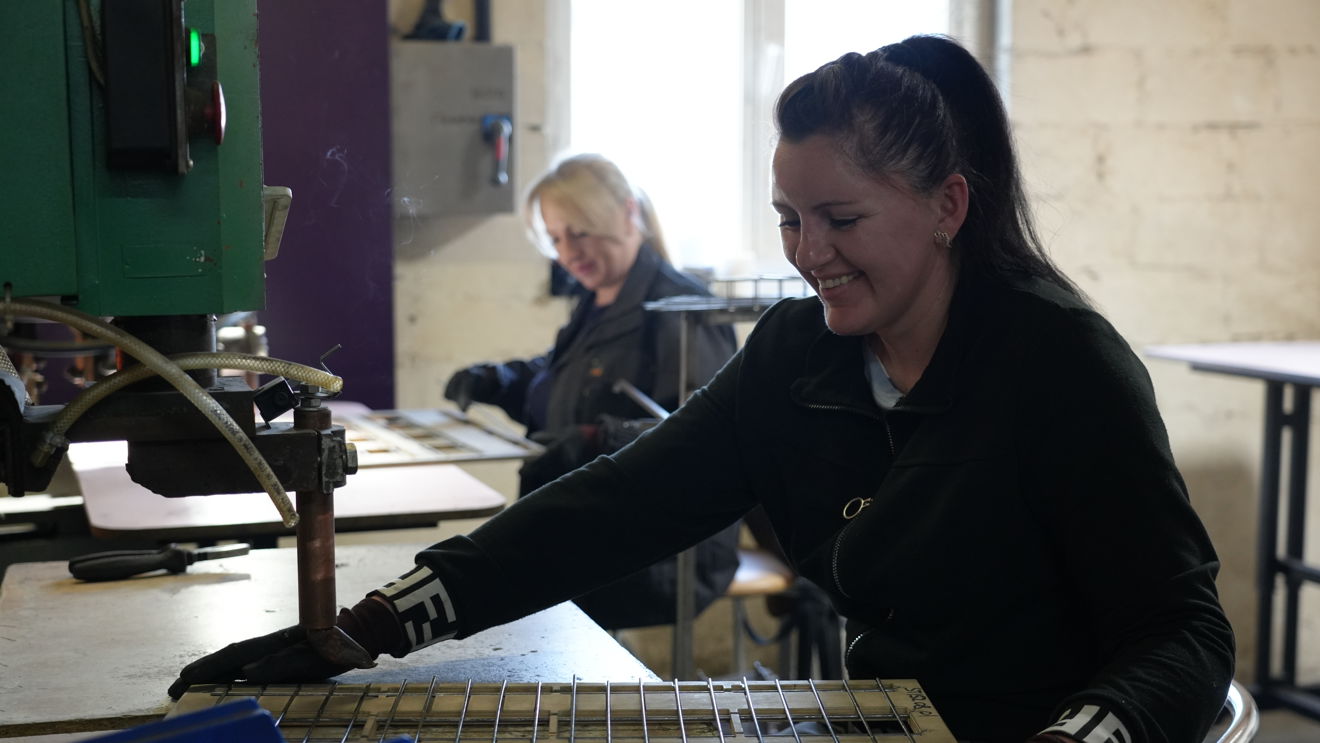
Female employees at MARKQUEN Company spot-weld sturdy wire shelves for shop fittings.
Small and medium-sized enterprises account for around 70 per cent of employment in Ukraine.
– They create jobs, sustain local value chains, pay taxes and help keep the Ukrainian economy functioning - even during wartime. Access to electricity is a prerequisite for economic growth. That is why this support is important, says Norad Director General Gunn Jorid Roset.
Together with GIZ, Norway supports micro and small enterprises in Ukraine by helping them invest in local energy production, energy storage and energy-efficient solutions. As a result, they are less vulnerable to attacks on the power grid and better equipped to maintain their operations.
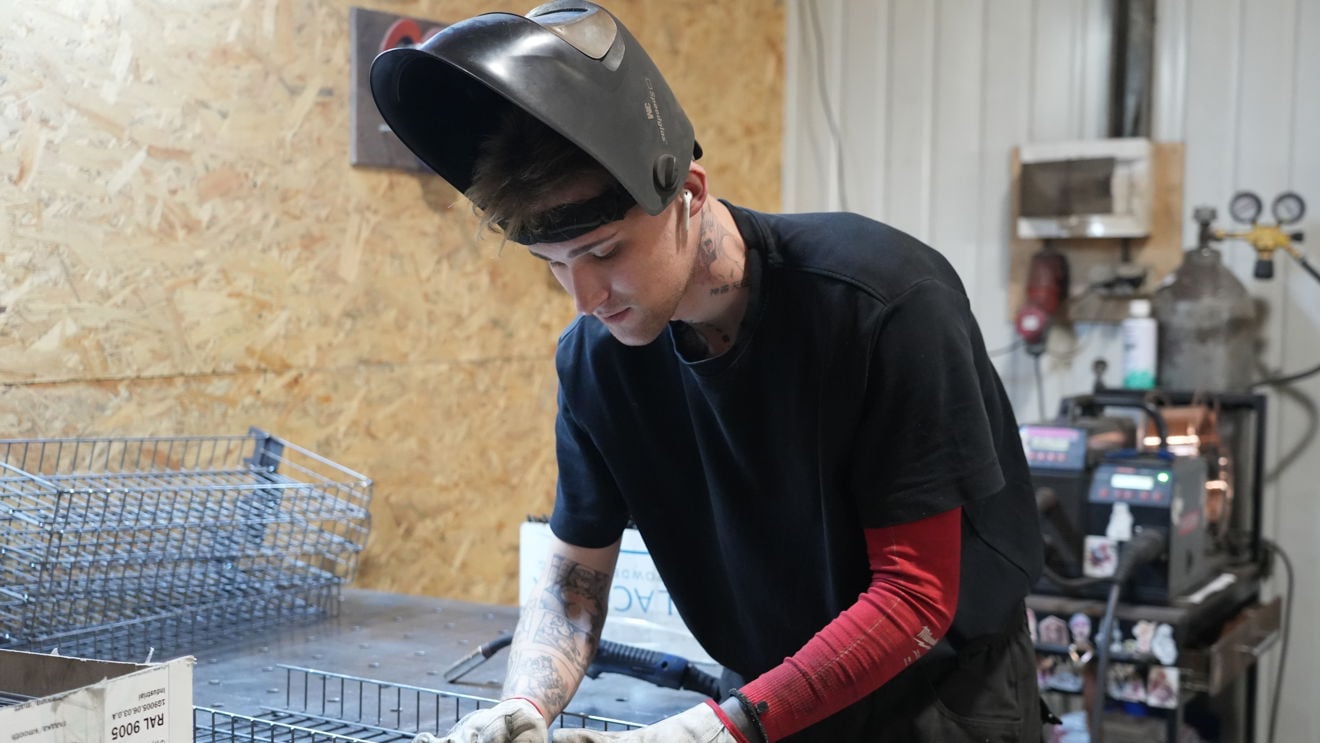
Having their own energy supply has given employees greater predictability in their working day.
In addition, Norway supports small and medium-sized enterprises through the World Bank’s RISE programme. Among other things, the programme helps improve the framework conditions for the private sector, access to affordable finance, advisory services and export markets, enabling businesses to keep going during the war while also preparing for reconstruction and EU integration.
– Ukraine must own its own future, and a strong private sector is an important part of that. That is why we are helping ensure that Ukrainian businesses have the opportunity to grow and create jobs, even during war, says Norad Director General Gunn Jorid Roset.
For Ukraine, a well-functioning private sector is also linked to the possibility of future EU membership.
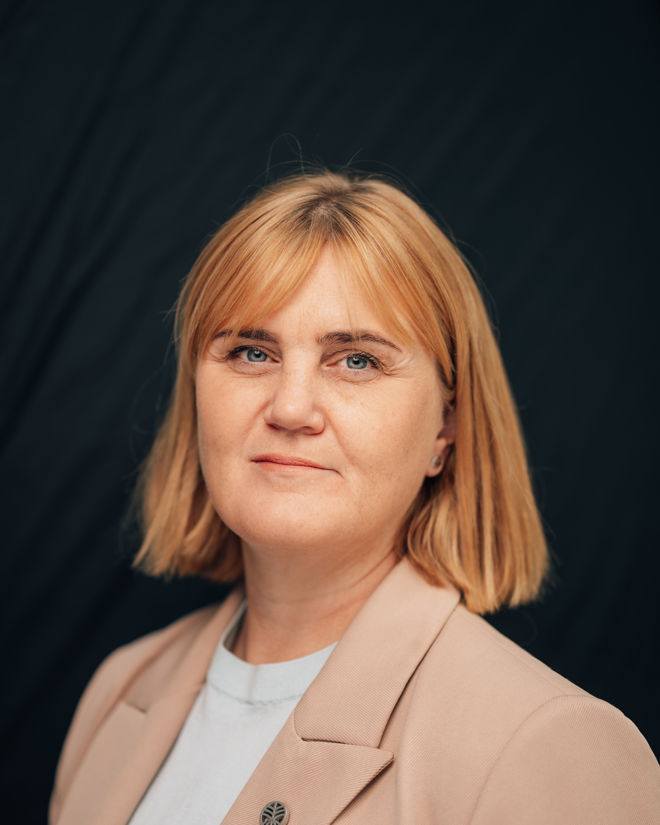
A well-functioning private sector is also crucial for meeting the requirements of the EU single market. This is an investment in Ukraine’s economic future.
The experience gained through ReACT4UA shows that targeted investments in energy and access to finance can deliver rapid and tangible results.
During the Ukraine Recovery Conference in Gdańsk in June 2026, Norway announced that it would provide an additional NOK 50 million for a new pillar of GIZ’s STEP IN 2 EU programme, which builds on ReACT4UA. The funding will support energy efficiency measures and the modernisation of production among Ukrainian small and medium-sized enterprises. Norway is already supporting the programme with NOK 150 million over the period 2025-2028.
STEP IN 2 EU brings together Norway, Germany, the EU, Lithuania and Estonia around a shared objective: strengthening the competitiveness of Ukrainian businesses and supporting Ukraine’s economic integration into the EU single market.
Through cooperation with local banks, public authorities and the private sector, more companies will gain access to financing, invest in modernisation and create new jobs.
Norway contributed NOK 25 million to energy support through the ReACT4UA project.
The support has delivered tangible results: