Ukraine: Resilience in the classroom
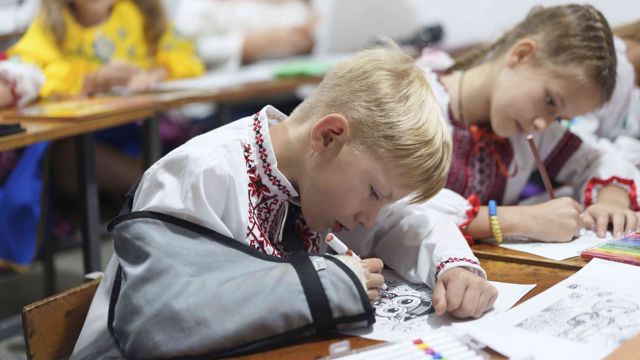
Pupils are being taught in the basement of a municipal building in Bobryk, in the Sumy region, after the school had to move there due to frequent air-raid alarms.
As the war continues, Ukraine is carrying out a comprehensive education reform to modernise teaching and learning in line with European standards. The World Bank and Norway are key supporters.
In Ukraine, schools are crucial spaces for learning, development and care. They help build resilience in local communities.
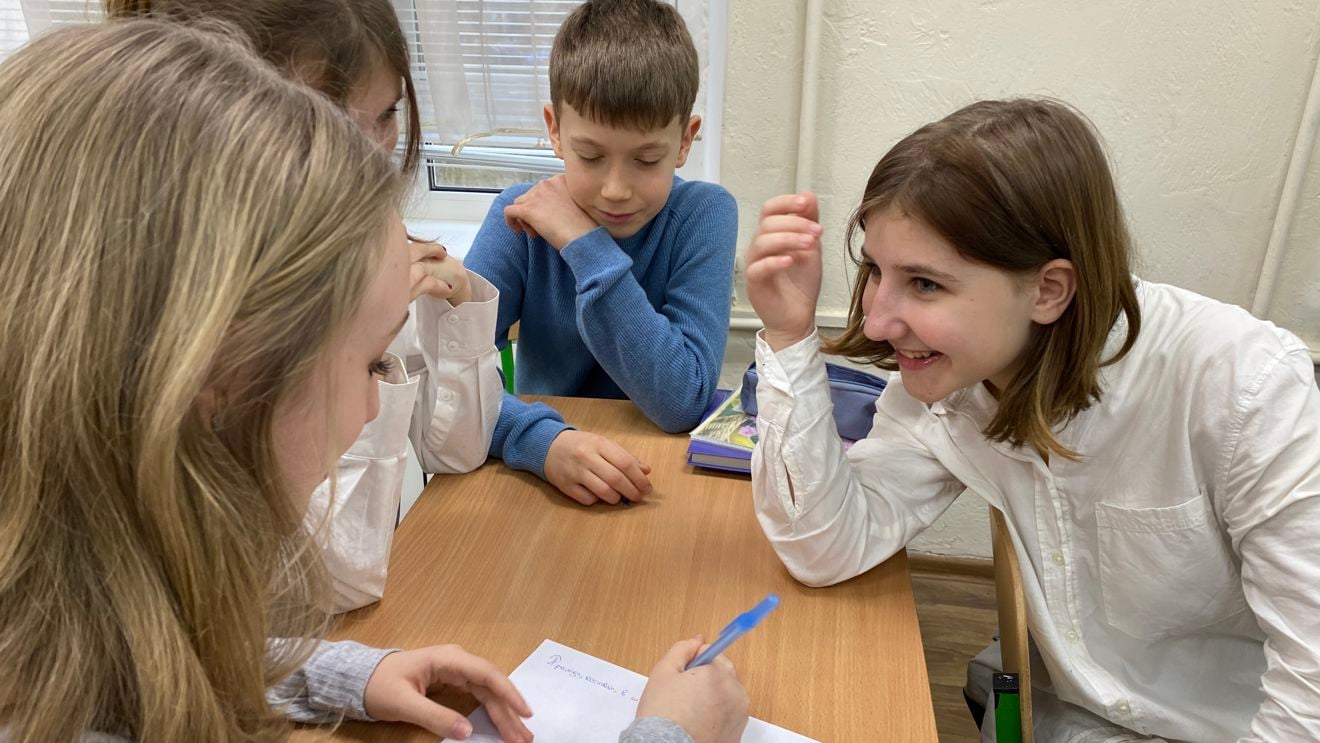
Russia’s invasion has destroyed thousands of educational institutions in Ukraine. Even so, classrooms continue to fill with Ukrainian children demonstrating strength and hope for the future.
– Children who think critically can analyse information, which helps them understand what is happening around them. With the reform, we are creating a learning environment where children not only acquire knowledge, but also learn to be active citizens in their own country and in Europe, says Iryna Tkachenko.
She is the deputy head teacher at Lyceum No. 1 in the city of Hostomel and works closely on the New Ukrainian School reform.
The reform focuses on the practical application of knowledge. The child is at the centre, and we aim to ensure their mental, physical and psychological wellbeing.
Read also: Back to School in Ukraine: Lessons in Freedom Amid War
An important partner in this work is the World Bank, which has helped Ukraine maintain public services such as education and healthcare.
The World Bank reports that education has been severely affected by the war. Average PISA (Programme for International Student Assessment) scores fell by 38 points between 2018 and 2022, equivalent to a loss of two years of schooling.
– Ukraine must use its resources to fight the war. It is therefore crucial that we help ensure schools and other public services remain open and maintain good quality. This is central to resilience, says Norad Director General Gunn Jorid Roset.
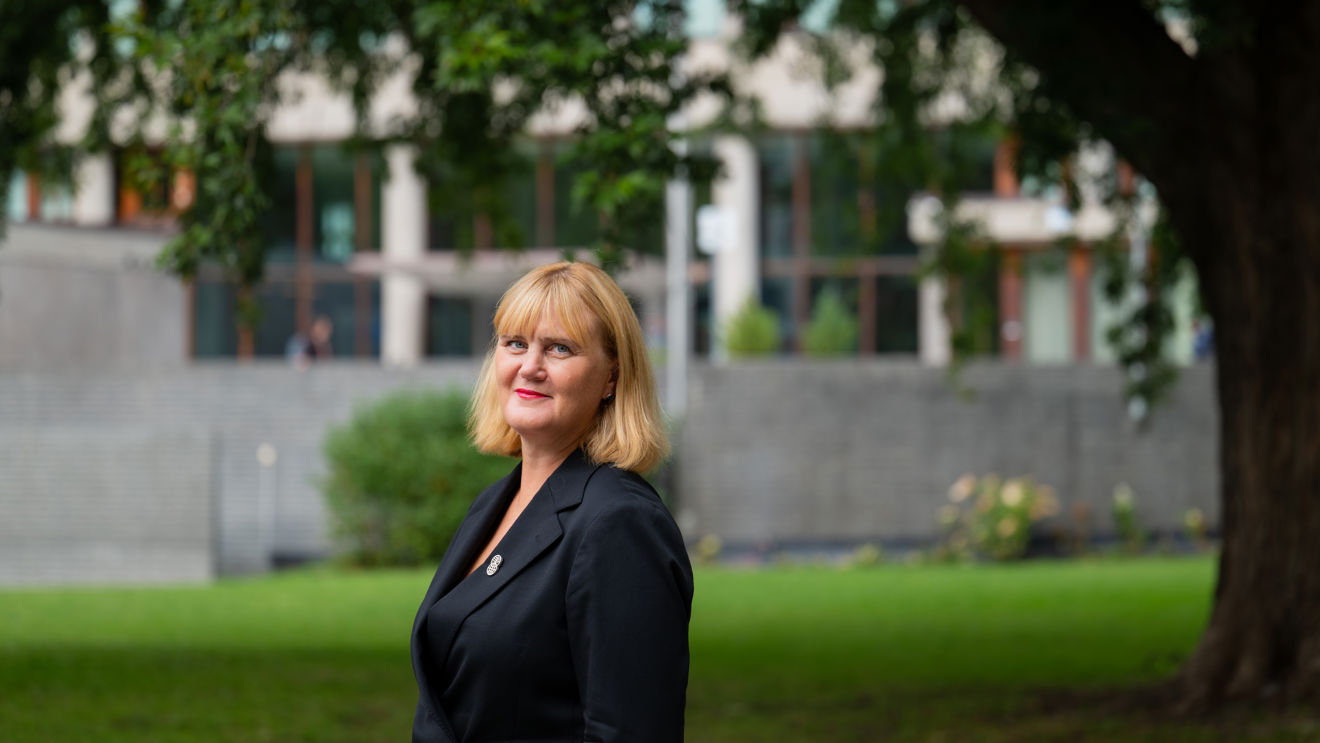
Gunn Jorid Roset, Director General of Norad.
Through the World Bank, 779,000 pupils have benefited from improvements and reforms in the education sector. In addition, 18,000 children in remote areas have received free school transport services to continue their education, and 240,000 teachers have been trained in a new EU-aligned curriculum for Years 7–8.
Read the World Bank’s article on the reform.
Norway – the largest donor
The World Bank plays a central role in international financial support to Ukraine. Total support from the Bank from February 2022 to March 2026 amounts to more than 900 billion NOK.
Norway is the largest donor to the World Bank’s URTF (Ukraine Relief, Recovery, Reconstruction and Reform Trust Fund), with NOK 11.3 billion.
– By supporting the World Bank, we help Ukraine to implement a range of reforms that are important for future EU membership. This work is central to the Nansen Programme, says Roset.
The Norad Director General recently participated in the World Bank Spring Meetings in Washington.
– Financing, reforms and continued support have been key topics in a series of meetings, where Norway has been a clear voice. The Ukrainian authorities are showing impressive dedication and – despite being in the midst of an ongoing war – have presented comprehensive strategies for the future and for reconstruction, including education reform, says Roset.
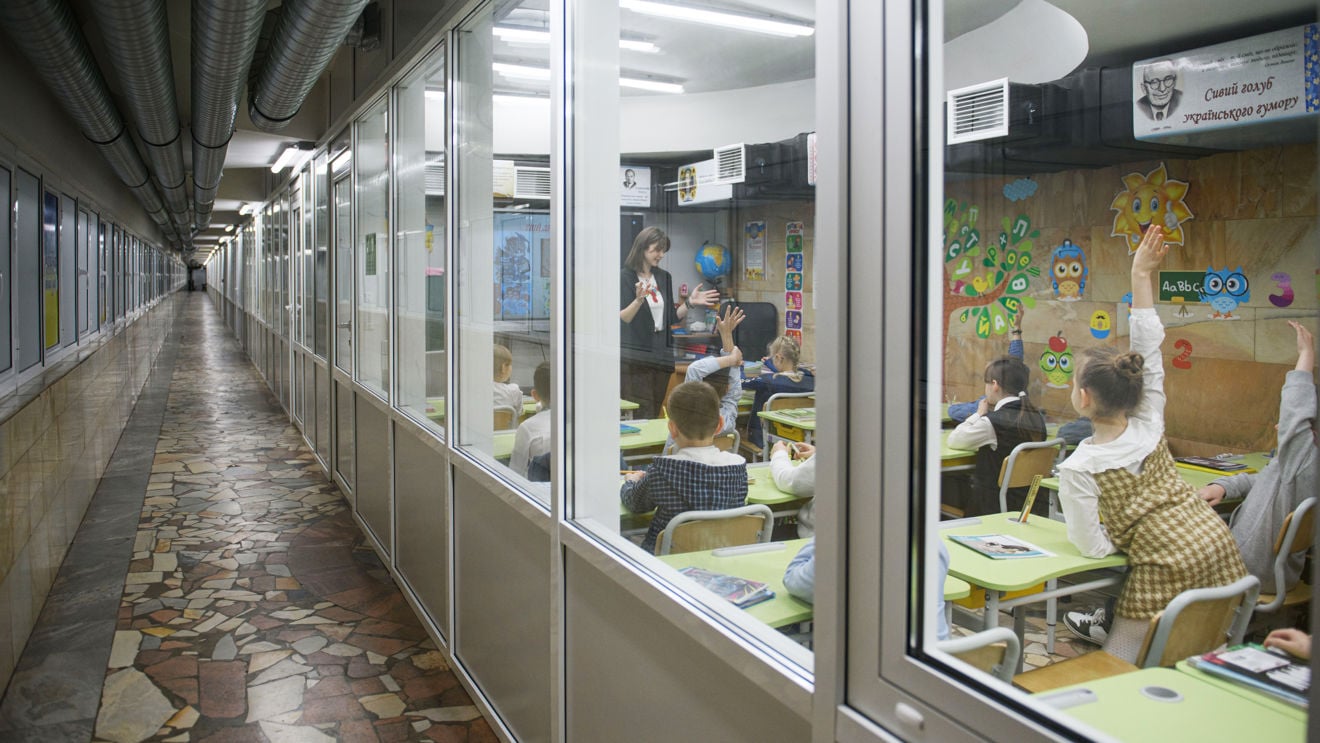
Lyceum No. 1 has 1,800 pupils, including 150 children who have fled their homes and 700 who are directly affected by the war. The school operates in two shifts to accommodate everyone.
War reverses progress
Poverty is a serious consequence of war. Overall, Russia’s invasion has reversed many years of progress in the fight against poverty. The World Bank estimated that the poverty rate in 2025 would be close to 37 per cent, up from 20 per cent in 2021. As the invasion continues, poverty is rising further, with around 9 million people in urgent need of support.
– By providing children and young people with a good education, we increase the chances that Ukraine will be able to reverse the current poverty trends over time, says Roset.
Broad support
The World Bank provides broad support and investment in Ukraine. In addition to the education sector, some of the results the World Bank can point to include:
- Energy: Equipment for emergency repairs to the power grid has restored electricity to 3.5 million households, and the reconstruction of district heating systems has restored heating for 1.5 million residents.
- Housing: 130,000 people have received support for housing reconstruction and repairs. Preparatory work has begun on repairs to 200 apartment buildings.
- Health: 7 million children have been vaccinated; 11.7 million people have gained access to primary health services; 655,000 have gained access to mental health services; and 772,000 have taken part in rehabilitation programmes.
- Agriculture: 69,883 farmers have gained access to finance, almost half of them women. USD 3.2 billion in private capital has been mobilised for the sector (twice the original target).
- Roads, rivers and railways: Equipment such as bridges, railway wagons and tugboats supports the transport sector. Planning and preparatory work for major road projects has been initiated (with other funding for the construction work itself), helping to sustain transport and economic activity.
- Operational support: 13 million people have continued to receive social benefits/pensions or salaries in the civilian public sector, such as nurses and teachers.
- Public financial management: A number of smaller projects support reforms and technical work to strengthen public financial management, anti-corruption efforts, tax collection and local authorities, and to manage reconstruction investment projects, including procurement and public–private partnerships.
- Framework conditions for business: Several smaller projects focus on simplifying and digitalising services for businesses and facilitating exports from small and medium-sized enterprises, and have helped to mobilise USD 1 billion in private capital.
Read also: The lifeline through Ukraine
High risk
Ukraine faces major challenges with corruption, and Norway sets strict requirements for its partners in Ukraine, including the World Bank. Preventing corruption risks and financial mismanagement is central to all of the World Bank’s work.
– We have zero tolerance for corruption, but we are aware that the risk is high. That is why we set a number of requirements for our partners and follow up closely to ensure that the funds reach those they are intended for, says Roset.
Read more about how we work against corruption in Ukraine.