For our customers, it is not just about transport. It is about dignity.
Daniel Gatura Kamau
Founder of Ace Mobility
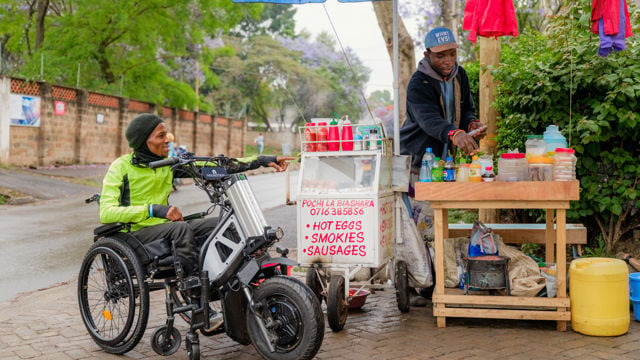
Elijah Muindi demonstrates how an ordinary wheelchair can easily be converted to electric power. This simplifies everyday life and creates new opportunities for people with disabilities.
A disability can also be a strength and a driving force for innovation and job creation. A group of young entrepreneurs in Kenya demonstrate this clearly. With support from a Norwegian-funded incubator, they are developing solutions for transport, communication and participation.
– This not only improves the quality of life for people with disabilities. It strengthens society as a whole, ays Bernard Chiira, founder of the innovation hub AT4D – Assistive Technologies for Disability Trust.

Heavy traffic in the city of Nairobi, where transport is an important part of everyday life and accessibility can determine whether people are able to get where they need to go.
In Nairobi, cars drive around that look completely ordinary to most people. But for a wheelchair user, these cars can mean the difference between staying at home and getting to work, seeing a doctor or going to a birthday party. On a screen elsewhere in the city, a digital avatar translates speech and text into sign language. Behind both solutions are young Kenyans who refuse to accept that society is is only built for some people – but not for everyone.
This is the story of how people with disabilities in Kenya are not only finding solutions to their own challenges, but also building companies, creating jobs and developing technology that can benefit society as a whole. Special needs have become special strengths.
Bernard Chiira knows what it means to encounter barriers. He was born with a physical disability and grew up in rural Kenya. The path to education and employment was long and challenging, but over time he realised that his disability was also a strength that he could harness.
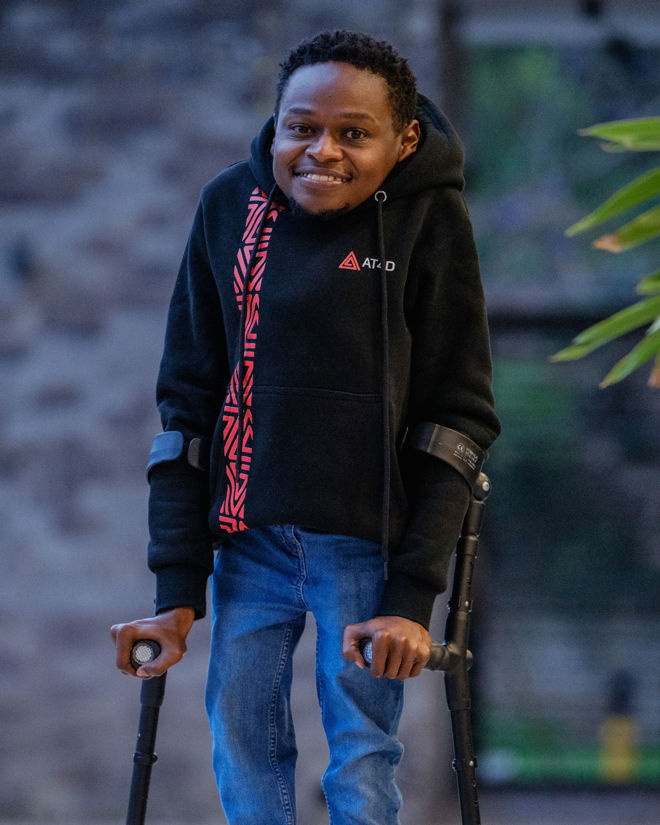
Bernard Chiira, founder and CEO of AT4D, Director of GDI Hub and Innovate Now – Africa’s first accelerator programme for assistive technology.
AT4D, which Chiira founded in 2019, has grown into a globally recognised innovation centre for assistive technology. The centre has, among other things, been featured by Forbes for two consecutive years, first on the Forbes Accessibility 100 list in 2025 and then again in 2026, for establishing the Momentous Fund – the first fund on the African continent to invest in early-stage assistive technology.
Not only that. Bernard Chiira is also Director of Innovate Now, a major accelerator programme run by the Global Disability Innovation Hub.
Drawing on his own experiences of success – and his own challenges – Chiira is passionate about helping others turn good ideas into sustainable businesses. He believes society has for too long treated people with disabilities as «in need of help», rather than recognising their potential for innovation, value creation and employment.
– I believe the biggest challenge is about attitudes – how people think about disability. There are still many negative associations with it. Even the word itself can feel negative. But a disability can also be an important driving force for innovation, says Chiira.
For him, assistive technology is about much more than assistive devices in the narrow sense. It is about designing better solutions for people.
– When people with disabilities are given the opportunities and tools they need, they contribute on an equal footing with others in society – and sometimes more than others. There are many examples, from presidents to researchers such as Stephen Hawking, and people like me here in Kenya, who are trying to create opportunities for others, he says.
For entrepreneur Daniel Gatura Kamau, it all began when his father was involved in an accident and became a wheelchair user. But the wheelchair itself was not the biggest challenge. He could actually still work. The real problem was that his father had no transport to and from work.
That experience became the starting point for Ace Mobility, a company that provides accessible transport for people with reduced mobility. The vehicles have ramps, lifts and seating solutions that allow passengers to get in and out without being lifted.
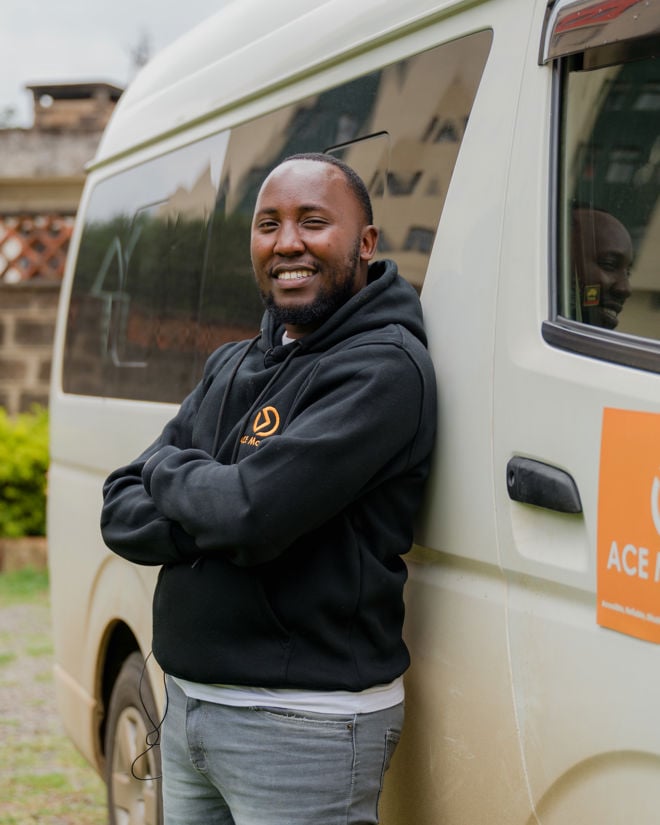
For our customers, it is not just about transport. It is about dignity.
– All too often, wheelchair users have to be lifted out of their chairs and into a car by other people. We have built a solution that enables people to travel on their own terms, Gatura Kamau explains.
Today, Ace Mobility has grown from one car to more than 20 vehicles, and from taking bookings by phone to having its own app for iOS and Android. The goal is to increase the fleet to at least 100 vehicles.
The entrepreneur has many stories to tell about satisfied customers whose lives have improved because of the service he and his company provide.
– Recently, a mother and child with cerebral palsy particularly touched me, because the child was finally able to travel to and from a birthday party with other children, safely and calmly, without stress. They told us that they had experienced problems with transport far too often. Grateful customers motivate me to continue developing the company, says the Kenyan entrepreneur.
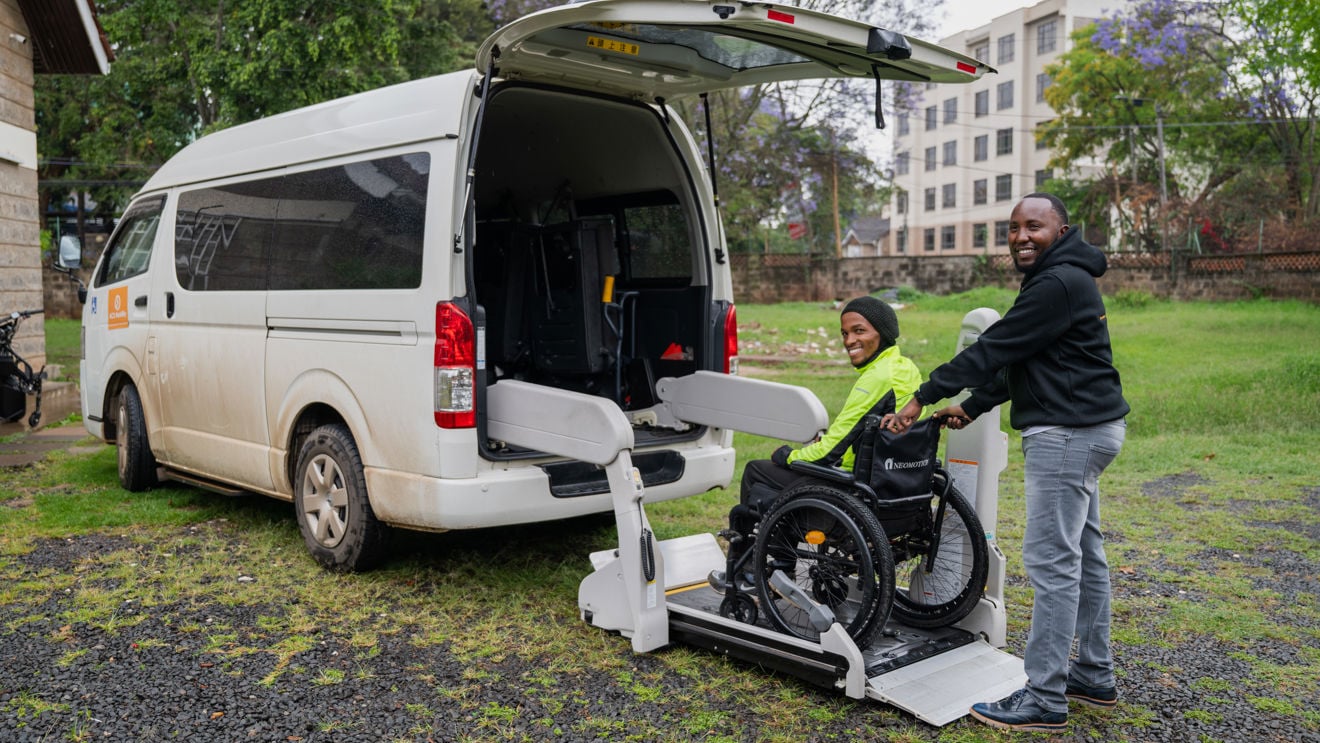
ACE Mobility in Nairobi provides accessible transport services for people with reduced mobility, with wheelchair-accessible vehicles, digital booking through an app and solutions developed with users’ needs at the centre.
Here too, support has been crucial. Through the Innovate Now hub, the enterprising Kenyan received help to turn a personal idea into a business model.
– What started as a small idea – to help my father – became a successful business. That is thanks to the support from Innovate Now, says Daniel Gatura Kamau.
While Ace Mobility addresses a physical transport problem, SignVrse is tackling another invisible barrier: language.
For many deaf people, sign language is their first language. But the world around them often communicates and provides information in ways that are not accessible. The result can be closed doors to education, healthcare, employment and public information.
The company SignVrse has developed a platform that converts text or speech into sign language through a digital avatar.
![[Winnie Ongiri stands smiling in an office, while several people sit working at computers in the background.]](/globalassets/bilder/nyheter-2026/kenya-spesial/norad_kenya_signvrse-10.jpg?width=1320&height=743&quality=80&rxy=0.5,0.5)
Winnie Ongiri leads SignVRse in Nairobi, where developers, deaf people and language experts work together to make digital communication more accessible using artificial intelligence and 3D avatars.
– In practice, it works like a digital sign language interpreter – not a physical person, but an interpreter available on your phone, computer or another device, explains Winnie Ongiri, who is the company’s CEO.
The idea emerged when the founder was teaching robotics and met deaf students who wanted to learn but could not follow the teaching without an interpreter. There were too few interpreters, and they were too expensive. Technology had to bridge the gap.
Today, the company has received significant international attention. SignVrse has, among other things, won the Africa Prize for Engineering Innovation and been accepted into Google.org’s AI accelerator, which has also invested two million US dollars in the company.
But the core idea remains simple: to open up the world to everyone.
– We make it possible to realise dreams that have long been held back by a lack of access to sign language interpretation, says Ongiri.
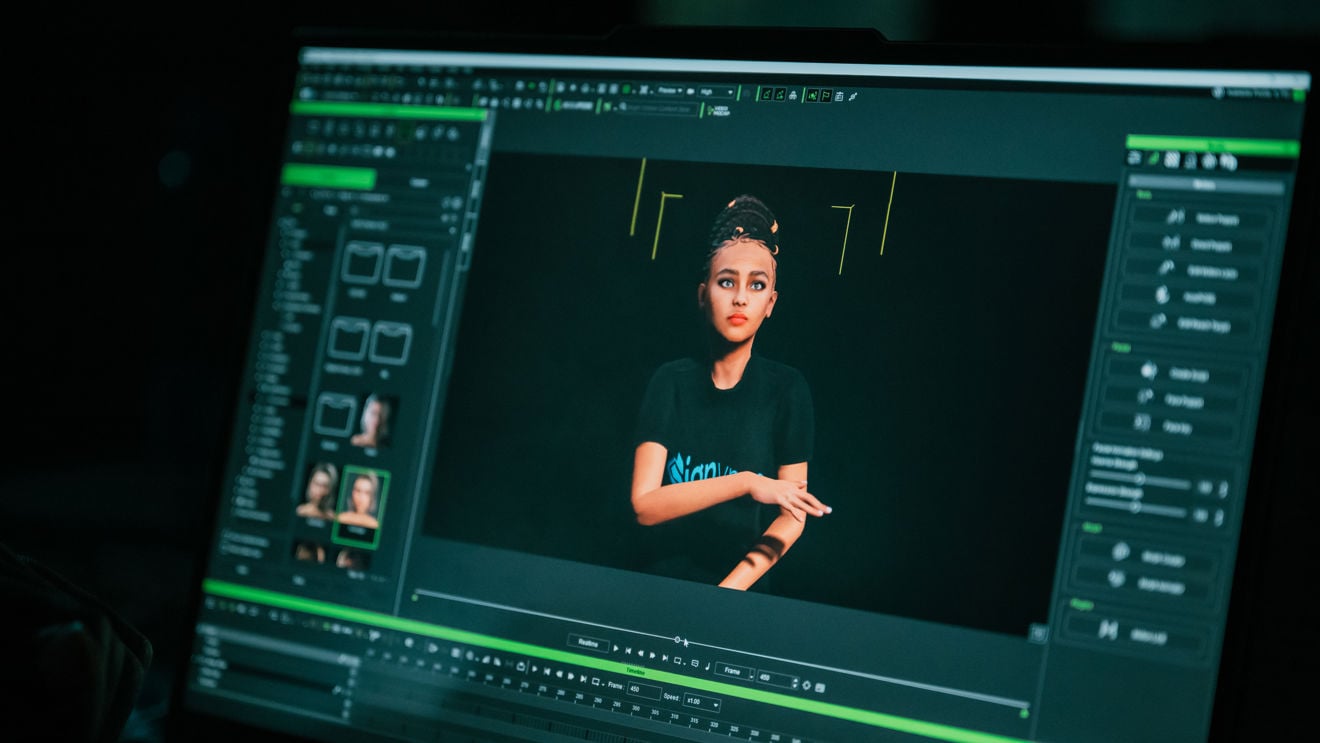
Developers, deaf people and language experts in Nairobi are developing AI solutions and 3D avatars for more accessible communication.
Hope Tech is another company that has received a helping hand and a boost from the Innovate Now accelerator programme. The company has developed The Sixth Sense, a wearable solution that uses artificial intelligence, sonar and sensor technology to help blind and visually impaired people navigate more safely and independently.
Hope Tech has grown into a recognised international company with operations in several countries, and is considered one of Innovate Now’s leading success stories.
– The company has raised more than three million US dollars in private capital on its own, proving that this sector can also generate profitability and create sustainable jobs, while addressing challenges faced by people with disabilities, says Bernard Chiira.
The stories from Kenya show that good solutions do not only benefit one group. Transport that is better adapted for wheelchair users also makes life easier for older people, pregnant women and people who are ill. Better digital communication for deaf people can make information more accessible to many more people. Innovation driven by disability repeatedly proves to be innovation for everyone.
Bernard Chiira highlights examples such as audiobooks, subtitles for films and television programmes, and electric toothbrushes. These are products that were originally developed for people with specific needs. They later became useful to millions. Glasses are another example.
– For many people, the term assistive technology can seem a little mysterious, and it is not always easy to understand what it actually means. I often use glasses as a very simple example. For those who need them to see, glasses are also assistive technology. But as you know, today glasses are so common and socially accepted that nobody calls you disabled simply because you wear them, says Chiira with a smile.
«Kenyas special forces» are not only fighting to overcome barriers. They are also helping to build a society that works better for everyone. When those who know the barriers best are given the opportunity to create the solutions, the rest of society often follows.
– When we start seeing the positive opportunities, put people first and make the right products and services accessible, we can truly change lives, says the successful entrepreneur from Kenya.
The young entrepreneurs in Kenya are challenging the myth that people with disabilities are primarily recipients of aid. On the contrary, here they are problem-solvers, employers and technology developers, emphasises Norad’s Mehraz Rafat.
– When young people are given support to develop their own ideas, they do not only create jobs for themselves. They build services that enable more people to participate in the economy, he says.
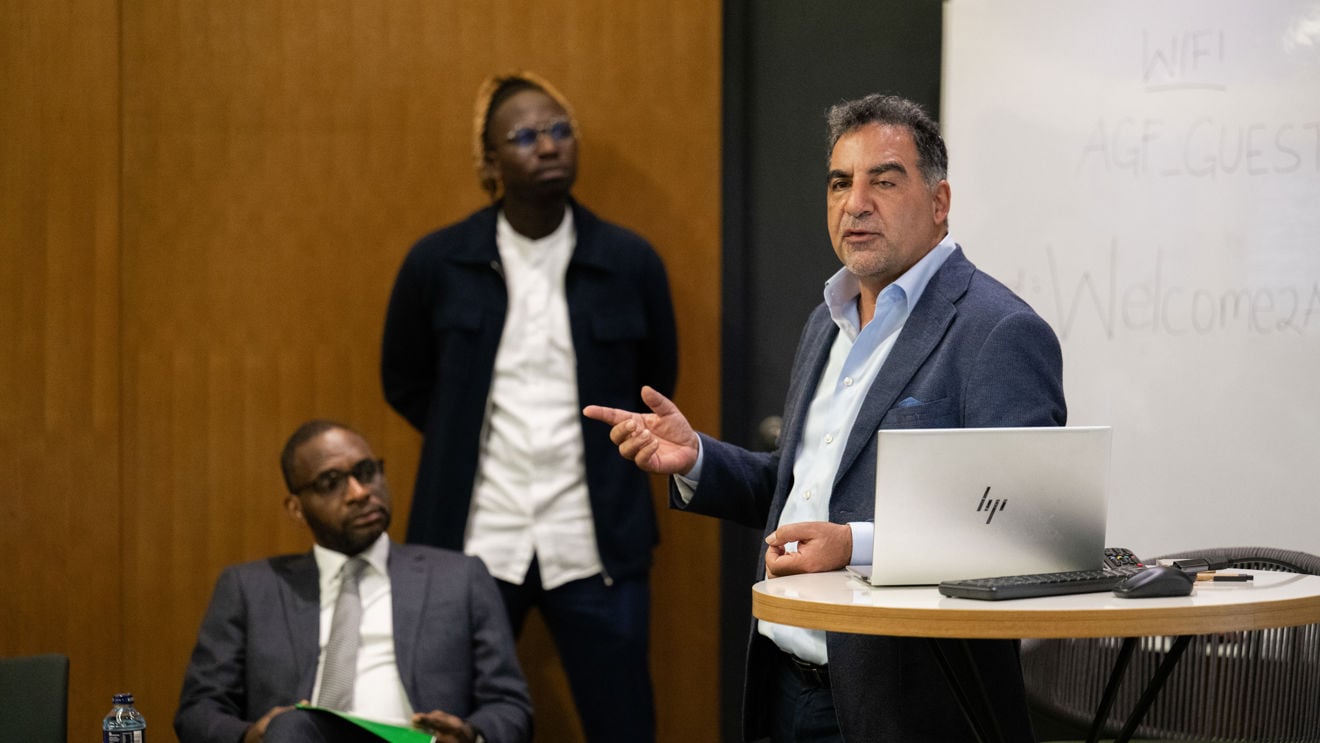
Mehraz Rafat, Senior Adviser at Norad. Here he is giving an introduction to incubators and catalytic capital.
Mehraz Rafat has worked with funding for incubators and entrepreneurial environments in southern Africa for many years, and says he is particularly impressed by the creativity within the development of assistive technology.
– When barriers are removed, opportunities for education, income and participation increase. A wheelchair user who can get to work, a deaf student who can access education, or a family that can move around the city more freely – all of this is development! Funding to initiatives such as Innovate Now and AT4D is not about «us giving while they passively receive help», the Norad expert explains.
– It is about investing in young people’s ideas and their determination to change their own societies. It is about helping to unlock the power that already exists there!