We were told to create fake profiles where we were supposed to post a mixture of personal content and propaganda. It was important that the profiles looked real.
Natalia Zaharescu
Investigative journalist at ZdG
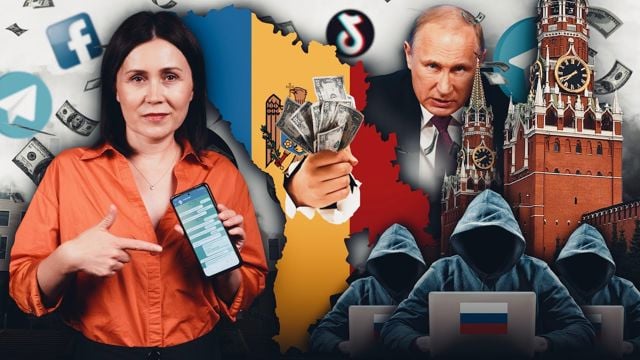
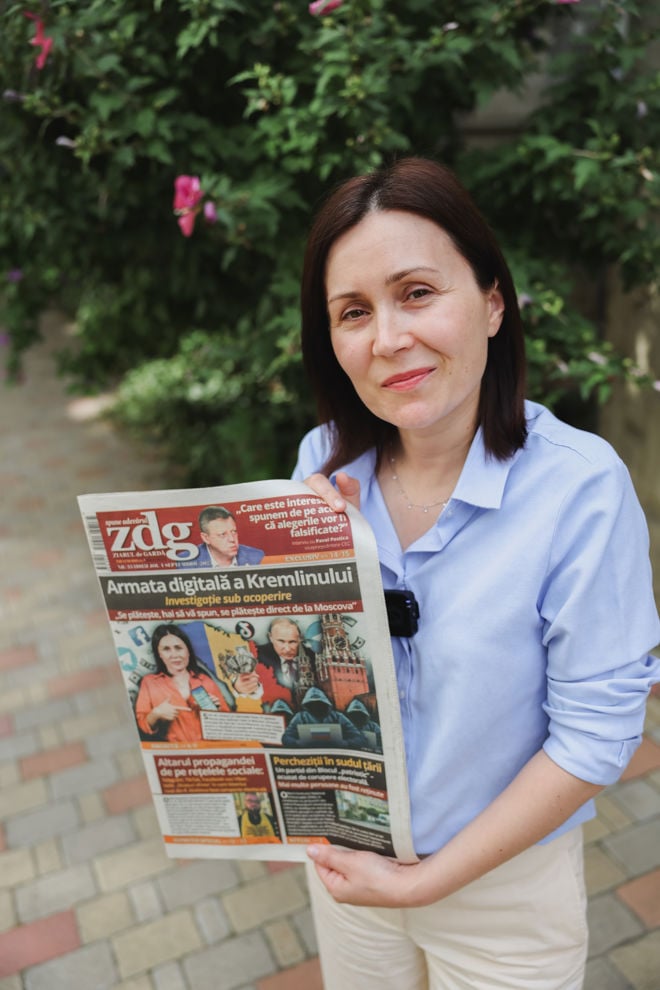
Ziarul de Gardă (ZdG) is Moldova’s largest newspaper. In 2025, its journalists exposed attempts by pro-Russian networks to influence Moldova’s parliamentary elections. Watch their YouTube documentary at the bottom of the article.
Russia attempted to influence Moldova’s parliamentary elections through digital warfare. By infiltrating pro-Russian networks controlled from Moscow, Moldovan journalist Natalia Zaharescu was able to expose how troll factories operate.
Zaharescu works for Moldova’s largest newspaper, Ziarul de Gardă (ZdG), and had been monitoring and infiltrating networks that spread Russian propaganda and support pro-Russian politicians in Moldova for some time. Before the 2025 parliamentary elections, she infiltrated a Russian troll factory and exposed how it was organised, how it operated, who took part and which narratives it promoted.
– They exploit fear and weaknesses in society. High gas prices, propaganda targeting LGBT+ people and low pensions were typical topics we were instructed to promote on social media, says Zaharescu.
In December 2024, Zaharescu gained access to a digital network that eventually grew to 500 members. Communication took place in a Telegram group, where members received extensive training in using social media and were assigned tasks to carry out. Those recruited into the network were referred to as activists.
We were told to create fake profiles where we were supposed to post a mixture of personal content and propaganda. It was important that the profiles looked real.
The instructor of the network was a Russian-speaking woman who went by the name Asea Albertovna. During the network’s first video meeting, she explained its purpose: «(...) because today we are fighting an information war, and the old methods no longer work. We have to move to a new level. And that level is, however frightening it may sound, the system of information warfare.»
Activists received assignments several times a week, and competitions were organised. On Christmas Day 2024, a flash mob was held to mark the start of the operation. The aim was to reach as many people as possible. Network members were encouraged to make videos of themselves dancing around Christmas trees, with messages such as «gas for one Moldovan leu», «ban LGBT+», «fair elections» and «increase pensions» superimposed on the footage.
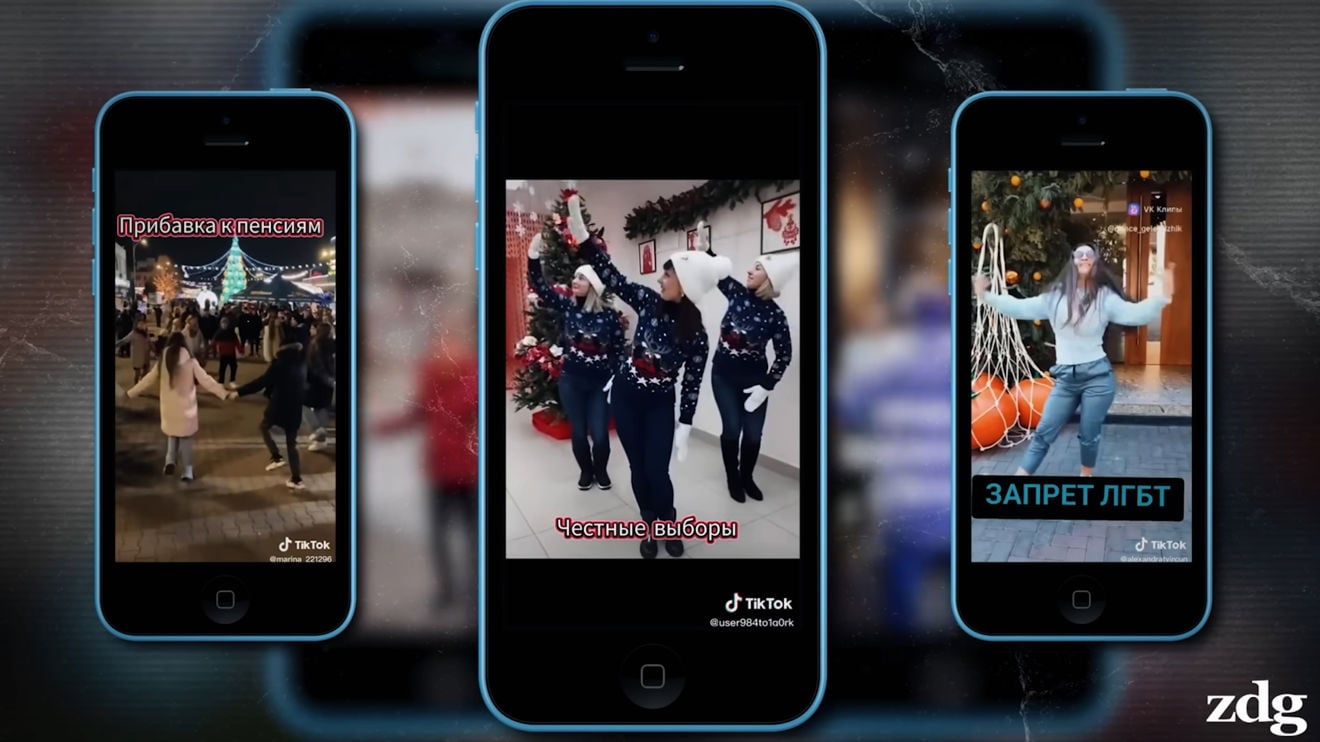
A screenshot from the documentary The Kremlin’s Digital Army.
The ten participants who achieved the most views on their TikTok videos, won an iPhone.
– We were encouraged to like and share each other’s content. This helped the content go viral quickly and exposed even more people to the messages.
The groups and networks were well organised. Every region of Moldova had its own groups and networks.
A large proportion of Moldova’s population is older, making older people an important group in elections.
– Older and vulnerable people were the main target audience for the Russian troll factories. Many older people struggle to distinguish between true and false information online. They do not distinguish between TikTok, Facebook and other channels. This makes it easy to absorb information without knowing where it comes from, says Zaharescu.
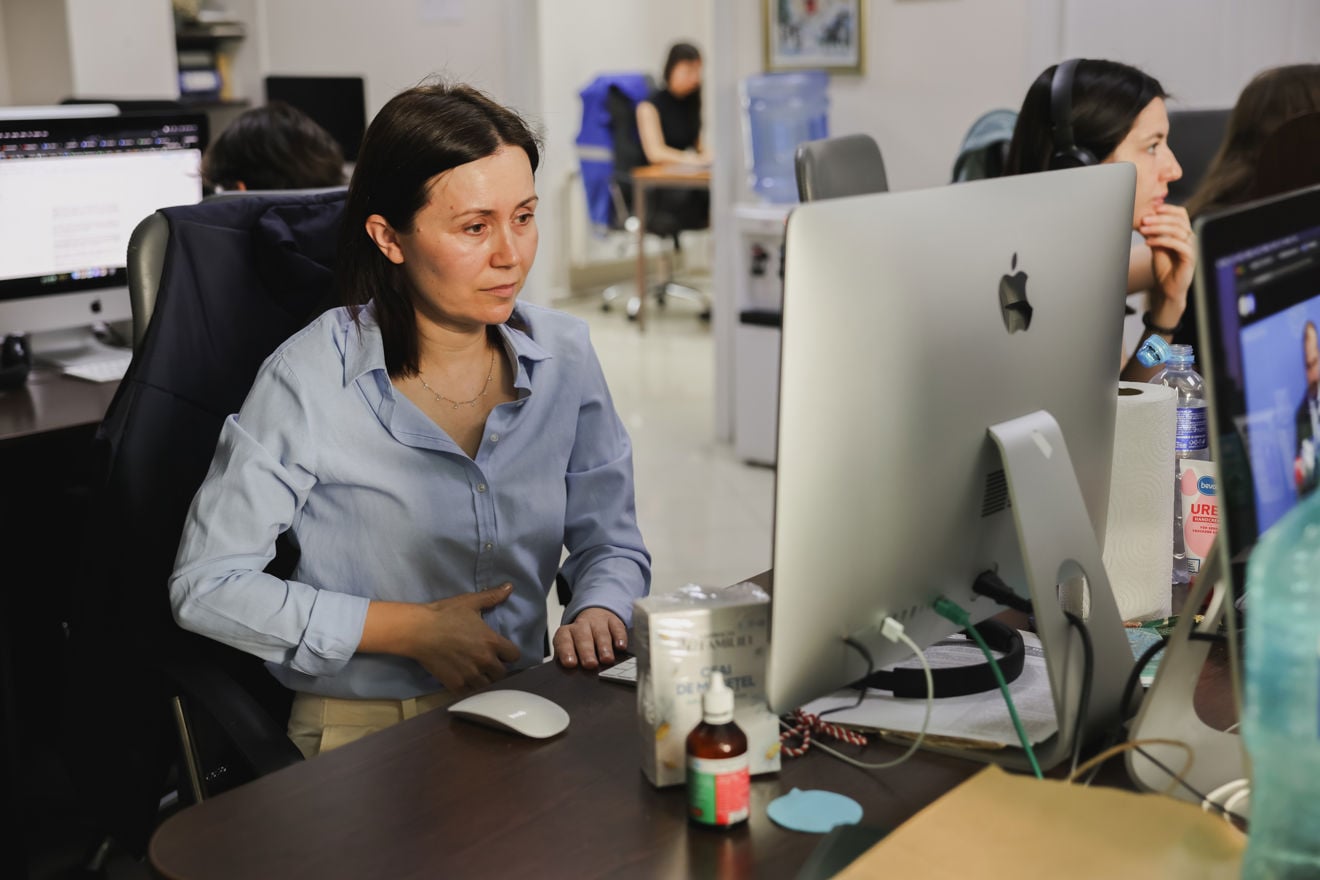
The newsroom of Ziarul de Gardă (ZdG) is located in Chișinău, the capital of Moldova.
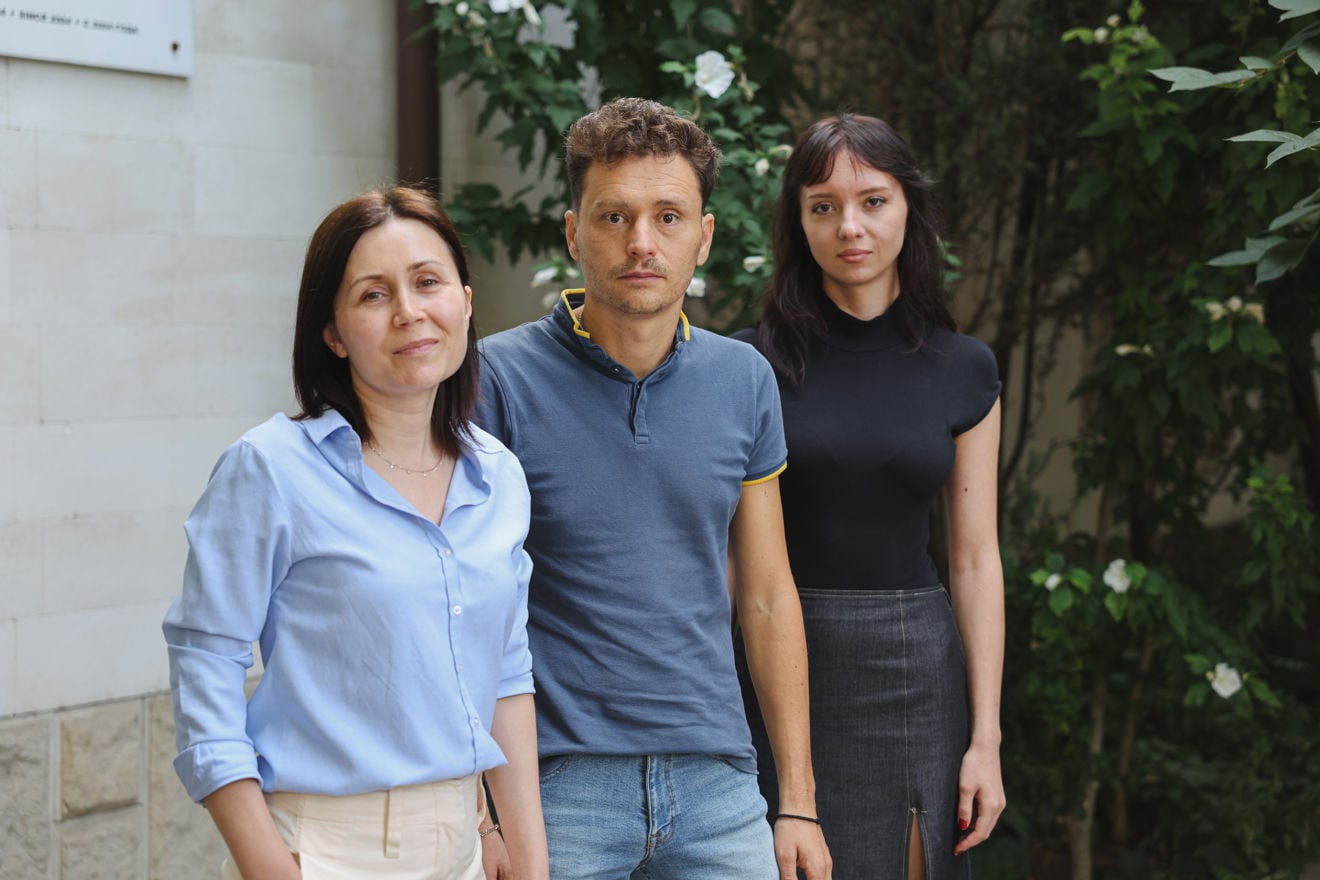
From left: investigative journalist Natalia Zaharescu, news editor Victor Mosneag and social media manager Mihaela Melnic.
ZdG has made investigative journalism a priority and has published in-depth reports on Russian interference in Moldova over several years. Infiltrating networks and troll factories is not without risk.
– I was afraid of being exposed, but what I was really afraid of was that if I were exposed, I would not get to the bottom of how the troll factories operate, says Zaharescu.
ZdG news editor Victor Mosneag says thorough and critical journalism is more important than ever. The newspaper monitors social media and follows up on serious claims that it suspects may be disinformation or propaganda.
Despite the considerable challenges facing Moldova, the editor-in-chief also sees reasons for optimism.
– The fact that we are the largest newspaper in Moldova says something about our society. People care about what is happening and want to read news with substance. We do not publish gossip in our newspaper, says Victor Mosneag.
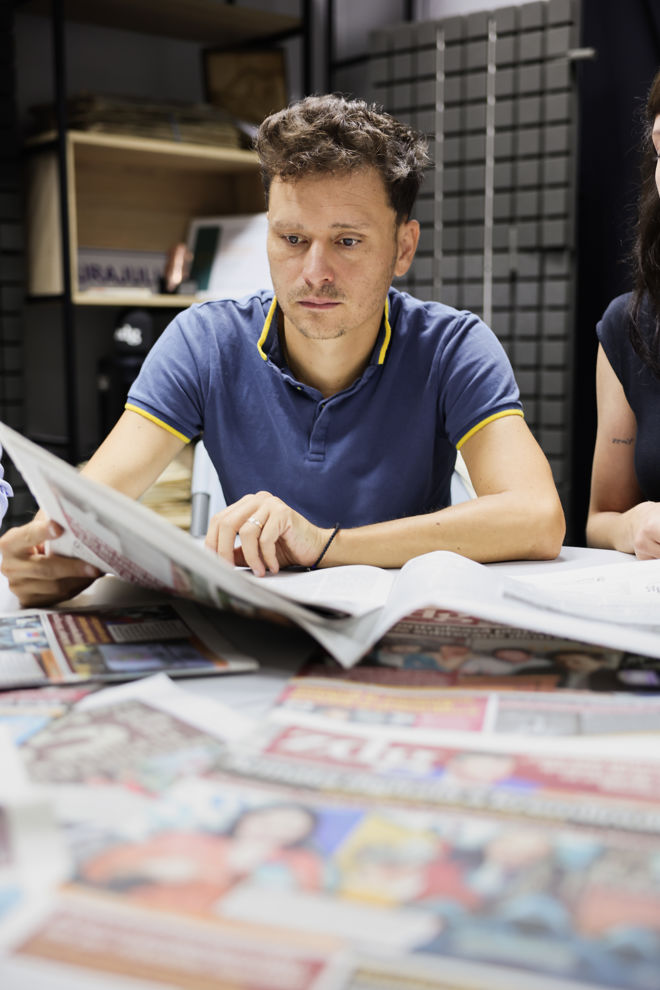
We publish critical reporting, and the politicians who criticise us are the first to read our newspaper. We take that as a sign that we are taken seriously.
Through several Norwegian-supported projects, Norway helps journalists carry out investigative reporting.
– With its historical ties to Russia and its long border with Ukraine, Moldova is under enormous pressure from Russia, despite having chosen and adopted a plan for future EU membership. A free and independent press is essential if Moldova is to succeed, says Norad Director General Gunn Jorid Roset. She also points out that supporting Moldova is in our shared interest.
– A stable and democratic Moldova is important for Moldova and the region, but it is just as important for us here at home, the Director General emphasises.
Watch the documentary by Ziarul de Gardă (ZdG) on YouTube:
You can select subtitles in the YouTube settings.