Historic agreement for women shea workers in Ghana
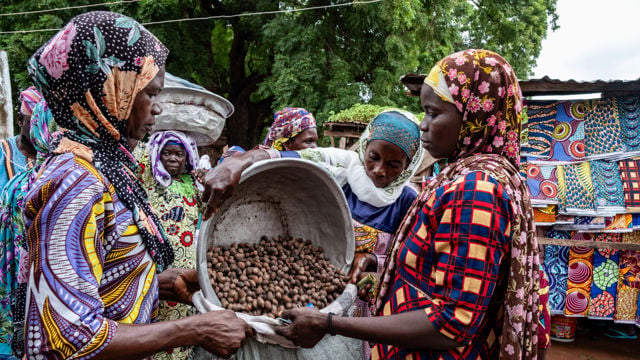
Safura Sulemana, who gathers and processes shea nuts in the Nakpatua community, helps a friend fill a sack with purchased shea nuts at the market in Kumbungu, near Tamale in northern Ghana, August 2025.
Hardworking and underpaid women in Ghana are now seeing their labour rights strengthened. The country’s first collective agreement in the shea sector has been signed, with support from Norway.
Behind the shea butter used in cosmetics around the world are thousands of women in Ghana. Their work collecting shea nuts is essential to a global billion-pound industry, yet they receive only a small fraction of the profits. At the same time, many work under demanding conditions, shaped by a harsh climate and highly labour-intensive traditional methods.
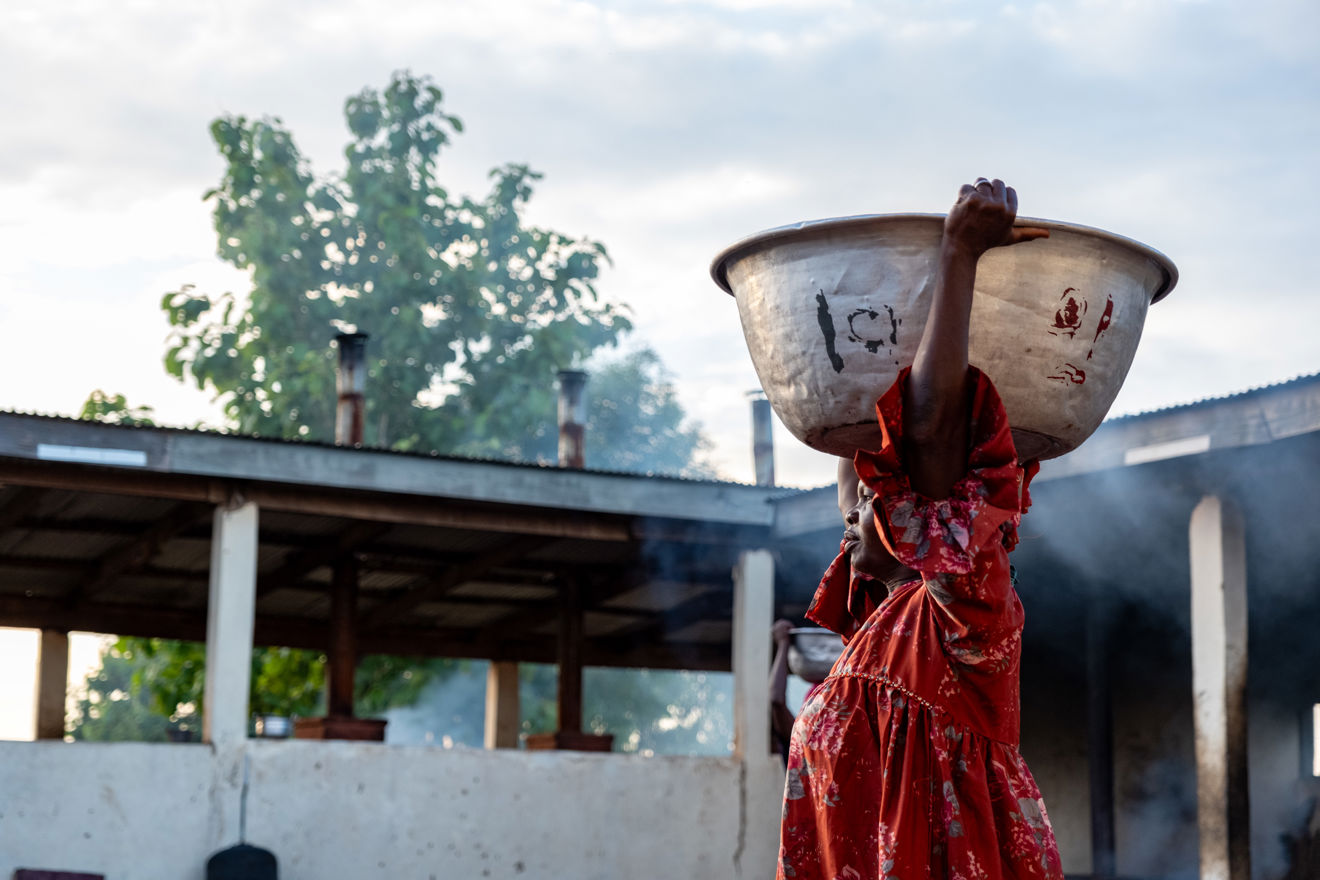
Sharatu Kassim, who works in shea processing at Tiyumtaba Shea Cooperative, carries a bowl of shea paste ready for kneading, June 2025.
Over the past four years, Norway, in partnership with Switzerland, has supported the ILO’s Productivity Ecosystems for Decent Work project. The aim has been to improve the daily lives of thousands of informal shea workers and small business owners in Ghana.
– Workers have, among other things, received training in health, safety and environmental standards. They have also learned more efficient and less physically demanding working methods. But on International Workers’ Day, it is important to emphasise that lasting improvements come when workers and employers engage in dialogue, says ILO project manager David Marcos.
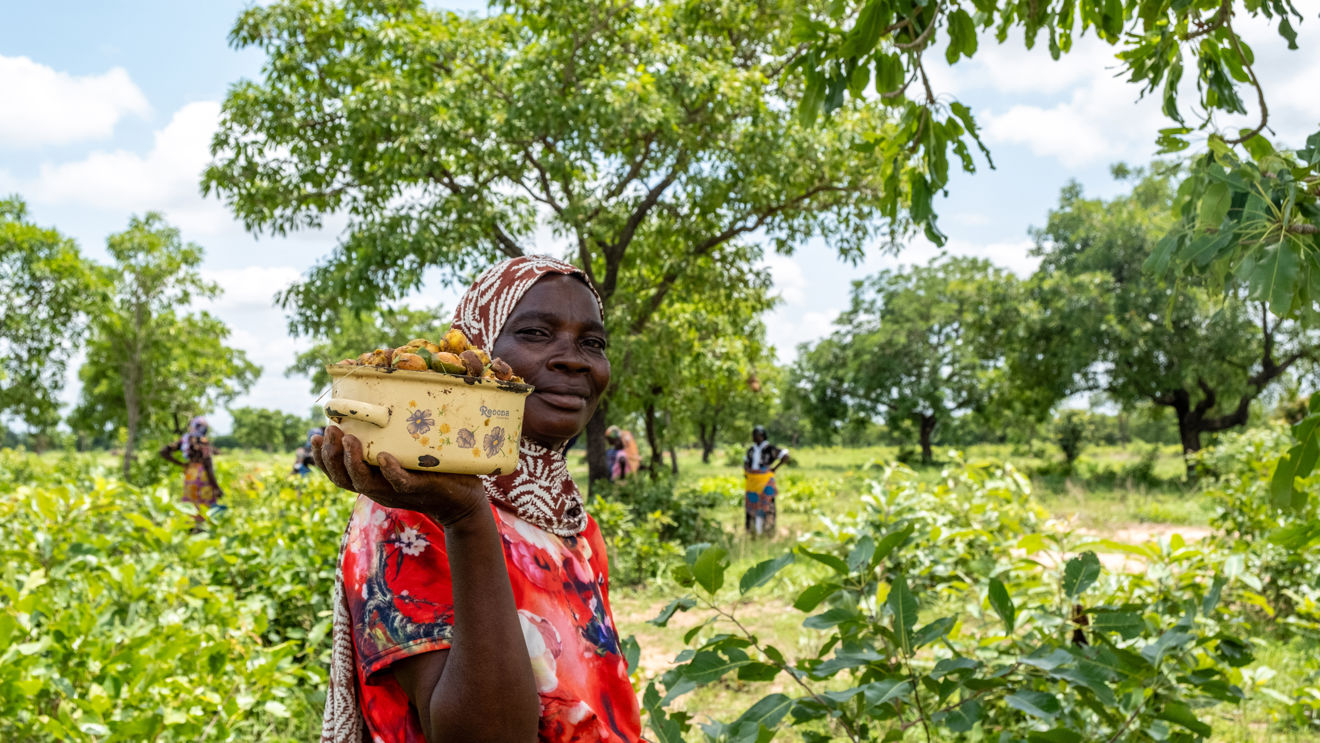
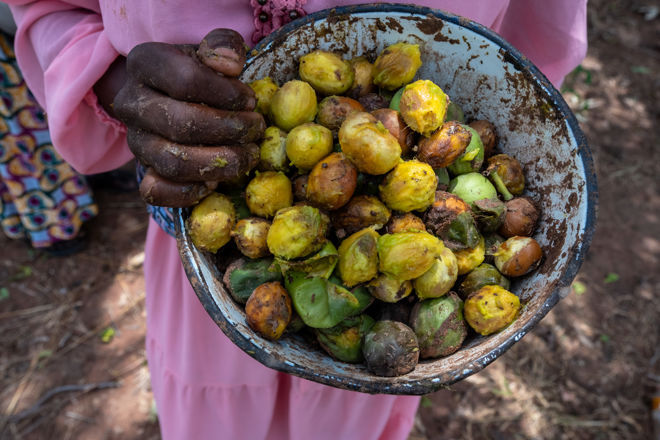
A member of the Nakpatua Picking Group, organised under Yumzaa Enterprises, shows her bowl of de-pulped shea during a group picking activity in Nakpatua, near Tamale, June 2025.
Direct impact on women’s everyday lives
With support from Norway, both a trade union for workers, the Ghana Shea Workers Union, and an employers’ organisation for local small and medium-sized enterprises, the Ghana Shea Employers Association, have been established. The aim has been to bring together the social partners and strengthen the interests of local actors, particularly the most vulnerable.
A major breakthrough has also recently been achieved: employers and workers have signed a collective agreement for the sector. The agreement will regulate relations between the social partners, prevent abuse, and help formalise an industry that has largely been characterised by informal labour.
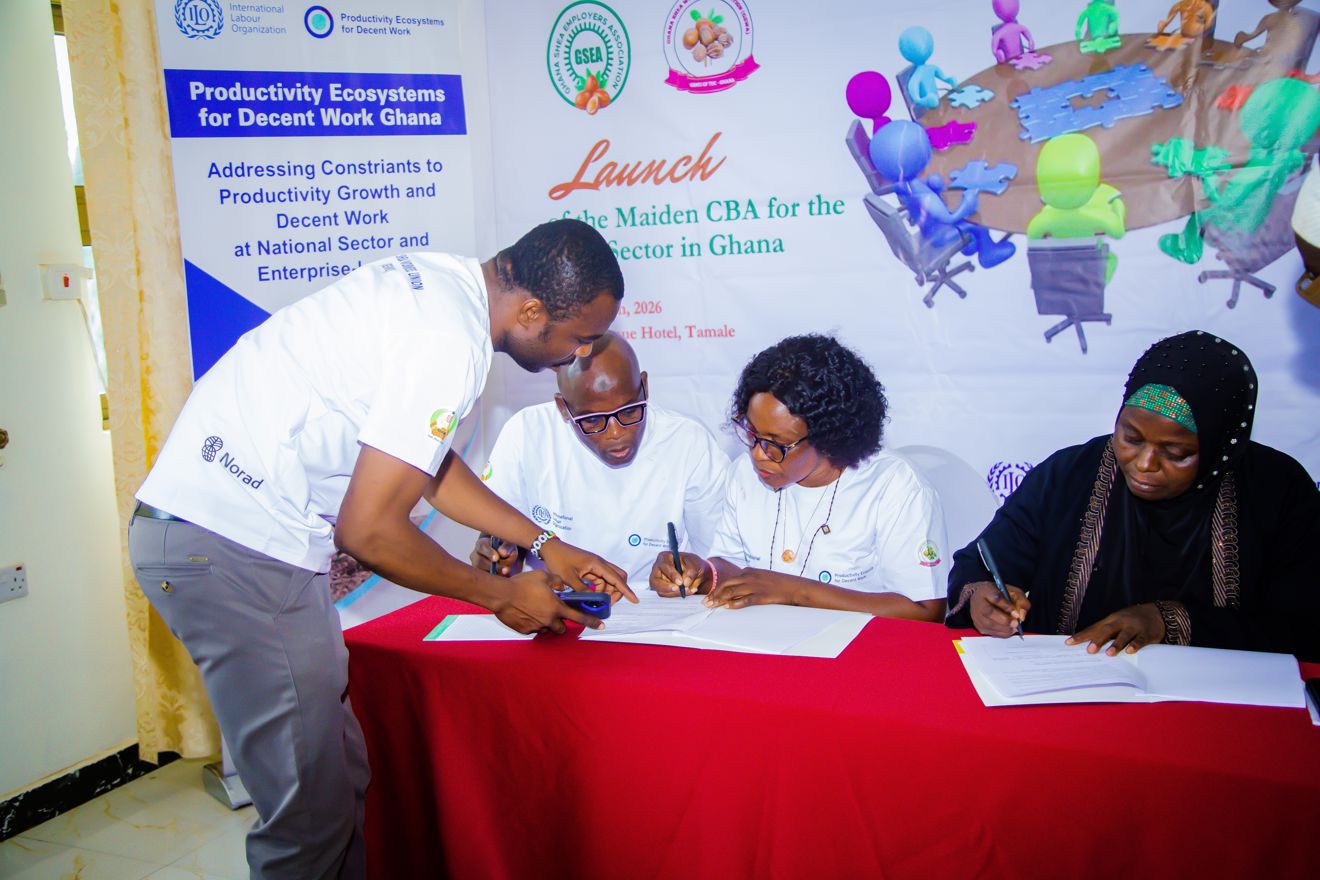
Ghana’s first collective agreement in the shea sector has been signed, with support from Norway.
– The agreement is not just a milestone on paper; it will have a direct impact on the everyday lives of thousands of women. This is truly worth celebrating, especially for those women who have long been invisible and without rights in the labour market, says Norad Director Gunn Jorid Roset.
Decent working conditions
The shea industry in Ghana has faced several challenges. Middlemen have driven down prices for women who collect shea nuts, while large foreign companies have purchased raw materials without contributing to local value creation.
– The new organisations have worked to establish better frameworks in the sector. They have, for example, contributed to the introduction of minimum prices to protect those collecting shea nuts, and quotas for local producers to secure access to raw materials, explains the ILO project manager.
The agreement between workers, employers and the authorities will provide safer working conditions, fairer pay and stronger representation for women, who form the backbone of production.
– The Norwegian-supported project in Ghana is an excellent example of how Norwegian development cooperation - working in partnership with international and local actors - can help promote dialogue, decent working conditions and better lives for a great many people, says Norad Director General Gunn Jorid Roset.
A foundation for sustainable economic development
Social dialogue, gender equality, decent working conditions and sustainable value chains are key elements of the project, which Norway supports through the ILO. In Ghana, around 85 per cent of the working population is employed in micro, small and medium-sized enterprises, most of which operate in the informal sector. When such working conditions are formalised, both workers’ rights and the foundations for more sustainable economic development are strengthened.
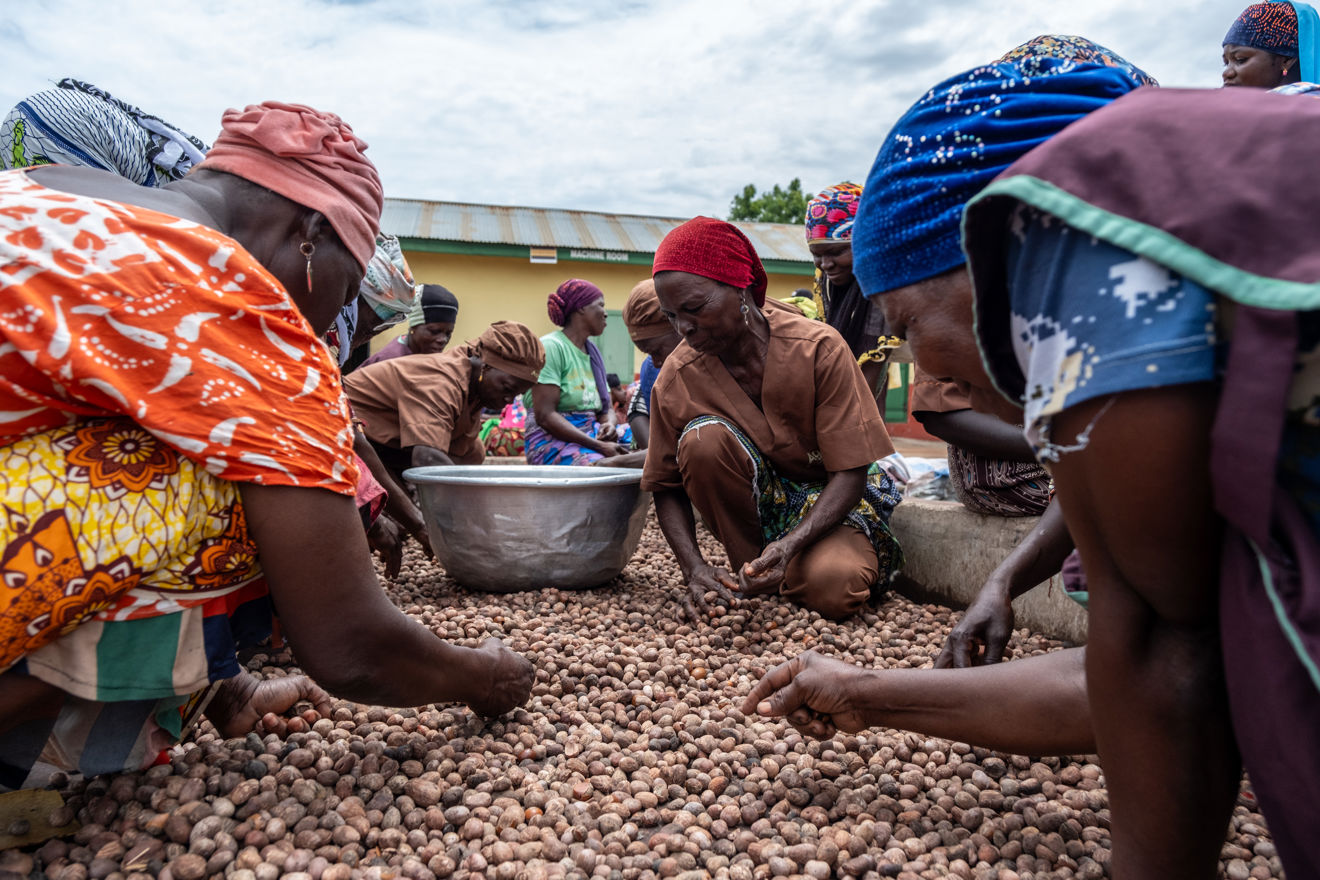
Mariama Abukari and other shea-processing workers remove shells and sort nuts at Agape Shea Enterprises in Tamale, 2025.