The World Bank plays a crucial role in addressing poverty, the climate crisis and rising inequality.
Gunn Jorid Roset
Director General, Norad
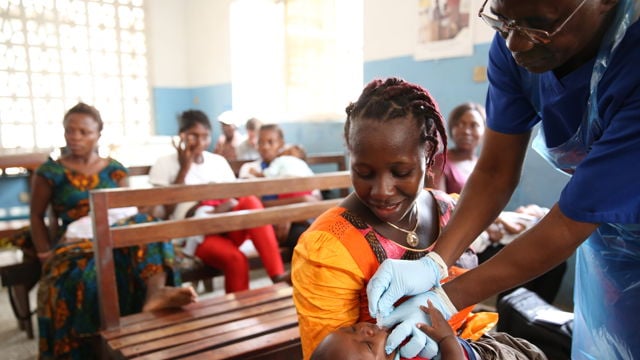
A mother has her child vaccinated in Freetown, Sierra Leone.
122 million people gained access to social protection, 54 million gained new or improved access to electricity, 138 million gained broadband access, and 225 million gained access to health services.
All of this occurred over the past three years thanks to IDA, the World Bank’s fund for low-income countries.
Amid a global pandemic and multiple overlapping crises, the International Development Association (IDA), the World Bank’s fund for the poorest countries, mobilised a record USD 97 billion to support the world’s most vulnerable.
IDA helped provide millions of people with social protection, electricity and broadband access. It also financed a wide range of climate measures and is the world’s largest provider of climate finance to the poorest countries. In short, IDA improved the quality of life for millions of people, created new opportunities, and offered hope for the future.
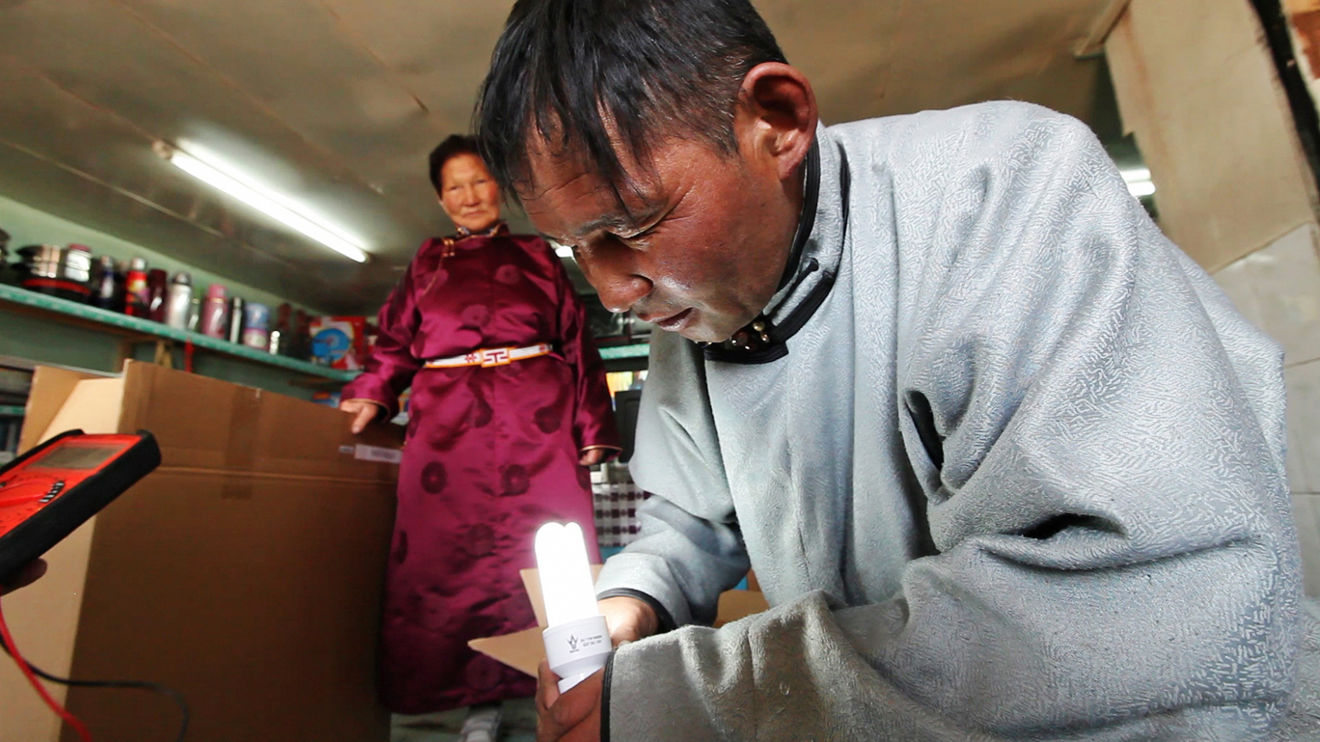
54 million people have gained new or improved access to electricity.
For 65 years, IDA has financed long-term development in the world’s poorest countries, providing USD 600 billion to 116 countries.
Many of these countries have experienced significant economic growth and have gone from being recipients to becoming donors themselves. South Korea, China, Türkiye and India are good examples.
Norway has been a donor since the beginning and continues to be an important partner in IDA, both through financial contributions and through shaping IDA’s priorities and objectives.
On March 20th, Norway launched a new and comprehensive strategy for cooperation with the World Bank for 2026–2030.
The World Bank is Norway’s largest single recipient of development assistance and one of the world’s most important institutions for development and climate action.
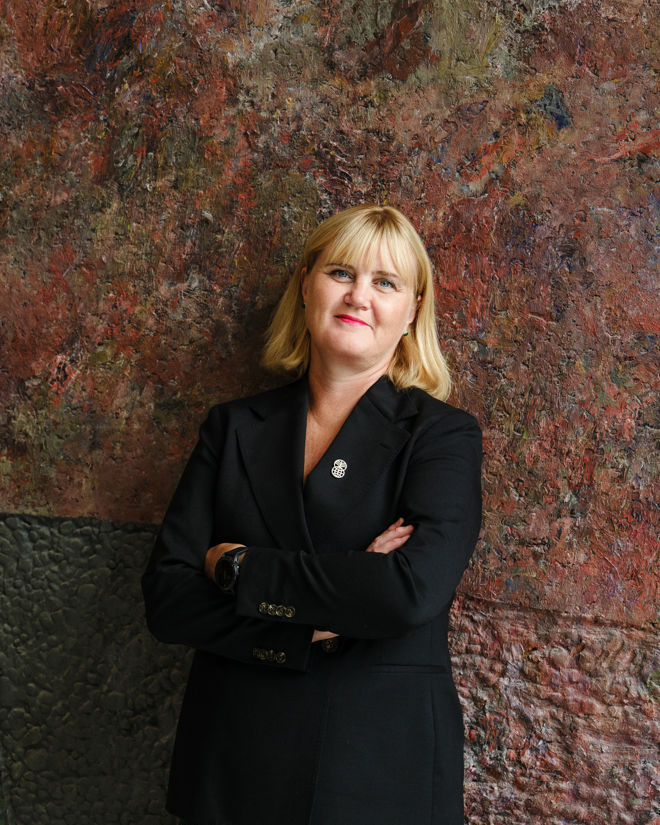
The World Bank plays a crucial role in addressing poverty, the climate crisis and rising inequality.
– The global landscape is marked by geopolitical instability, growing pressure to achieve the Sustainable Development Goals, and an increasingly fragmented aid system. In this context, strong and effective multilateral cooperation is not just important – it is essential, says Gunn Jorid Roset, Director General of Norad.
She highlights that IDA is particularly important because it delivers strong results efficiently for those who receive aid.
Minister of International Development Åsmund Aukrust emphasises that Norway will support the World Bank’s core priorities, while also working to strengthen Norwegian priorities in its cooperation with the Bank. He emphasises on gender equality, climate and nature, renewable energy, decent work and food security.
Norway will support the World Bank’s work where needs are greatest, including in fragile and conflict-affected countries.
In 2022, the world faced several major crises that reinforced one another. For the first time in a generation, global poverty increased. The pandemic was a major contributing factor. The purpose of IDA20, established that year, was to help the poorest countries recover lost ground and work towards achieving the Sustainable Development Goals. IDA20 financed more than 700 projects in 78 countries. Around 70 per cent of the funding went to Africa.
Of the total USD 24 billion in donor contributions from 48 countries, Norway contributed NOK 3.3 billion. For every dollar contributed, IDA is able to provide nearly four dollars to the poorest countries in grants and highly concessional loans. This is why IDA20 was able to deliver USD 97 billion in financing to poor countries during the period 2023–2025.
Through IDA, the World Bank works closely with partner countries to address some of the most complex development challenges.
30 per cent of IDA20 lending went to infrastructure projects.
27 per cent went to “prosperity”. This encompasses institutional strengthening and job creation.
IDA supported:
Financing for investments in the social sectors – including education, health and social protection, accounted for 20 per cent of total financing.
IDA is the world’s largest provider of climate finance to the poorest countries. Under IDA20, 41 per cent of IDA lending was climate-related, exceeding the target of 35 per cent. Of this financing, 58 per cent went to climate adaptation, also above the target of 50 per cent.
IDA20 set ambitious targets for recovery and resilience and achieved nearly 90 per cent of the targets set for the period.
Strong results from IDA20: