Sudan: The world’s worst crisis
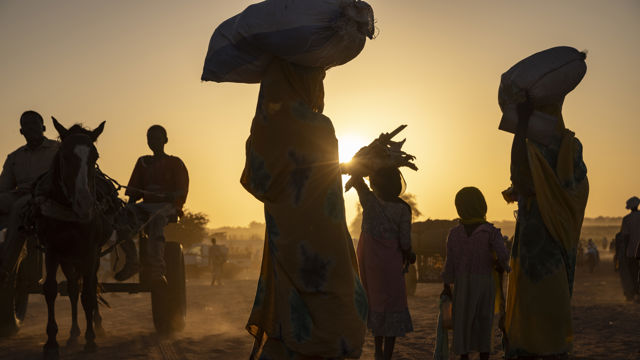
Recently arrived Sudanese refugees in the border town of Adré in Chad.
The war in Sudan has led to the world’s largest humanitarian crisis. More than 33 million people need assistance. Over 13 million have been displaced. It is now three years since the conflict began.
– The UN describes the crisis in Sudan as the world’s largest and most complex crisis. Yet it receives far less international attention than it should, says Norad’s Director General Gunn Jorid Roset.
Aid to people affected by the war in Sudan is at a critically low level. Only 16 per cent of the needs in the UN’s hyper‑prioritised crisis response plan are funded. This means that the UN is not attempting to cover the entire crisis, but only to keep people alive where needs are most acute and resources are insufficient.
The war is becoming increasingly brutal. It is raging along multiple fronts. In Kordofan and Darfur in particular, civilians are being severely affected. Attacks are taking place in locations where people gather, including hospitals and schools. Daily life is extremely dangerous.
Also read (in Norwegian): Norge gir 470 millioner kroner til humanitær og langsiktig bistand
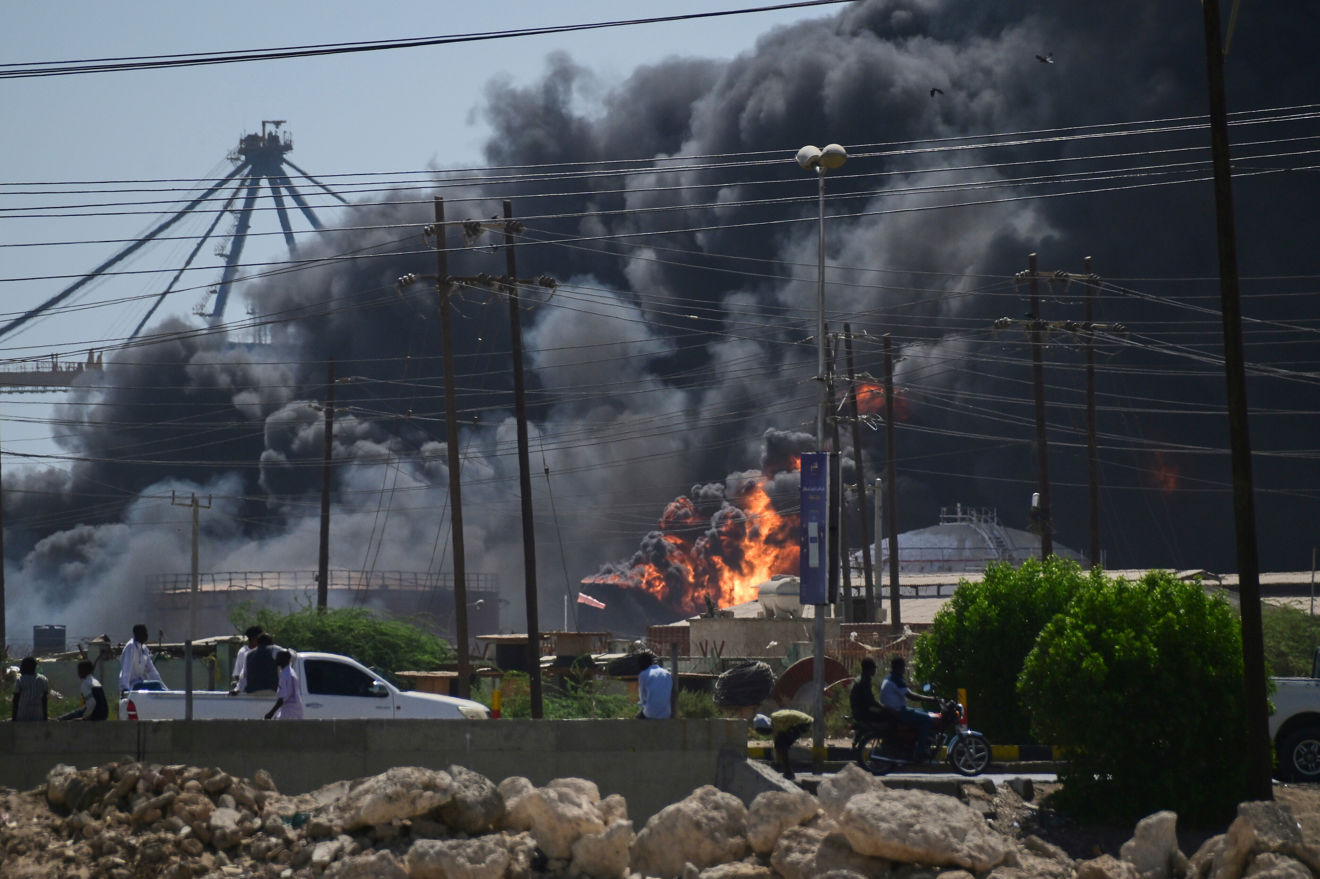
Smoke after a drone attack at the port of Port Sudan, 6 May 2025.
Hunger and abuse
Hunger is extreme and is being used as a method of warfare. More than 20 million people are facing acute food insecurity, and famine has been confirmed in several areas.
Sexual and gender-based violence is also being used as a weapon of war. Girls and boys, women and men are subjected to grave abuses.
Doubled Norwegian support
In the midst of this, Sudanese people and local organisations stand together with international aid workers and save lives every single day.
Norway is working to end the war and has provided substantial assistance to the Sudanese people for several years. Following the outbreak of war in 2023, Norway has doubled both its humanitarian and long-term support.
In total, more than NOK 600 million was provided in support to Sudan in 2025, of which humanitarian support accounted for NOK 451 million. This is in addition to long-term support, largely channelled through the embassy.
Read also: The Rafto Prize laureates from Sudan: As long as we live, we believe in democracy
Local and international actors stand together
Norwegian support will remain at a high level in 2026 as Norway has allocated NOK 470 million for humanitarian and long-term assistance to Sudan.
Norway supports the Sudanese people through the UN, the Norwegian Red Cross and Red Crescent Movement, Norwegian organisations and local actors in Sudan, reaching the most vulnerable with food and cash assistance, healthcare and protection, as well as access to safe water, basic hygiene and education.
Through the UN, including the UN Humanitarian Fund for Sudan, the World Food Programme and UNICEF, Norway contributes to rapid and flexible efforts that combine life‑saving emergency assistance with measures that strengthen local resilience.
In 2025, Norwegian support through the World Food Programme helped reach approximately 2.7 million people in Sudan with food, cash assistance and nutrition measures.
Norwegian support to the World Food Programme reached several highly prioritised areas – including Darfur, Kordofan, Khartoum, White Nile, Aj Jazirah, Kassala, Gedaref and the Red Sea. In Darfur alone, more than 1.1 million people were reached; nearly 60 per cent of them were women, and around 830,000 of those who received assistance funded by Norway were children under five years of age.
The Norwegian Red Cross, Norwegian Church Aid, the Norwegian Refugee Council, Save the Children Norway and Norwegian People’s Aid work closely with Sudanese organisations and volunteers who reach people where needs are greatest.
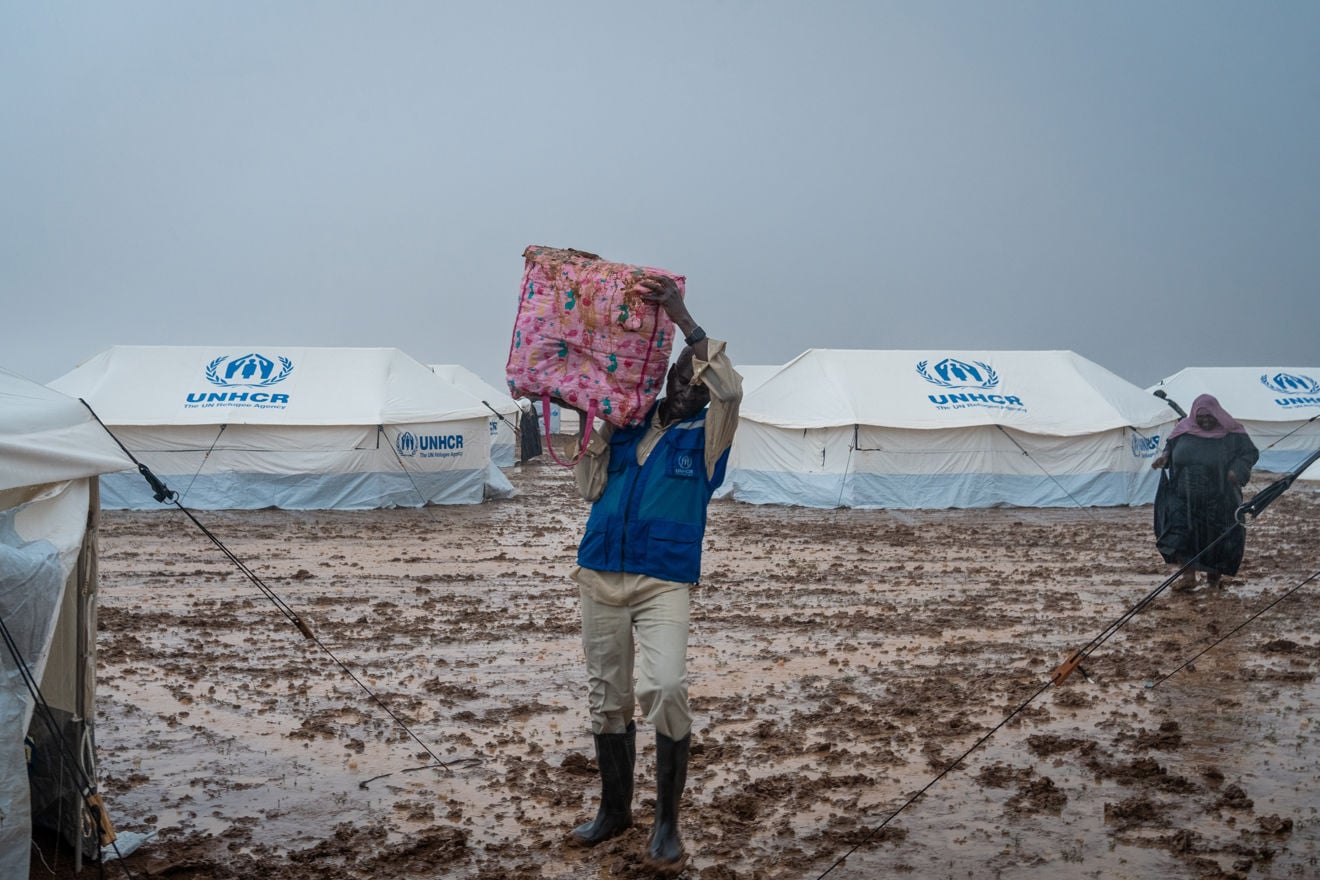
A UNHCR staff member helps an internally displaced person with her belongings on the way to her tent.
Work against sexual and gender‑based violence
Efforts to combat sexual and gender-based violence are a central part of the response. Norwegian Church Aid and Sudanese partners are implementing locally anchored measures in vulnerable areas, including Gedaref.
In 2025, more than 11,000 people were reached through prevention and awareness-raising activities on sexual and gender-based violence. Over 4,600 women and girls took concrete steps to strengthen their social and economic situation after participating in activities, and 1,200 women and girls received psychosocial support through access to safe spaces.
This demonstrates how Norwegian support contributes to locally led responses that strengthen delivery capacity and improve protection for women and girls in an extremely vulnerable context.
Long-term efforts
In addition, there is long‑term assistance provided through bilateral channels. This amounted to around NOK 200 million last year.
The main priorities for long-term support in Sudan are:
- Peacebuilding and democratic development through civil actors
- Gender equality and women’s rights
- Food security and livelihoods
In this way, Norway – together with the UN, the Red Cross and Red Crescent Movement, Norwegian organisations and local partners – helps save lives, support survivors of violence and strengthen Sudanese people’s own capacity to respond to the world’s largest humanitarian crisis.