When women are able to participate, the chances of effective and lasting solutions increase. That is why gender equality is both a priority and a cross-cutting principle across all development cooperation.
Gunn Jorid Roset
Norad Director General
The fight for women’s rights is being waged on many fronts across the world. Meet four women who are creating change in humanitarian crises, business, climate action and peacebuilding.
More people are living in war and conflict today than at any time since the Second World War. Women are often particularly affected: gender-based violence increases, health services collapse, and legal protection is weak or absent in many countries.
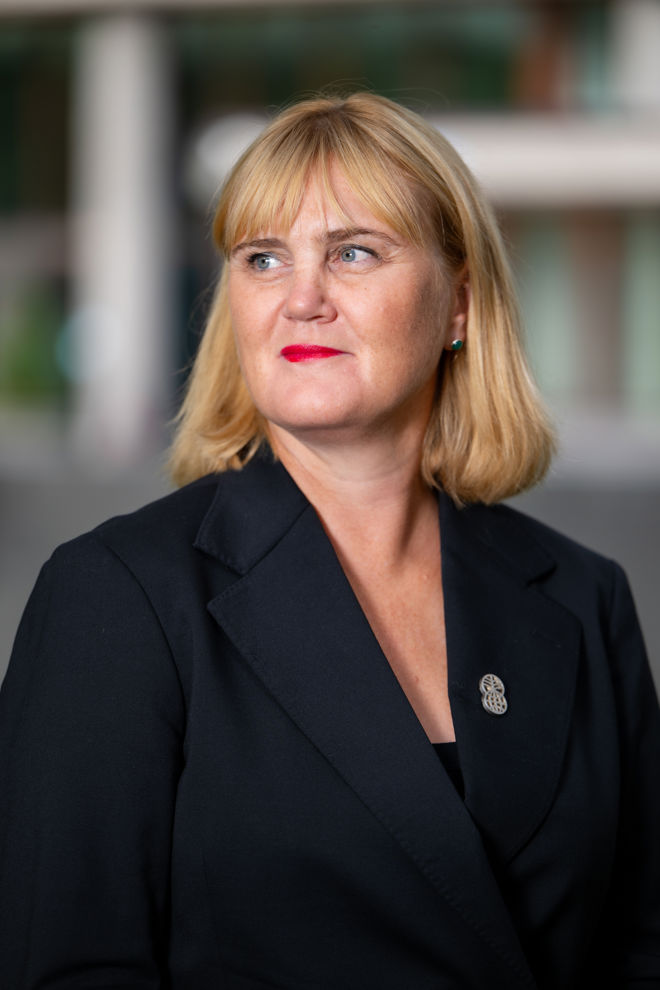
— We are also facing a global struggle over values, where powerful forces are seeking to roll back on rights that have been fought for and achieved over several decades. We cannot accept that, says Norad Director General Gunn Jorid Roset.
When women are able to participate, the chances of effective and lasting solutions increase. That is why gender equality is both a priority and a cross-cutting principle across all development cooperation.
On International Women’s Day, we highlight four women who are each working in their own way for safety, influence and a better future for the next generation.

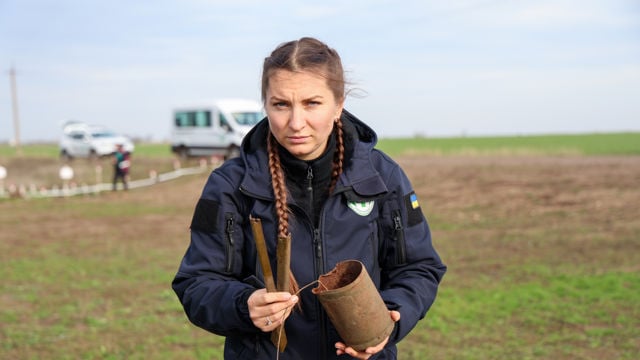
Viktoriia Vasyuta (on the left) is clearing her country of mines.
Ukraine is now one of the most heavily mined countries in the world. Nearly 140,000 km² may be contaminated with mines and unexploded ordnance following Russia’s war against the country — around 20 percent of the country’s territory, an area larger than Hungary and Denmark combined.
Mine clearance is essential for people to return home, cultivate land and rebuild communities.
Viktoriia Vasyuta is one of those doing the work on the ground. Four years ago, she was an English teacher and a mother of young children. When the full-scale invasion began, she chose to stay in Ukraine with her family. Today she works as a deminer for Norwegian People’s Aid, supported through the Nansen Support Programme for Ukraine.
— I cleare my country of mines, one step at a time. I want my children to live a normal life - in a Ukraine without war, says Vasyuta.
At the Norad Conference 2026, Victoriia Vasyuta talked about everyday life in Ukraine.
Gaza is currently one of the most dangerous places in the world to work as a humanitarian. According to the UN, more than 560 aid workers have been killed since October 2023, and the situation continues to deteriorate.

Women make up a large part of the humanitarian response in Gaza — as nurses, psychologists, logisticians and field workers.
Many carry out this work while being displaced themselves and trying to keep their families safe. One of them is Salma Altaweel, a humanitarian worker with the Norwegian Refugee Council.
— When I finish my work for the day as an aid worker, I do what other women in Gaza do. I light a fire to cook, wash clothes by hand, and prepare my children for a night filled with the sound of bombs.
Altaweel live from Gaza during the Norad Conference 2026.

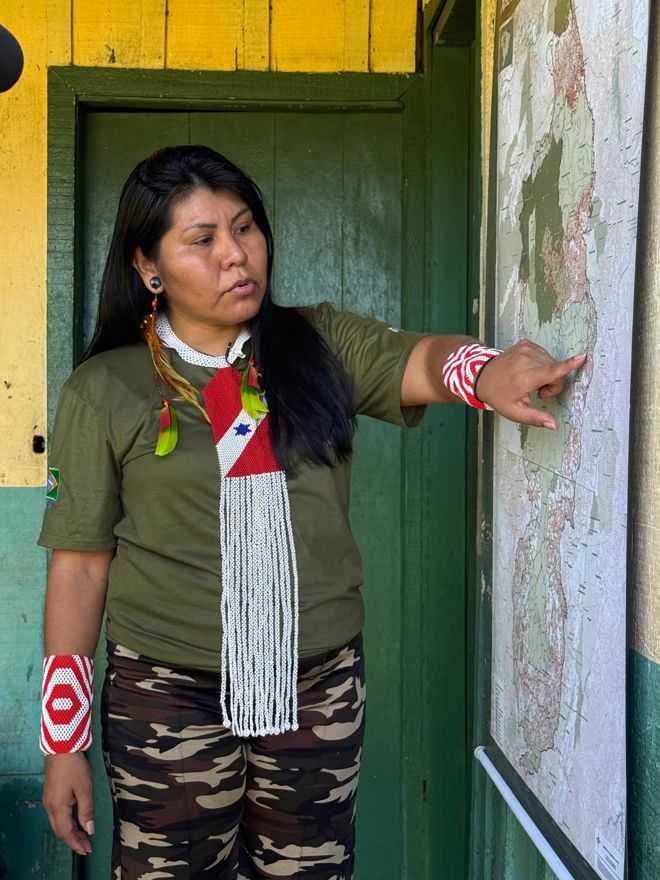
Ô-é Paiakan Kayapó leads the regional Indigenous directorate of FUNAI in Pará. She is at the forefront of the fight against illegal gold mining in Indigenous territory.
In the Amazon, Indigenous women are on the front lines of the fight against illegal gold mining that destroys both nature and local communities. Record-high gold prices have attracted international criminal networks, leaving behind deforestation, polluted rivers and serious health problems.
Ô-é Paiakan Kayapó leads the regional Indigenous directorate of FUNAI in the state of Pará. Together with local communities, she monitors the territory, documents intrusions and works with authorities to protect both people and forest.
We monitor and protect Indigenous rights within the territory. We care for nature for future generations. That is incredibly important.
Illegal gold mining involves extensive use of mercury, which contaminates rivers and destroys fish stocks - the basis of livelihoods for many Indigenous communities. To prevent intrusions, the Kayapó people have established checkpoints and patrol large areas of rainforest.
Their work is supported through Norway’s International Climate and Forest Initiative, which helps strengthen Indigenous organisations, monitoring and efforts to combat environmental crime in the Amazon.
Watch the mini documentary about the illegal gold mines:
The Indigenous territories in the Amazon are among the best preserved forest areas in the world.
— When you are called upon for any leadership position, raise your hand, step forward and leave an impact.
That is the message from Christabel Wasonga to young women in Kenya. She participates in the leadership programme Female Future Kenya (FFK), which aims to increase the number of women in top positions in the workplace.

Wasonga is the Director of Nursing at Aga Khan University Hospital in Nairobi.
The programme is run by the Federation of Kenya Employers in cooperation with the Confederation of Norwegian Enterprise (NHO) and is supported by Norad. It targets women in middle and senior management positions in the private sector, public sector, and civil society.
Kenya has a growing economy, but there are still significant gender gaps in access to capital, education and political representation. For Wasonga — Director of Nursing at Aga Khan University Hospital in Nairobi — the programme is about strengthening her own leadership skills and paving the way for others.
— Leadership is a very key component of any structure and any organization. I joined this programme to learn how to lead people better and to represent women in top leadership positions with confidence.
Through the Female Future Kenya programme, participants receive training in rhetoric, personal leadership, board work and financial management. For Wasonga, developing a deeper understanding of her own leadership has been especially valuable.

Since its launch in 2013, more than 400 women have completed the programme.
The programme aims to strengthen gender equality in the workplace and increase the share of women in leadership and board positions in Kenya.