The world’s most important backup: seeds for the future
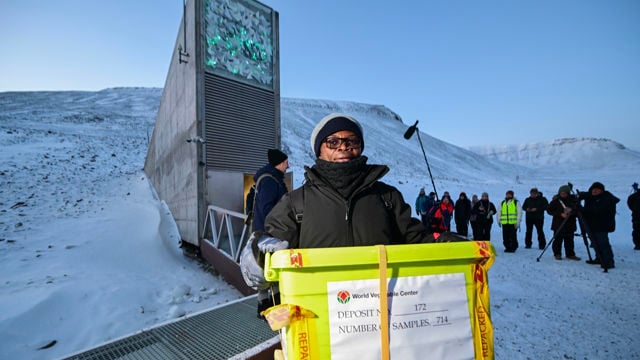
Deposit from the World Vegetable Center in Arusha, Tanzania, to the seed vault in Svalbard in October 2025.
Deep in the permafrost of Svalbard, more than one million seed samples are stored – a global insurance policy in case vital plant species disappear. At the same time, farmers in Somalia are testing new seed varieties to strengthen food production in the face of climate change and conflict.
Biodiversity - the diversity of species, genes, and ecosystems - is one of the foundations for ensuring that people have sufficient, safe, and nutritious food. Somalia illustrates why this diversity matters.
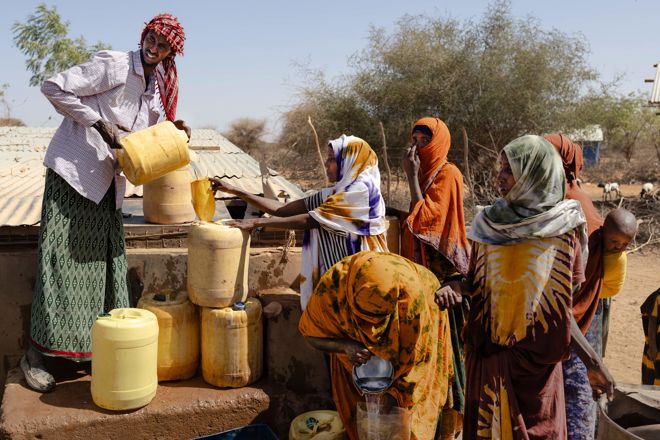
People collecting water at an emergency water distribution point in Somalia. Prolonged drought and extreme weather have severely affected communities in Somalia.
Decades of conflict and drought have caused many of the country’s crop varieties to nearly disappear. One example is cowpea, a protein-rich legume that has long been an important part of diets across Somalia.
When civil war broke out in the 1990s, this crop, and much of the country’s seed diversity, was lost. However, before the conflict, many of these varieties had been collected and sent to the international gene bank IITA in Nigeria. IITA is part of the global system supported by Norway through the Crop Trust’s Endowment Fund, where Norway is the third-largest contributor.
Now, the seeds are being returned.
Somali researcher Dr Ahmed O. Warsame leads efforts to reintroduce and improve cowpea cultivation. Together with farmers and universities, he is testing both traditional and new varieties to identify crops that can withstand drought, provide stable yields and perform well under local conditions.
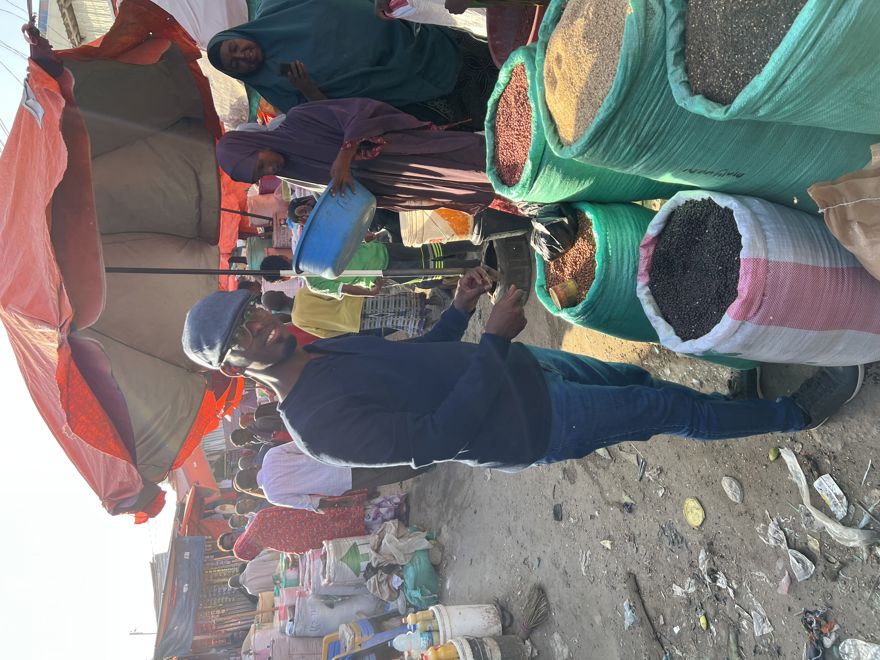
Dr. Warsame meets women working at a grain market in Somalia’s capital, Mogadishu.
– Somalis need to bridge a forty-year gap in crop diversity. We cannot do that alone. Gene banks provide the raw materials we need to rebuild our food systems, says Dr Ahmed O. Warsame.
Read the interview with Warsame on the Crop Trust website.
How gene banks and the Seed Vault work together
The story from Somalia illustrates how the global system for conserving seeds works:
- International gene banks collect, conserve and actively use seeds in research and development.
- The Svalbard Global Seed Vault stores backup copies of these seeds in case gene banks lose their collections, for example due to war or natural disasters.
- Together, they form the world’s most important food security system.
– Each seed sample may become crucial as we work to produce food for a growing population in an increasingly unstable world and a changing climate. That is why Norway is helping to build a long-term preparedness system for future generations - even for situations we cannot yet foresee,” says Per Fredrik Ilsaas Pharo, Director of Climate, Nature and Private Sector at Norad.
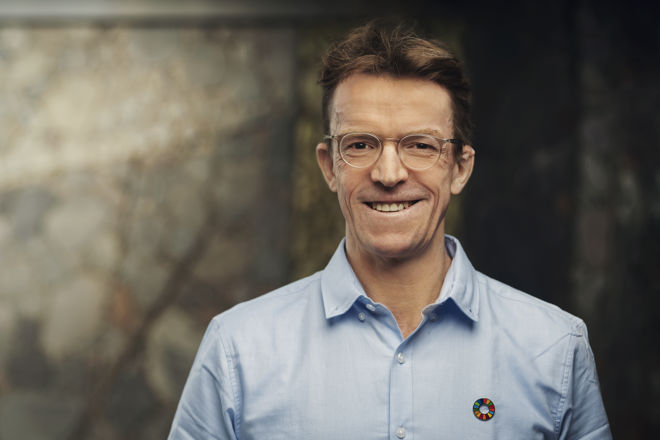
Per Fredrik Ilsaas Pharo leads Norad’s work on climate, nature and private sector development.
Seeds as preparedness and security
Norway has long supported the global system for plant genetic resources. Through Norad, Norway contributes to:
- The Crop Trust’s endowment fund, which ensures the long-term operation of international gene banks.
- A wide range of international gene banks that manage key food and feed crops, including cereals, legumes, root and tuber crops, forage crops and grasses, fruit trees, and selected vegetables.
- An international emergency reserve, managed by FAO and the Crop Trust, used when important genetic collections are under threat. Norway has contributed to securing gene banks in Sudan, Yemen and Ukraine.
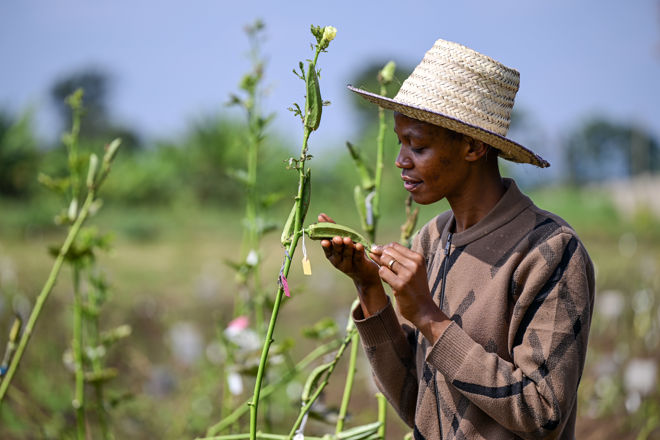
Surath Machambire from WorldVeg inspects okra plants grown at the World Vegetable Center in Arusha, Tanzania. Okra is one of several promising “opportunity crops” that can help transform agriculture, incomes, and diets in Africa.
While international and national gene banks play a crucial role, national ownership is also essential for preserving biodiversity. Countries need strategies that integrate gene banks into broader agricultural and food policies.
Norwegian-supported organisations such as the World Vegetable Center, CGIAR centres and the Crop Trust support this process. They also help strengthen national ownership and use of biodiversity. Norad’s support strengthens the link between global efforts and national implementation, which is an important priority in Norway’s board participation in the relevant organisations.
Working together to protect biodiversity is a way of preparing for an uncertain future.
– Gene banks and the Seed Vault are not archives of the past - they are infrastructure for the future. When biodiversity is lost, it is gone for good. No emergency response can replace it” says Ilsaas Pharo.