Stronger protection against mines and explosive ordnance
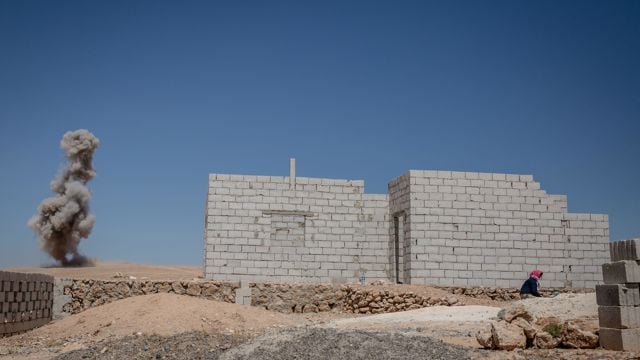
Mofida Majthoub (45) from Mines Advisory Group (MAG) detonates explosives collected during mine‑clearing operations in northern Syria.
To protect civilians from landmines and explosive remnants of war, Norway is contributing nearly NOK 1 billion to six organisations.
The organisations receiving support implement humanitarian mine action, including survey and clearance, explosive risk education (EORE), victim assistance and strengthening national mine action authorities and systems. In addition, efforts to strengthen international norms and legal frameworks will be further developed.
– Landmines and explosives continue to kill and injure civilians long after conflicts have ended. This support will help save lives, reduce risk, and enable safe access to homes, land, and livelihoods, says Norad Director General Gunn Jorid Roset.
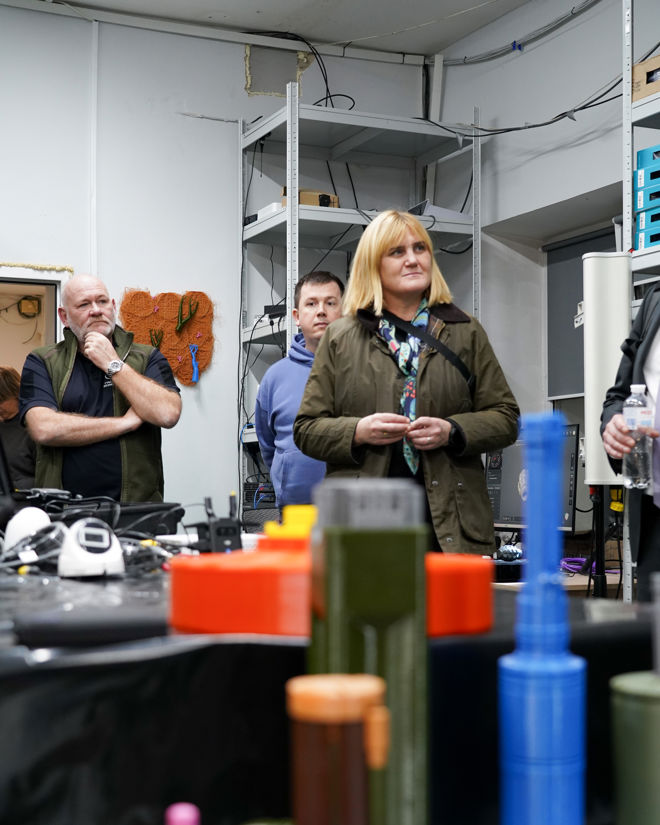
Norad Director Gunn Jorid Roset visited the organisation HALO Trust, which clears landmines in Ukraine.
The funding is provided through Norad’s call for proposals for global Humanitarian mine action and protection against explosive weapons, and covers the period 2026–2029.
NOK 580 million is allocated to humanitarian mine action and advocacy globally, and NOK 400 million specifically to Ukraine over a four-year period. See separate article on the support to Ukraine.
The funds are allocated to the Mines Advisory Group (MAG), the HALO Trust, Humanity & Inclusion (HI), the Danish Refugee Council (DRC), and Campaña Colombiana Contra Minas (CCCM). Together, the organisations cover a broad range of efforts, from technical mine clearance and risk education to survivor support and strengthening national coordination.
The organisations will be receiving support for work in some of the world’s most heavily affected countries, including Afghanistan, Colombia, Lebanon, Myanmar, Syria, and Yemen.
– This support from Norway will enable MAG and our partners to carry out long-term, locally led efforts in some of the world's hardest-hit countries. From Lebanon to Ukraine, we see the devastating consequences that landmines and explosive remnants of war have on civilians, both now and for many years to come. We are deeply grateful for Norway's continued commitment to humanitarian mine action, and for the country standing with us in the work of making areas safe again for local communities, says MAG's Chief Executive, Darren Cormack.
Local ownership and integrated approaches
In the selection of partners, emphasis was placed on technical quality, relevance to humanitarian needs, and implementation in accordance with humanitarian principles.
In addition, priority was given to strengthening national capacity and ownership, linking humanitarian mine action, development, and peacebuilding, as well as new technology and innovative solutions to improve efficiency.
By supporting both international organisations and a local actor in Colombia, Norway contributes to a more locally anchored and sustainable humanitarian mine action response.
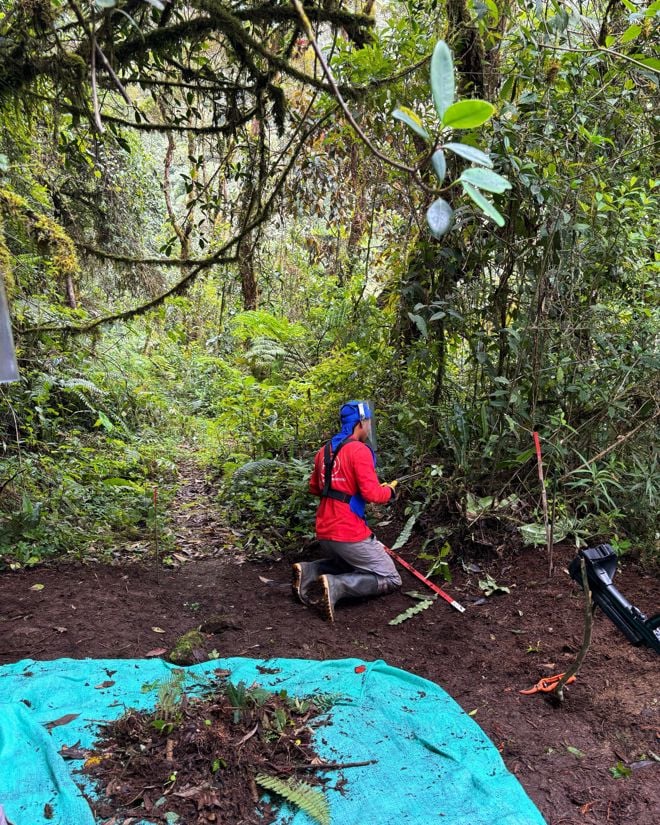
Extensive mine clearance work in Colombia.
International norms and protection of civilians
The call for proposals also includes support for international efforts to strengthen norms and regulations that protect civilians from weapons with severe humanitarian consequences.
This includes work to increase adherence to the Mine Ban Convention, the Convention on Cluster Munitions, and the Political Declaration on Strengthening the Protection of Civilians from the Humanitarian Consequences Arising from the Use of Explosive Weapons in Populated Areas (EWIPA).
A consortium led by Article 36, together with the International Campaign to Ban Landmines and Cluster Munition Coalition (ICBL-CMC) and Humanity & Inclusion (HI), will receive NOK 40 million in support for this work for the period 2026 to 2029.
– At a time when respect for international norms is under pressure and the need to protect civilians is growing frther, this effort is particularly important. This allocation is part of Norway’s long-term commitment to protecting civilians in conflict and contributing to safer societies both during and after war, says Roset.
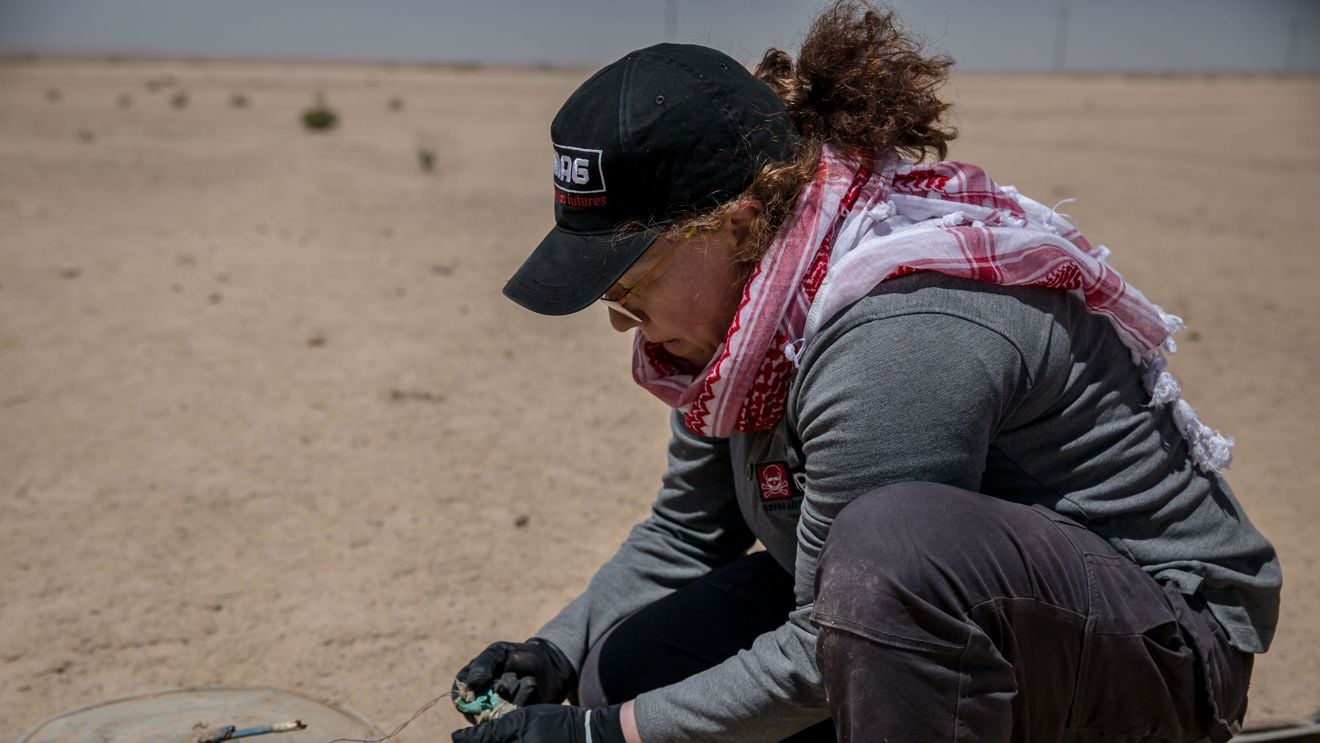
Technical field leader Mofida Majthoub from Mines Advisory Group (MAG) makes an explosive device safe by removing the detonator. This is part of the vital mine‑clearing work in Syria, one of the most mine‑contaminated countries in the world.
Separate agreements with the Norwegian People’s Aid and the International Committee of the Red Cross (ICRC)
Norway also supports several key actors in humanitarian mine action through separate multi-year agreements.
Norwegian People's Aid is Norway's largest partner in humanitarian mine clearance and receives funding through a strategic humanitarian partnership agreement. The agreement totals NOK 1,258 million for the period 2025–2029, with approximately 73 per cent of the funds under this agreement going to humanitarian mine action.
The organisation operates in more than 20 countries and combines operational mine clearance with training, community support, and international humanitarian disarmament work. Norwegian People's Aid has more than 30 years of experience in the field and is a key actor in Norway's overall efforts towards a mine-free and safer society.
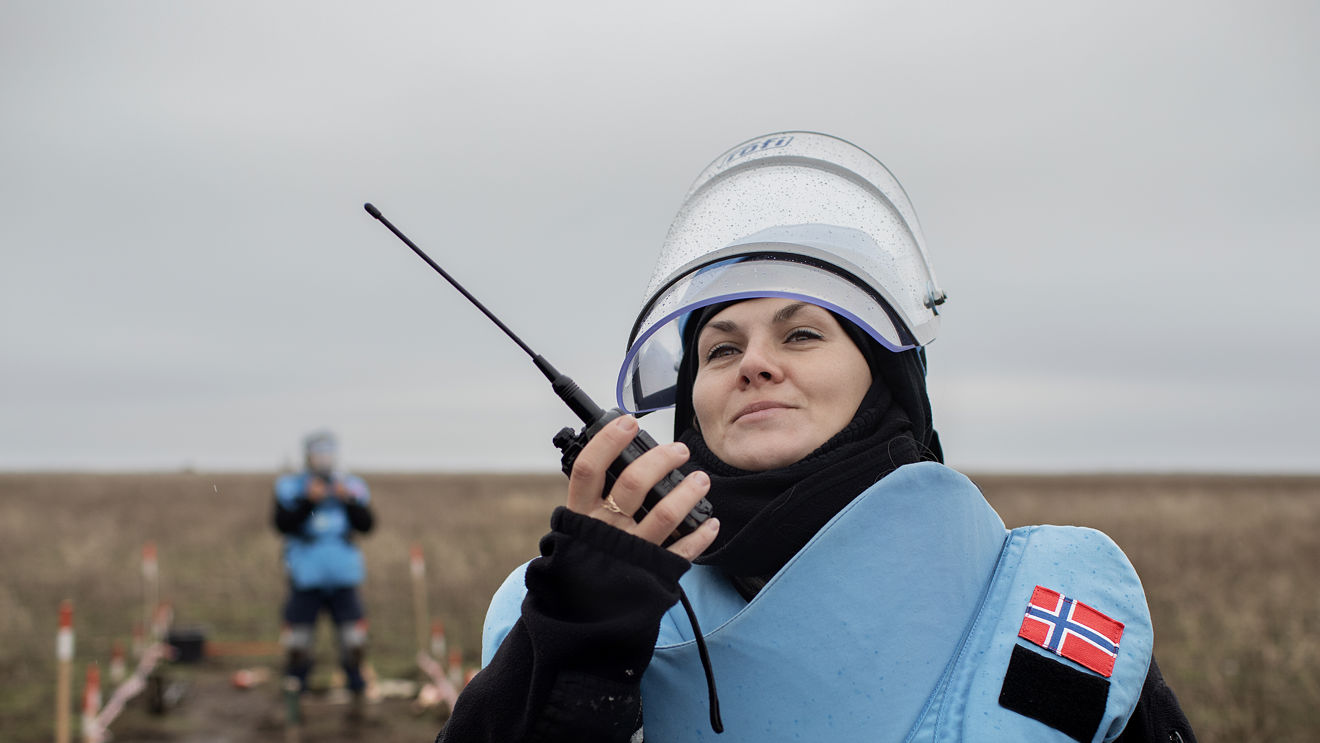
Norwegian People's Aid is clearing some of the world's most mine-contaminated farmland – vital work to make everyday life safer and get Ukrainian agriculture back on its feet.
– Norwegian People’s Aid is a key partner in Norway’s work to remove landmines and protect civilians in conflict-affected areas. Their long-term presence and strong partnerships with local actors ensure that their efforts reach where the needs are greatest, says Roset.
Norway is also providing NOK 60 million for the period 2026 to 2029 in support of the work of the ICRC (International Committee of the Red Cross) to reduce harm from mines and other explosive remnants of war. The support also helps promote the Mine Ban Convention and other relevant treaties, and states' compliance with them.
In 2026, the ICRC will, among other things, work to reach millions of people with risk-reduction measures, strengthen the work of national Red Cross and Red Crescent societies in this area, and provide support for the rehabilitation and social inclusion of mine survivors.