Norway’s responsibility is to ensure that the support we provide for their efforts is relevant, coordinated and of high quality.
Espen Barth Eide
Minister of Foreign Affairs
Norwegian civilian support to Ukraine helps keep society functioning and ensures that assistance reaches those who need it most. The Nansen Support Programme for Ukraine is the largest support programme Norway has ever established.
By the end of 2026, Norway will have disbursed NOK 52 billion in civilian support to Ukraine since Russia’s full-scale invasion began in 2022. Ukraine has endured four brutal winters of full-scale war and is now facing the fifth.
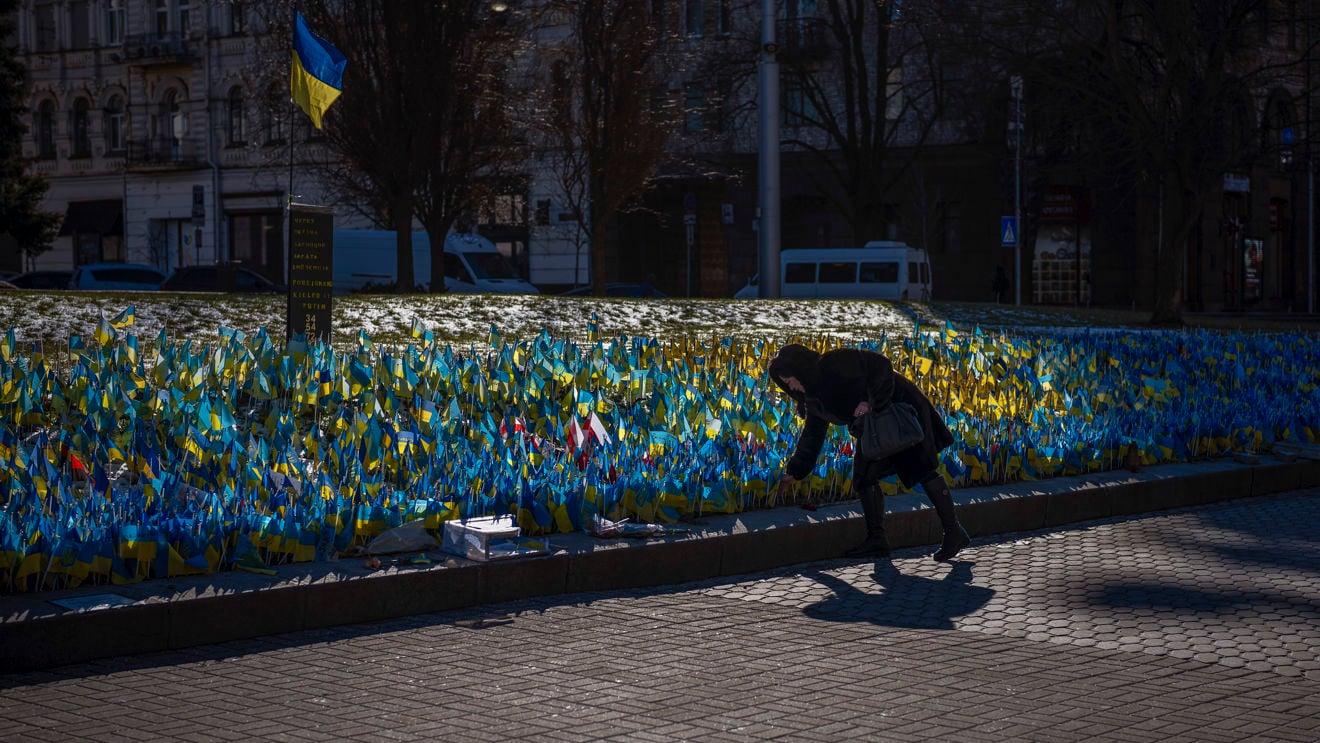
A woman places a Ukrainian flag at the memorial to those killed in the war in Independence Square in Kyiv.
The new report from Norad presents the results from the civilian support administered by the agency in 2023–2025, totalling NOK 31.1 billion.
– Norway’s support aims to strengthen Ukraine’s ability to withstand Russian attacks and occupation. Despite ongoing, large-scale attacks, Ukraine has maintained public services, and the economy and financial system have continued to function. Damaged infrastructure has been repaired, often several times. At the same time, the country has continued to pursue important reforms along its chosen path towards EU membership. The results belong first and foremost to the Ukrainian people. It is they who, in the midst of a brutal war of attrition, are keeping society running, defending their country and building for the future, says Minister of Foreign Affairs Espen Barth Eide.
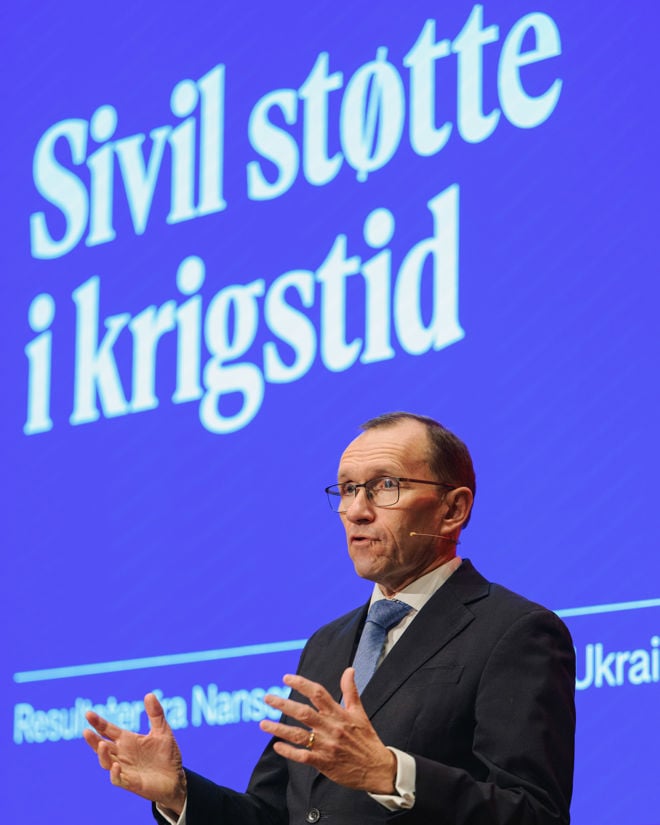
Norway’s responsibility is to ensure that the support we provide for their efforts is relevant, coordinated and of high quality.
– In wartime, the fact that something does not collapse can in itself be a critical achievement: securing electricity supplies to homes and hospitals, and keeping schools and transport routes functioning. Norwegian support contributes to strengthening Ukraine’s resilience and laying the foundations for lasting peace and security in Europe, he says.
Norad administers the majority of funding for the civilian component of the Nansen Support Programme.
– Norwegian support is reaching those it is intended to help, and Norway is helping to make a difference. At the same time, we must always adapt the support to Ukraine’s immediate needs. People are being injured, traumatised and killed. Our responsibility is to ensure that Norwegian support is relevant and reaches those who need it. That is why the lessons from this results report are important, says Gunn Jorid Roset, Director General of Norad.
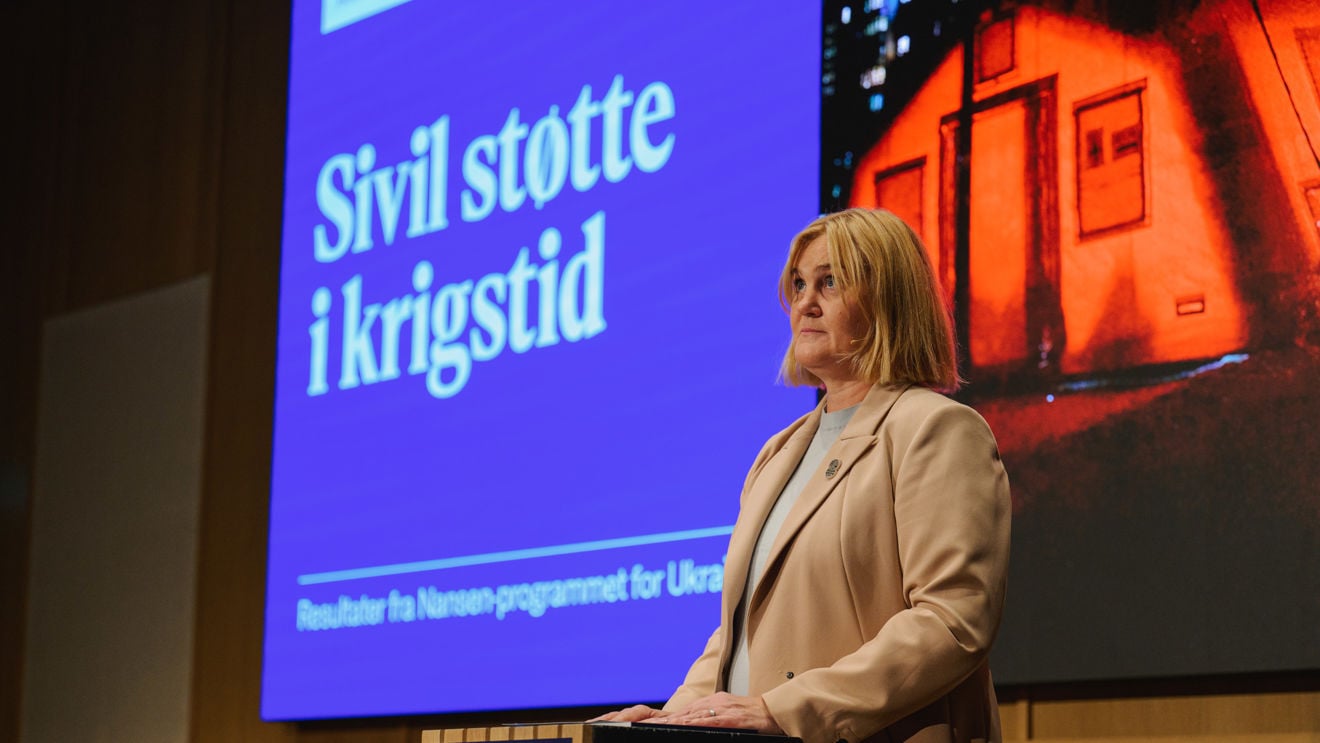
Norad Director General Gunn Jorid Roset
The report also highlights the dilemmas and risks involved in providing such substantial funding to support a country at war.
– We must show what the funding contributes to, but also be open about the risks of supporting a country at war. Further attacks can destroy infrastructure that has just been repaired. Humanitarian workers risk their lives when they go to work. The risk of corruption is high. We accept risk, but we do so on the basis of sound professional assessments, says Roset.
Conditions for humanitarian workers have deteriorated dramatically. Over the past year, nine humanitarian workers have been killed in Russian attacks. Developments in drone technology have also expanded the front line and the area known as the “kill zone”.
– Since the launch of the Nansen Support Programme, we have recognised the need to accept a higher level of risk than is normally associated with Norwegian development assistance. That does not change the need to continue providing support. The most important steps we take are to enter into agreements with the right partners, set requirements and verify that the funding reaches those it is intended to help, says Minister of Foreign Affairs Espen Barth Eide.
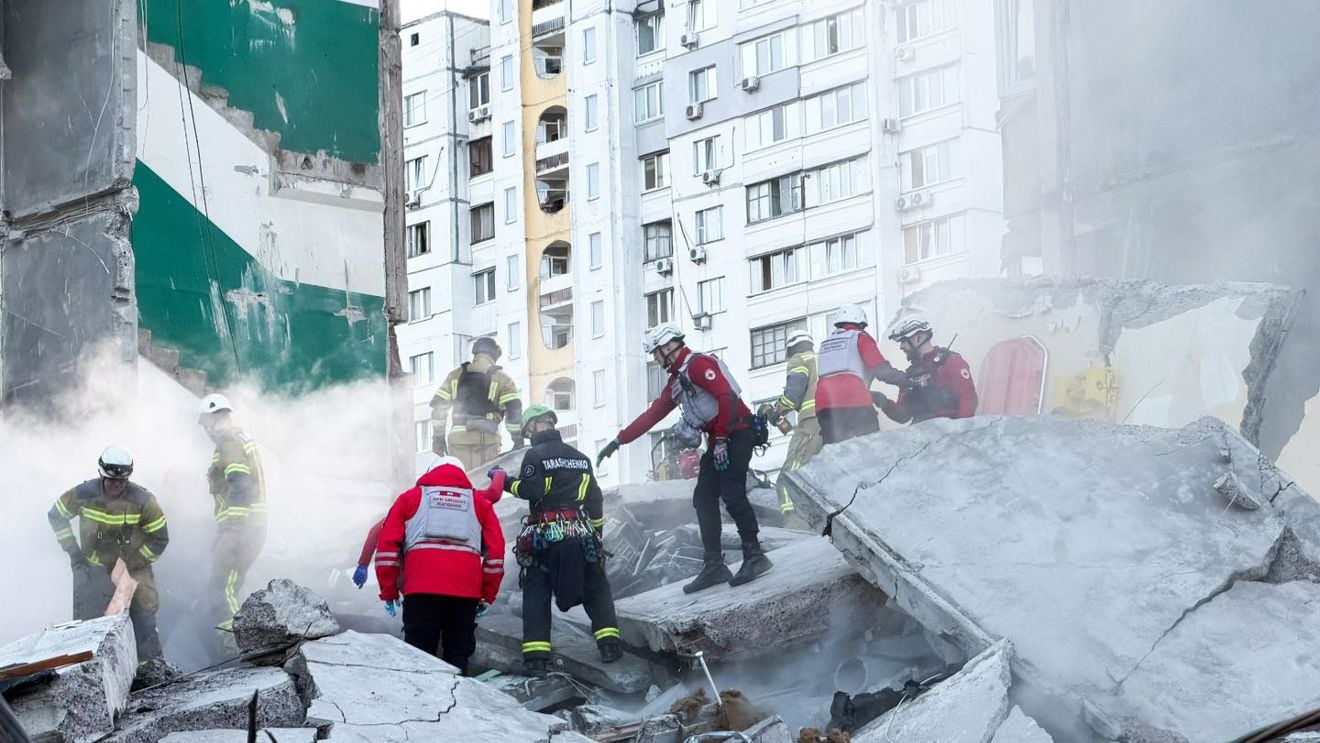
Extensive damage following a Russian attack in the Darnytskyi district of Kyiv on 14 May. Red Cross volunteers are on the ground to provide assistance.
Energy support and humanitarian assistance are the largest areas of support under the Nansen Support Programme. Winters are particularly challenging for the civilian population.
– We are now seeing Putin’s regime act more cynically than ever in its tactics of directing drones and missiles at civilians and the infrastructure that supplies the country with electricity. The aim is to wear down the Ukrainian civilian population. Our support for energy infrastructure is more important than ever, says Eide.
– We prepare for winter all year round. This means both adapting our interventions in the energy sector and helping people cope when temperatures fall. We contribute to repairs to power plants and other infrastructure, support gas imports and work closely with organisations that provide people with firewood, blankets, access to heated tents and hot meals, says Roset.
The Nansen Support Programme is based on a cross-party agreement between all parties in the Norwegian parliament, the Storting. The agreement emphasises that support should be based on Ukraine’s needs.
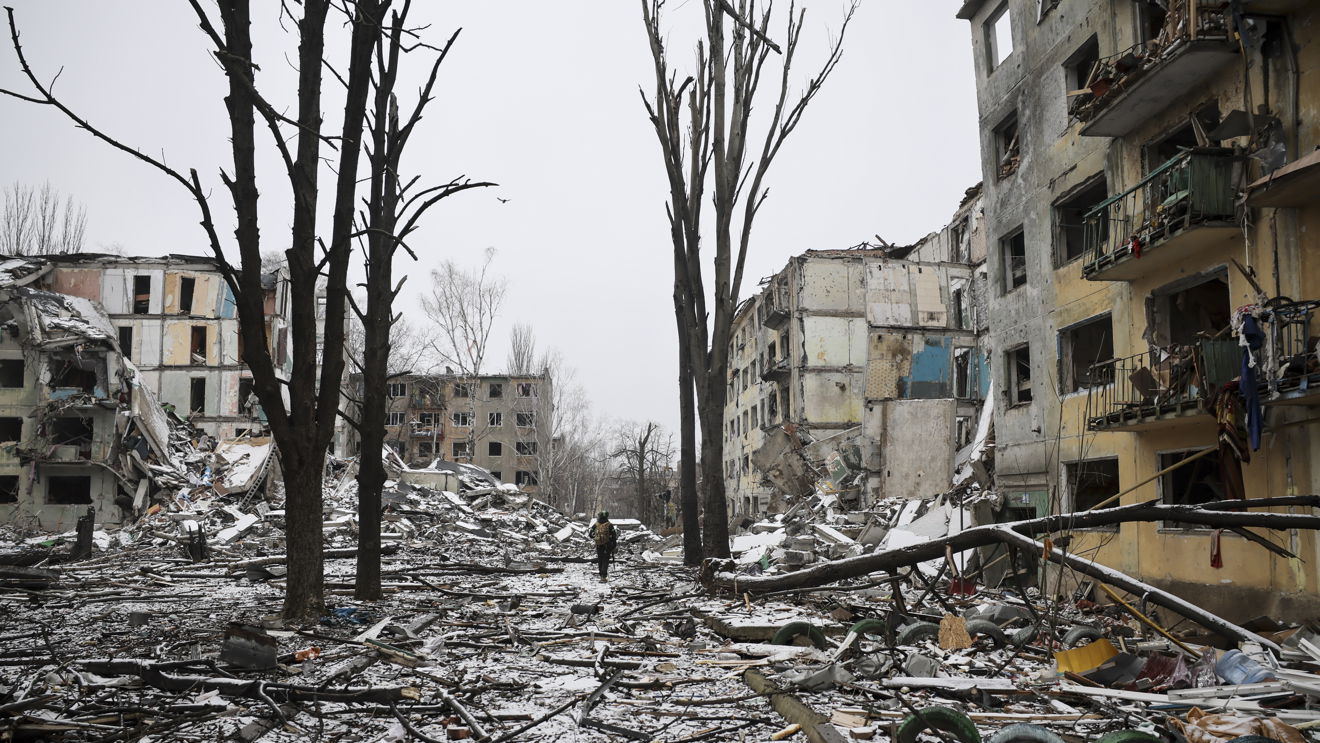
Extensive destruction in the frontline town of Kostiantynivka in the Donetsk region on 17 December 2025.
– Ukraine is now preparing for another winter, and several major cities have advised older people and those who need additional assistance, in particular, to evacuate. Norad coordinates humanitarian assistance through the UN to ensure that those who need help receive it, says Roset.
Today, 10.8 million people in Ukraine need humanitarian assistance. Many live near the front line or are internally displaced.
Norway contributed to gas imports equivalent to 13 per cent of Ukraine’s needs in 2025. Norwegian contributions to emergency repairs restored electricity to 3.5 million people. Ukraine’s winters are cold, making the need for electricity and gas particularly high. Much of the work throughout the year therefore focuses on preparing for winter.
Through organisations working in Ukraine, Norway provides winter assistance to the civilian population. This includes cash assistance to meet increased fuel costs, hygiene supplies and hot meals.
One example is the World Food Programme (WFP), which provided 1.1 million people with food and cash assistance in 2025.