Middle East: Norwegian support for people affected by the war
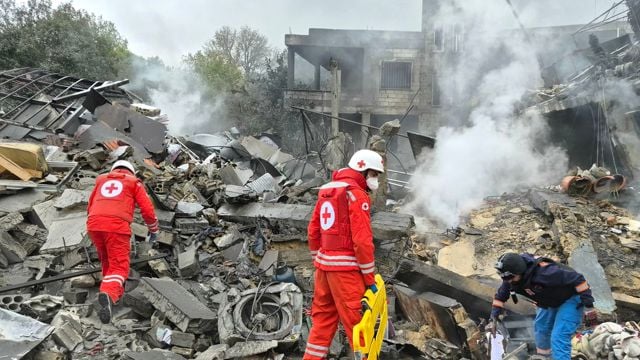
First responders work at the scene following an Israeli air strike in Kfar Roummane, southern Lebanon, 26 March 2026
The suffering in the Middle East caused by the war is immense. Several thousand people have been killed. Millions have been displaced.
Norway is providing further assistance in the war-affected areas of Lebanon, Iran and elsewhere in the region.
– When an acute crisis occurs – such as a new war or a natural disaster – it is often local aid workers who are first on the scene. These can be ordinary people, or volunteers from the Red Cross or Red Crescent. They contribute to search and rescue, first aid and immediate needs, says Erik Abild, Director of Humanitarian Assistance and Comprehensive Response at Norad.
The Norwegian Refugee Council is the leading international organisation in Iran and operates several relief centres.
– The most important thing we do as a donor is what we do before a crisis strikes, so that our partners have the preparedness to act quickly when a crisis occurs, says Abild.
Norway does this through the crisis funds of the UN and the Red Cross, and through mechanisms in our agreements that enable partners to help quickly and effectively.
Three things characterise Norwegian humanitarian efforts:
They are principled, predictable and flexible. This means our partners are ready to help those who need it most.
Flexible funding
Flexible funding is money that humanitarian organisations can use without it being earmarked in advance for a specific location, activity or target group – as long as its use falls within overarching humanitarian goals and principles.
In crises, situations change rapidly. Flexible funding makes it possible to:
- act quickly when new needs arise (for example, new displacement, disease outbreaks, or schools that need to reopen)
- reprioritise funding along the way – from one type of aid to another
- support local actors, who are often first on the scene and know the area best
Rather than the funding being earmarked, organisations can use it where the need is greatest.
A humanitarian reserve is funding set aside in advance to enable a rapid response to humanitarian crises – such as natural disasters, conflicts or acute hunger crises.