GDP and the reality behind the numbers in Africa
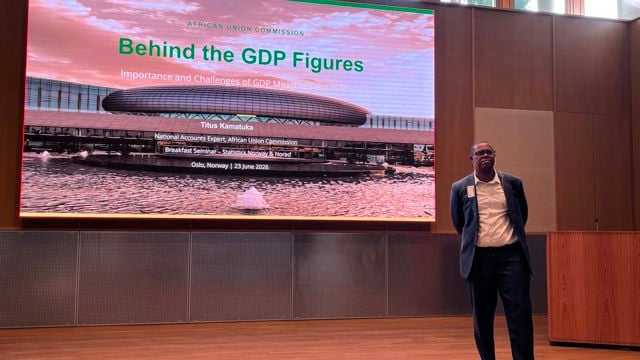
Titus Kamatuka (African Union) presenting at the seminar.
GDP is a key measure of economic development, but it is only as reliable as the statistics behind it. At a seminar in Oslo, Norad, Statistics Norway and the African Union explored what GDP figures reveal about African economies, and the reality behind the numbers.
GDP remains one of the most widely used indicators of a country’s economy. It is used to assess economic size, growth, and development, and it helps inform decisions on fiscal policy, investment, debt sustainability, and international financing. At the same time, GDP is only as reliable as the statistics and systems on which it is built.
This was the focus of the seminar “GDP and the reality behind the numbers in Africa,” organized by Norad and Statistics Norway in June 2026 in cooperation with the African Union. It was held in conjunction with a workshop for 10 African countries on national accounts in Oslo.
The seminar highlighted why the quality of national accounts matters, and the challenges many African countries face when measuring economic activity.
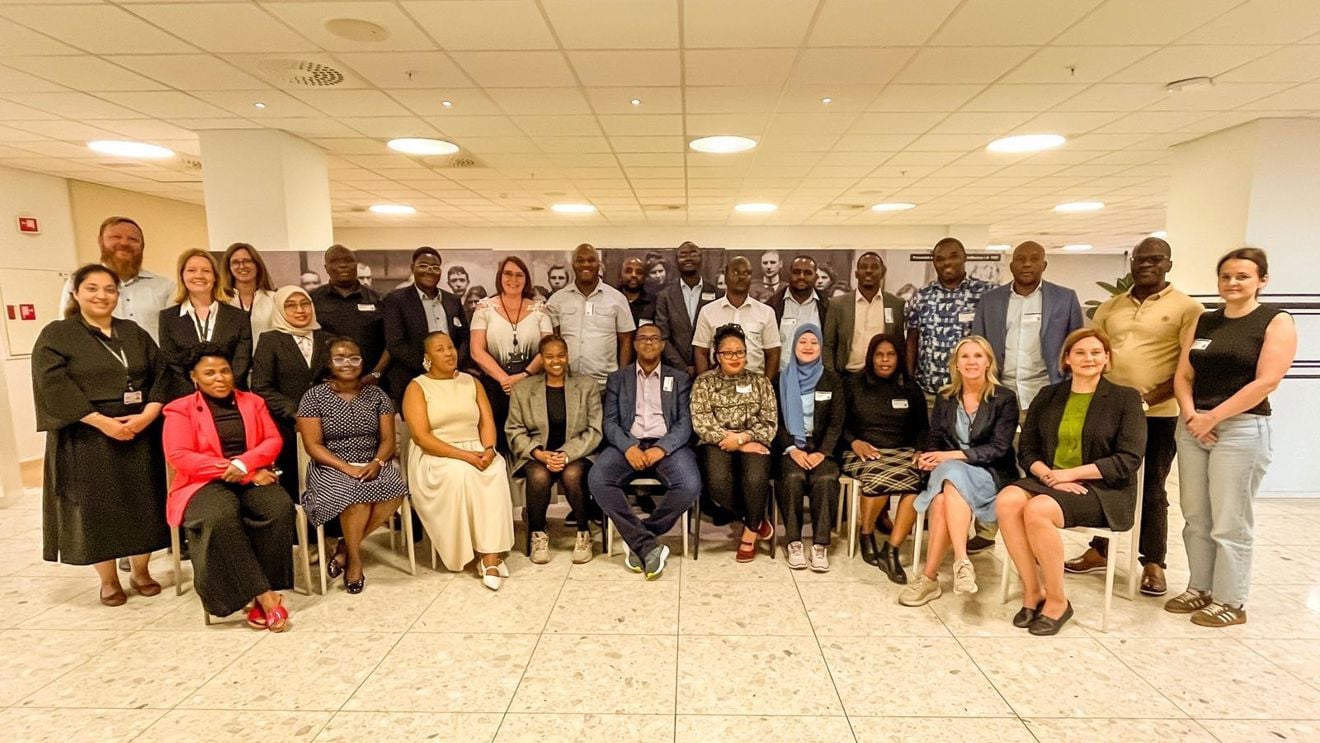
Workshop on national accounts and the Nadabas system co-organized by Statistics Norway, the African Union and EFTA.
A number that matters
– Countries are making billion-dollar decisions based on GDP, says Titus Kamatuka in the African Union.
GDP is more than a measure of economic output. It also shapes how countries are assessed by governments, investors, development partners, and international financial institutions. Indicators such as GDP per capita, the tax-to-GDP ratio, and the debt-to-GDP ratio are commonly used in assessing loan conditions, eligibility for aid, and overall economic sustainability.
Several speakers emphasized that inaccurate GDP figures therefore can have significant consequences. When such figures are used to guide major economic and political decisions, the quality of the underlying data becomes critical.
Significant statistical challenges
Presentations from the African Union and Statistics Norway showed that many African countries compile national accounts under difficult conditions. Common challenges include:
- outdated base years
- weak coverage in surveys and administrative registers
- limited access to business and price data
- insufficient measurement of the informal economy
- capacity constraints and high turnover among technical staff
- weak systems for data-sharing across public institutions
When the base year used in national accounts is outdated, important parts of the economy may be underestimated or excluded altogether. In practice, this means that today’s economies may be measured using yesterday’s structures. New and fast-growing sectors such as digital services, mobile payments, e-commerce, telecommunications, and other emerging activities may be captured too late or too poorly. Using an outdated base year is a bit like navigating present-day Oslo with an old map: the landscape has changed, but the tools have not kept up.
– If GDP is inaccurate, the corresponding indicators will also be misleading, potentially resulting in misguided decisions, says Janne Utkilen in Statistics Norway.

Some of the NADABAS workshop participants at the roof of Statistics Norway in Oslo.
Progress, but unevenly distributed
At the same time, the seminar showed that progress is being made. In recent years, several African countries have strengthened their national accounts work, adopted more up-to-date international standards, and increasingly begun producing quarterly GDP estimates and supply and use tables. This provides a more coherent and accurate picture of economic activity.
Substantial efforts are also underway to harmonize statistical production across African countries. The African Union, UN Economic for Africa and the African Development Bank are supporting common guidelines, capacity development, and the design of methods and tools to improve quality and comparability. One important example is NADABAS, a system for compiling national accounts that is used in several countries. This work contributes not only to more standardized statistics, but also to stronger professional communities, greater exchange of experience, and stronger national ownership of statistical systems.
A key message from the seminar was that this is not only about technical fixes. Better statistics require long-term investment in institutions, skills, and systems for sharing and using data.
From statistics to policymaking
Another central theme of the seminar was that national accounts are not merely a statistical product, but a practical tool for economic governance.
A representative from Malawi’s Ministry of Finance, Economic Planning and Decentralization explained how national accounts are used in macroeconomic modelling, planning, and policymaking. Through collaboration between the Ministry, the Central Bank, and the National Statistical Office, efforts are being made to strengthen the data base and apply economic models to assess the effects of policy measures and external shocks. Concretely, the model has already been used to develop policy notes on the implications for Malawi on the US-Iran war and on potential impacts on changes to VAT.
– We identified data gaps and data-sharing challenges, and this collaboration platform was created to help address them, says Charles Chinkhuntha from the Ministry of Finance, Economic Planning and Decentralization in Malawi.
The examples from Malawi illustrated how better data can give policymakers a stronger foundation for assessing economic recovery, tax policy, debt sustainability, and the effects of international crises.
Important beyond GDP
Norad also emphasized that good data and statistics matter in a broader sense. Accessible and reliable data are essential for:
- better public financial management
- more effective investment decisions
- greater transparency and accountability
- stronger foundations for national prioritization
- more evidence-based development cooperation
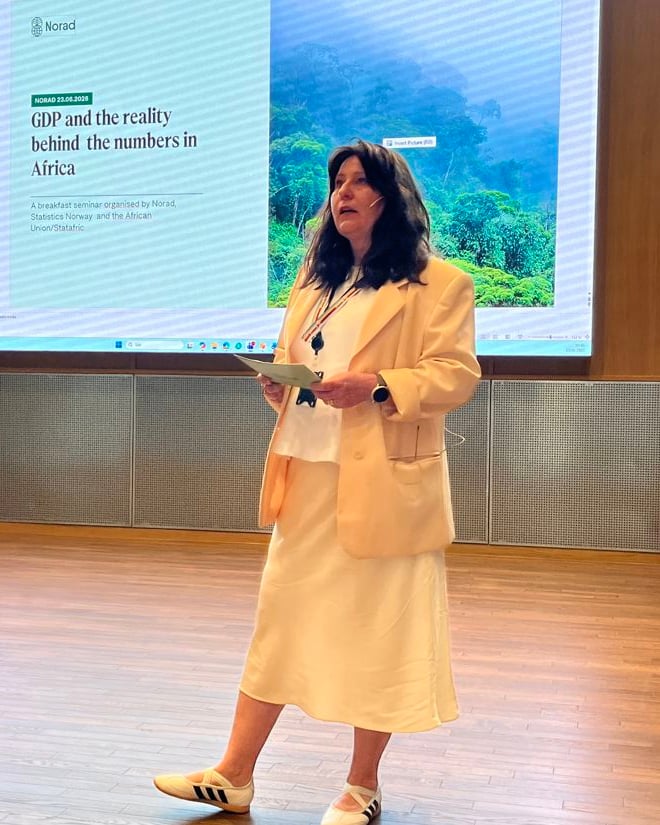
Kathrine Raadim, head of governance section at Norad presenting at the seminar.
The seminar speakers agreed that GDP remains an important indicator, but one that must be used with an awareness of its limitations. Many other indicators depend on the same underlying statistical systems. It is therefore not enough simply to call for more metrics; the basic work of strengthening national data and statistical systems must also be prioritized.
– Nobody asks: how was the figure produced? What was missing in the numbers, and what imputations were made to arrive at the final figure?, says Titus Kamatuka.
A need for long-term commitment
One overarching conclusion from the seminar was that improving GDP figures requires more than technical changes to the national accounts themselves. It calls for investment in the full ecosystem surrounding statistical production: legal frameworks, administrative data systems, business registers, price statistics, surveys, digital infrastructure, and technical expertise.
Stronger national statistical systems are therefore about more than better numbers. They are about enabling better decisions, more efficient use of resources, and more effective public policy.